China’s R&D spending hits record 2.8% of GDP, beating OECD average for the first time
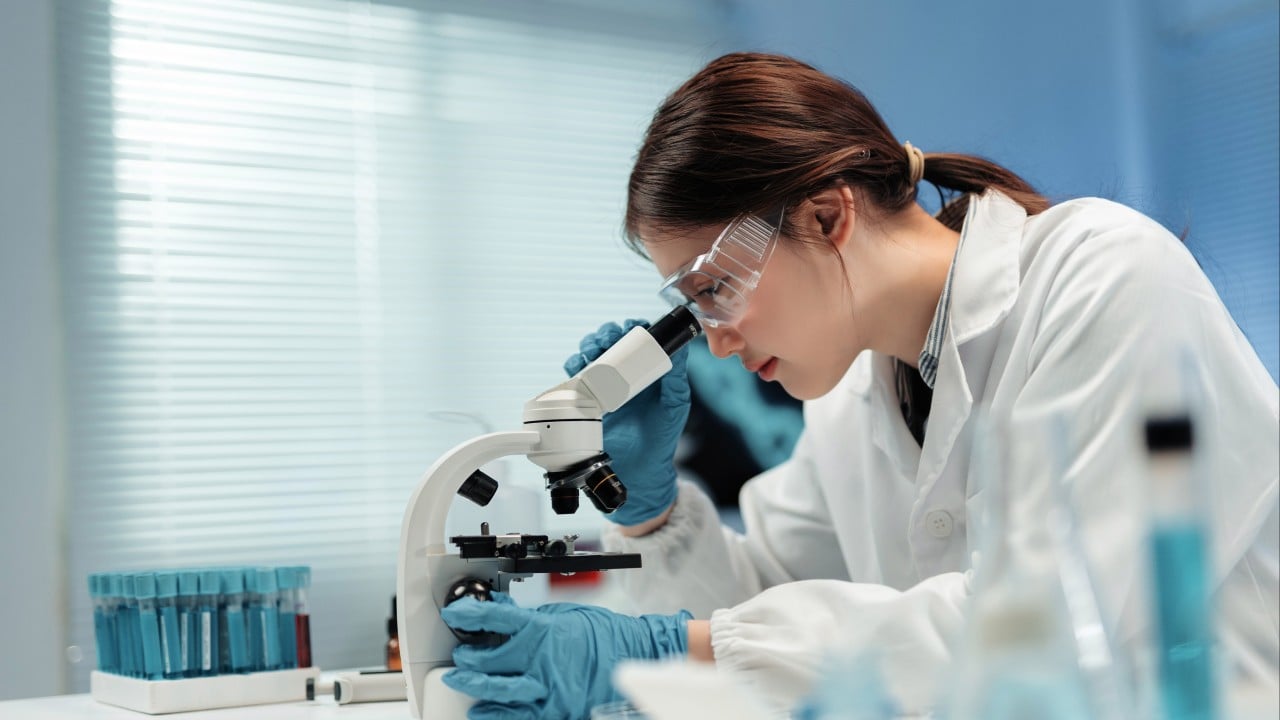
For the first time, China’s spending on research and development as a share of gross domestic product has surpassed the average for Organisation for Economic Cooperation and Development (OECD) members – a trend one analyst expects to continue as Beijing seeks to strengthen technological self-reliance amid intensifying global competition.
R&D expenditure exceeded 3.92 trillion yuan (US$584.8 billion) in 2025, accounting for 2.8 per cent of GDP, Science and Technology Minister Yin Hejun said at a press conference on Tuesday. The OECD average stood at 2.7 per cent for the year, the National Bureau of Statistics reported.
Wang Peng, an associate researcher at the Beijing Academy of Social Sciences, said the achievement showed how China’s investment in innovation had reached a level comparable to that of developed economies. He expected the share of GDP devoted to R&D to keep rising, with a greater focus on optimising funding allocation and improving research efficiency.
“We must continuously increase the proportion of investment in basic research to build a solid foundation for ‘zero-to-one’ original breakthroughs,” Wang said, while ensuring that “large-scale R&D investments translate more efficiently into industrial competitiveness”.
“Zero-to-one” innovation describes an original, high-risk discovery that leads to technological breakthroughs or reshapes industries.
The milestone comes as Beijing ramps up efforts to achieve technological self-sufficiency under its latest five-year plan amid intensifying competition with the United States in fields such as advanced chips and artificial intelligence. China is also facing growing global scrutiny of strategic industries such as clean energy, electric vehicles and critical minerals.
Minister Yin outlined government plans to strengthen basic scientific research, calling it essential to achieving technological breakthroughs and addressing national security and other strategic priorities.
Beijing would also ramp up efforts to address bottlenecks in critical sectors such as semiconductors, industrial machinery and high-end instruments, Yin added. Research into frontier technologies including AI, quantum technology, biotechnology and brain-computer interfaces would also receive greater support as China seeks an edge in emerging fields.
“The 15th five-year plan period is a critical period for building China into a leading science and technology power,” Yin said.
“We will ... seize the historic opportunities presented by the latest wave of scientific and technological revolution and industrial transformation, with accelerating high-level technological self-reliance and self-strengthening while fostering new drivers of growth as our main priorities.”
Technological progress would also depend on talent cultivated through education, Yin noted, pledging greater support for young researchers and a stronger focus on emerging and interdisciplinary fields.
In a letter released on Tuesday, President Xi Jinping urged Sichuan University to draw on its interdisciplinary strengths in the humanities, sciences, engineering and medicine to support China’s national strategy.
SCMP Plus is a new premium news platform that gives you an
all-inclusive edge to stay ahead on China news.
To access our exclusive content you’ll need to subscribe.
Already a subscriber?
LOG IN
The Ministry of Education, meanwhile, announced plans last week to add 76,000 undergraduate places at top-tier Chinese universities between 2027 and 2030, targeting in-demand fields such as AI, semiconductors, biomedicine and new energy.
KioskNews shows a cleaned-up reading view extracted from the publisher’s page — the original always lives on their site, not ours.