A wake-up call for the UK government on wild birds | Letter
The Office for Environmental Protection’s finding that government departments are breaking the law by failing to protect wild birds should alarm us all (UK government ‘breaking the law’ by not stopping decline of wild birds, 18 November).
The scale of bird declines in the UK is impossible to ignore, and songbirds are among the worst affected. The Department for Environment, Food and Rural Affairs’ wild bird indicators show that nearly 70% of farmland songbird species have declined since 1970. Woodland songbirds are faring little better, with more than 30% of species in decline. Unfortunately, none of this comes as a surprise. Decades of monitoring by scientists and dedicated volunteers have shown that our wild birds are in trouble. Yet successive governments have failed to act with the urgency needed to halt these declines.
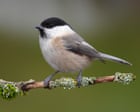
Specialist species have been hit particularly hard. The willow tit, which depends on young wet woodland, is nearing extinction. Its close relative, the marsh tit, has had a catastrophic fall in numbers. As woodlands become increasingly fragmented, their populations are left isolated and vulnerable. We know that creating larger, better-connected habitats can help these species, but too little has been done to create and protect them.
There is, however, reason for hope. The recovery of the Dartford warbler from near extinction in the 1960s shows what is possible when suitable habitat is properly protected. When governments invest in and support nature, species can recover.
We have the evidence. We understand many of the causes of decline and what needs to be done. The government must now respond to this legal failure with long-term investment and action before more of our cherished birds disappear.
Emma Phipps
Scientific research and impact manager, SongBird Survival
KioskNews shows a cleaned-up reading view extracted from the publisher’s page — the original always lives on their site, not ours.