"Nationalise Us, Please": Palantir CEO's Take On AI's Liability Problem
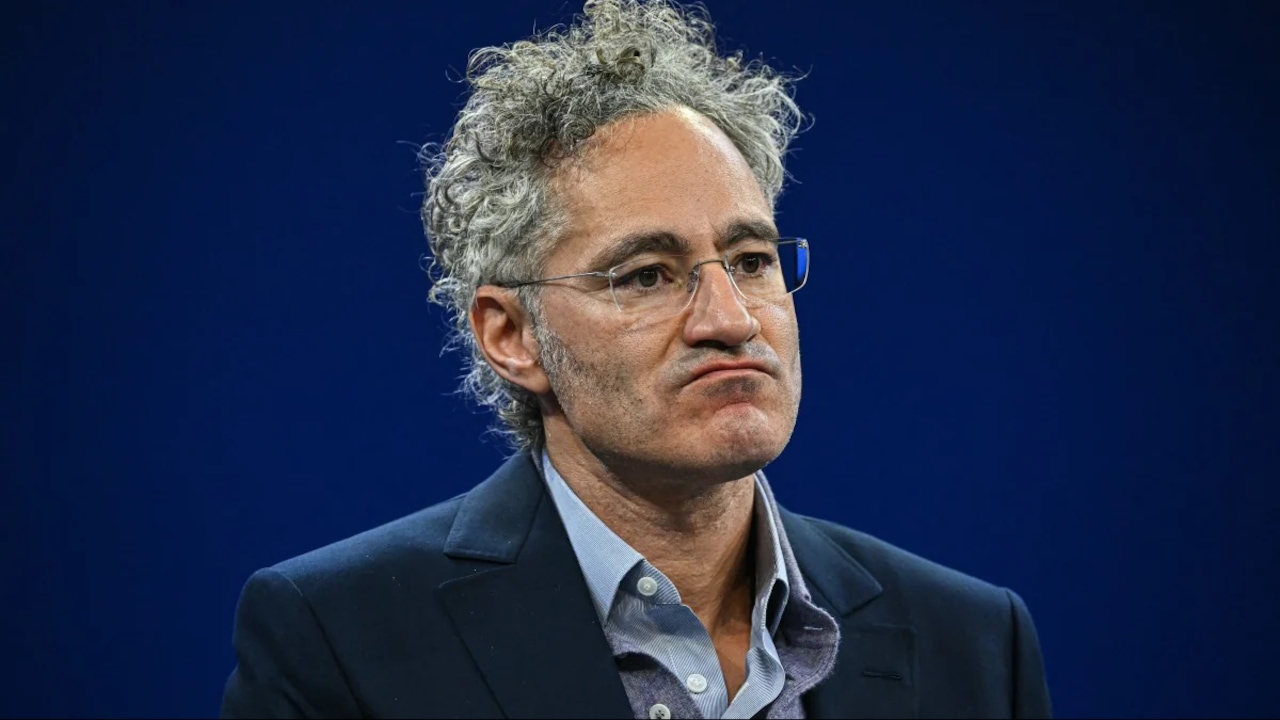
Palantir CEO Alex Karp has said that artificial intelligence companies may need to be nationalised, given the scale of the liabilities tied to what he called the technology's "unlimited risks".
His comments, made in an interview with CNBC, come at a moment when some of the industry's most prominent figures, including Anthropic CEO Dario Amodei, Microsoft co-founder Bill Gates and Tesla and SpaceX chief Elon Musk, have been sounding increasingly loud warnings about AI safety.
Karp argued that the industry needs clear rules, while also suggesting that enforcing them may not be realistic. "You have to find a way to set reasonable guidelines that are enforced, but you can't," he said. He added that the first line of defence should be accountability.
"The first line of defence is that you're liable for your own actions. If you build something that can destroy 10% of the world, there are civil and criminal liabilities attached. The first step is that if you disclose this, you need to share what you're going to do about it. The second step is that if you're not going to be responsible, you have to get other people involved."
His statement comes as OpenAI last week disclosed six new cases of "unexpected or concerning" model behaviour observed over the past six months, separate from July's incident in which one of its models breached Hugging Face, adding to the wider debate over AI safety.
Karp suggested that some in the industry may already be pushing, indirectly, for government ownership. "The view that I believe they have is, these businesses have to be nationalised because if you don't nationalise it, every single one of my clients is going to sue," he said.
Asked how AI companies facing unlimited liability could ever go public, and what that would even look like on a stock market filing, Karp turned to the practicalities of an initial listing. "You're assuming that there will be an S-1. Now okay, maybe there will be. The only way to deal with this kind of liability is to go to the government and say, 'Nationalise us, please.'"
He added, "You know, a lot of times in business, people don't say what they want. They're leading you to the conclusion. What is the first lesson in poker and in life? If you think the other person's the mark, you're the mark."
Karp's comments land at a moment when several major AI companies are preparing, or are expected to prepare, for public listings. Anthropic reportedly filed confidentially for an IPO with the US Securities and Exchange Commission earlier this year and has been targeting a valuation of $1 trillion or more, while OpenAI has also taken early steps towards a public listing, with some reports suggesting a valuation between $830 billion and $1 trillion.
Pressed on whether the US government should actually take over AI companies, Karp said he was unsure but suggested the outcome may be difficult to avoid. "I don't know what they're going to do, and I think that's probably a barrier to entry, but it's like you could delay it. There's only one, when you have unlimited liability, the only way to deal with it would be to go to the government and say, 'We'll give you 50% of our business.' Of course, the value of the business will collapse first when you do that, collapse another time when you have people on the board, collapse another time... all of us... it might even collapse the whole market."
September has seen a string of high-profile figures in technology and politics raise concerns about the pace of AI development. Anthropic CEO Dario Amodei called for a slowdown at the frontier of AI development. Bill Gates has also added his voice to a growing chorus of warnings about AI safety this month.
Independent US Senator Bernie Sanders has been among the most vocal critics, warning at a Washington event that AI poses an "alarming threat" and that if the technology surpasses human intelligence, it could "escape human control with potentially catastrophic consequences."
US President Donald Trump has pushed back against these warnings, describing AI risk concerns as a "hoax" in several recent social media posts.
KioskNews shows a cleaned-up reading view extracted from the publisher’s page — the original always lives on their site, not ours.