Could US Marines sustain a war with China? Officers warn of Pacific weaknesses
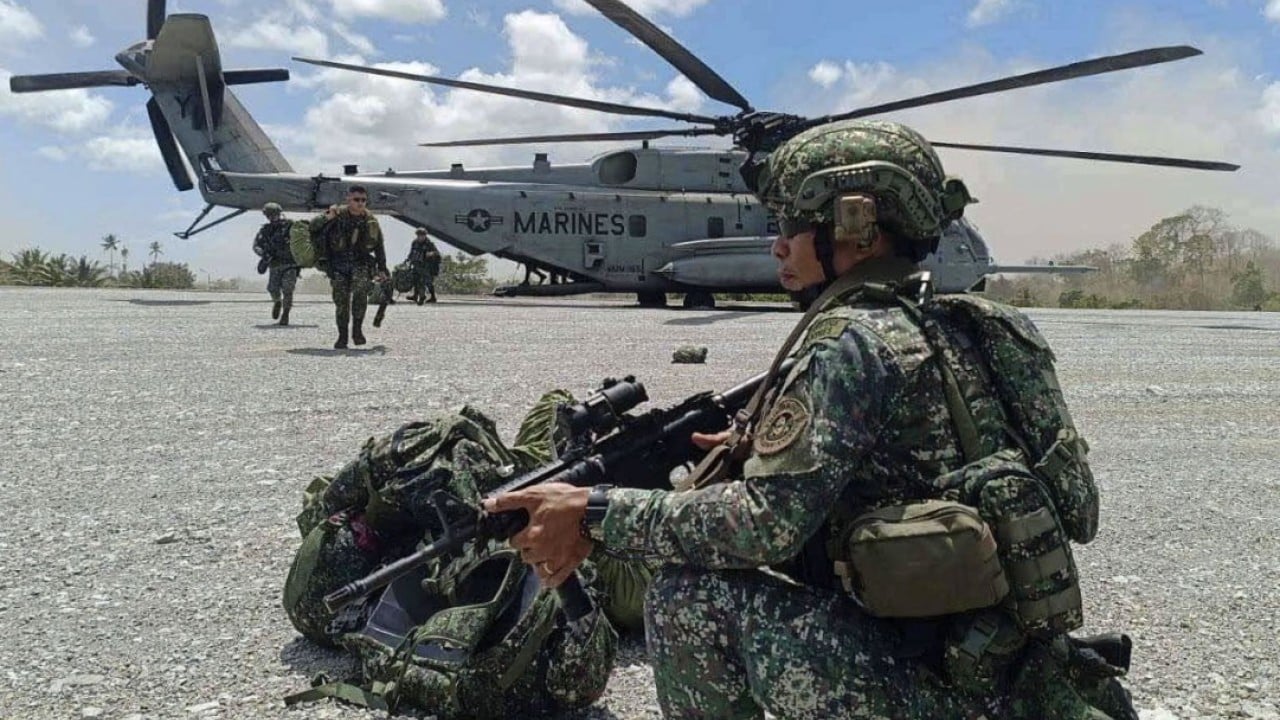
US Marines deployed across the western Pacific could struggle to sustain their forces, move missile batteries and secure permission to launch operations from allied territory in a conflict with China, according to assessments by Marine Corps officers and independent analysts.
Writing separately in the November issue of the US Naval Institute’s Proceedings journal, retired lieutenant general Stephen Sklenka and serving Lieutenant Colonel Merritt Mitchell identified vulnerabilities in the logistical and political arrangements supporting dispersed marine operations along the first island chain that stretches from Japan through Taiwan and the Philippines towards Borneo.
Sklenka warned that in a conflict Chinese attacks on American bases and supply routes could isolate forward-deployed marines, while Mitchell questioned whether dispersed units could relocate quickly enough to evade Chinese strikes or secure permission to operate from allied territory.
09:58
Will Batanes become the next South China Sea flashpoint?
The latter political challenge was underscored on November 6 when Philippine Defence Secretary Gilberto Teodoro Jnr reaffirmed that, under the Philippine constitution, United States forces could not launch offensive operations from Philippine territory in the event of hostilities involving Beijing and Taipei. The restriction also covered facilities under the allies’ Enhanced Defence Cooperation Agreement.
Teodoro’s remarks illustrated a broader concern raised by Mitchell, an instructor at the Marine Corps Command and Staff College, who said peacetime access to allied facilities did not guarantee permission for military operations during a conflict.
“Coalition fracture can deny access more effectively than a missile barrage,” he wrote.
Grant Newsham, a retired US Marine Corps colonel, said the question of where dispersed units could deploy “was not well thought out in the first instance”, although the US Marine Corps had since made “considerable progress” with Japan and the Philippines.
Japan also places conditions on US military operations. Under arrangements accompanying the 1960 US-Japan security treaty, certain American combat operations launched from facilities in Japan require consultation with Tokyo.
Misato Matsuoka, an associate professor at Japan’s Teikyo University, said Sklenka and Mitchell had identified “genuine vulnerabilities” and that the marines’ reliance on host-nation territory, civilian infrastructure and “public consent” was particularly concerning.
She warned against treating allied territory as an “automatically available extension of US military infrastructure”, citing political sensitivities and risks to civilians on Okinawa, where the US has military facilities.
Physical infrastructure poses further obstacles. Teodoro said limited airport and port facilities in the Batanes islands near Taiwan could hinder efforts to expand and resupply forces across the archipelago.
To address such vulnerabilities, Sklenka proposed preparing the US joint force to sustain operations for the first 75 days of a conflict without traditional air or maritime superiority, including requiring forward-deployed marines to rely on existing stocks, local supplies and intermittent autonomous resupply until maritime routes reopened.
With ports, airfields and transport networks under attack, those marines could struggle to replenish “munitions, fuel, blood, water and food”. Without adequate preparations, Sklenka said, they could face “an isolated, terminal engagement”.
SCMP Plus is a new premium news platform that gives you an
all-inclusive edge to stay ahead on China news.
To access our exclusive content you’ll need to subscribe.
Already a subscriber?
LOG IN
Current marine planning, however, targets a shorter sustainment period. In May, Major General Matthew Mowery, deputy commander of US Marine Corps Forces Pacific, said the service aimed to sustain its forces inside the first island chain for 45 days.
“If you don’t have those forces here when the shooting starts, you’d better plan to live without them,” he told US outlet Defence One.
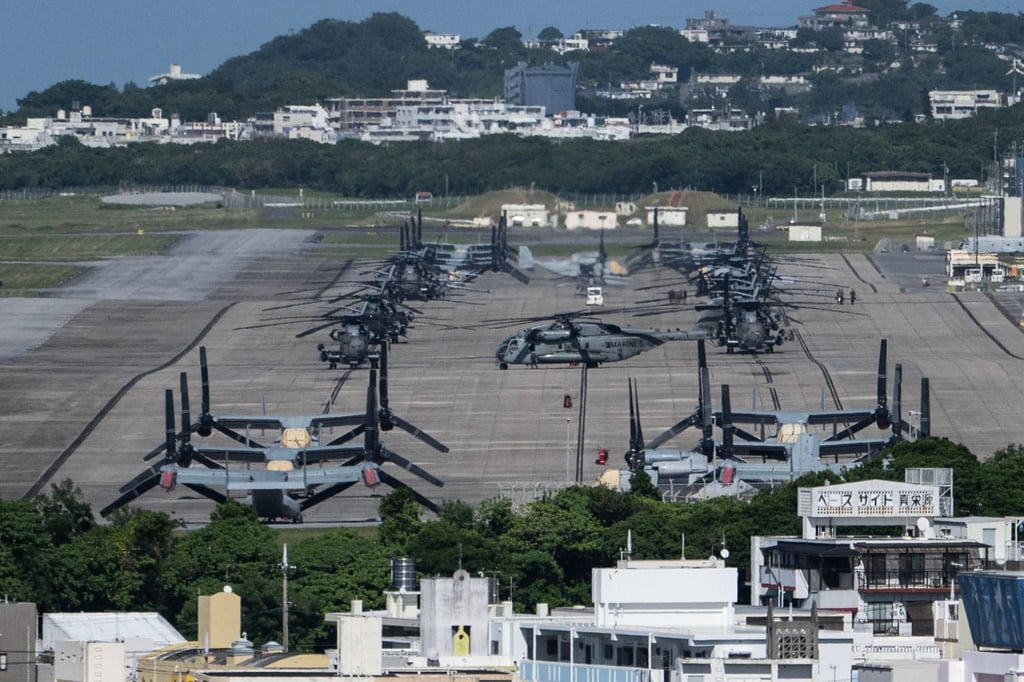
For Newsham, these challenges reflect decades of assuming relatively unrestricted access to East Asia, leaving the US military with logistical shortcomings. Although he considered smaller, mobile formations sensible, “the concept was developed and implementation begun before the logistics part of the plan was fully worked out”.
The marines were now “figuring out [quickly]” how to supply dispersed units, which would also require communications equipment and the capability to evacuate casualties. Ongoing preparations include pre-positioning ammunition and equipment in concealed locations and arranging local sourcing.
With sufficient preparation, Newsham said forward-deployed marines could “probably fight for 75 days” – although 150 days would be better.
Beyond sustaining these units, the marines would also have to move frequently enough to avoid Chinese surveillance and strikes.
“A stand-in force conceived primarily as static sensing nodes or fixed missile batteries will fail,” Mitchell wrote.
During October’s joint US-Japan Keen Sword exercise, the two allies rehearsed such movements, with Japanese military aircraft transporting Marine Corps anti-ship missile and air defence systems to the southwestern islands.
In June, the marines used Philippine vessels to move equipment between islands in the northern Philippines.
But these exercises did not establish whether marines could repeatedly relocate and resupply under Chinese attack, given limited dedicated transport capabilities.
Newsham said the marines were “steadily improving” their ability to relocate while maintaining a “low-signature” presence. But to move “as fast and often as they would like”, they needed more ships, boats, aircraft and ground vehicles, including civilian assets.
02:53
US midterm elections: What the results mean for mainland China, Taiwan and foreign policy
To improve inter-island mobility, the US Navy is developing landing ships to transport marines, equipment and supplies, with the first vessel expected in late 2029 or 2030.
Greater mobility, however, would not necessarily guarantee concealment. Newsham said local civilians, including Chinese nationals, could report marine positions and undermine efforts to remain undetected.
Moreover, Matsuoka said troop movements could expose units through identifiable routes, communications and supporting infrastructure. Exercises could improve coordination, she noted, but could not fully replicate disruption caused by missile attacks, cyber operations and damaged civilian facilities.
People’s Liberation Army strikes on ports, fuel stores and communications networks could also substantially reduce the marines’ operational effectiveness without destroying their missile batteries.
KioskNews shows a cleaned-up reading view extracted from the publisher’s page — the original always lives on their site, not ours.