Arpita Singh: A personal tribute by Anju Dodiya
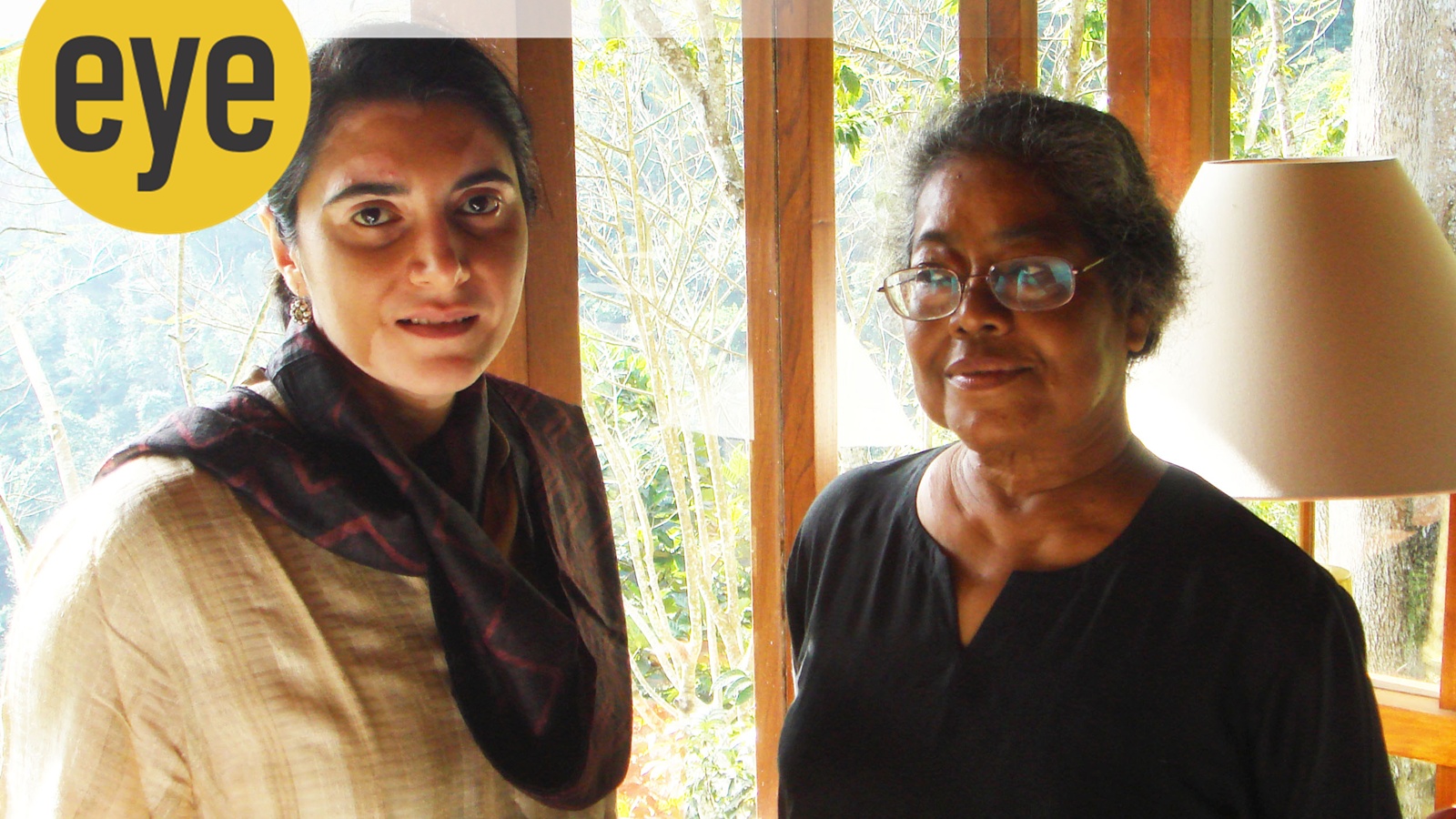
An astounding painting of two vultures and two semi-clad women, another with a multitude of black-suited men bustling about crisscrossing yellow city roads, come to mind when I recall Arpita Singh’s images. However, let me tell you about another painting very close to my heart.
It is a palm-sized watercolour of a large-eyed woman with long black hair framing her face, arms crossed, sitting at a table with three fluffy clouds. In Arpita’s ouvre, it is only a little drawing done between major paintings of bodies, cities, women, goddesses, vast oceans and cloud-filled skies. But to my 25-year-old artist self it was an inspiriting bounty.
It happened in 1989. Atul and I were at an art opening of Krishen Khanna at a new space in Connaught Place, New Delhi. There, I met Arpita for the first time. In a shy fangirl moment I went up to her and told her that I loved her work. I had seen her early black-and-white abstract drawings with their painterly mark-making and some more recent colourful watercolours.
I asked her if Atul and I could do a studio visit in the next few days. Publications of contemporary Indian artists were rare in those days and with no Internet yet, one felt a great gaping hunger to see art that one cared for. Her immediate response was, “Sure, just come along with us. Stay overnight and then see the paintings in the morning light.” I was stunned and delighted by her spontaneous generosity.
After spending a night on their living room couch, we woke up to breakfast and studio stories with Paramjit (her artist husband) and their daughter Anjum. We saw Arpita’s beautiful paintings and a bed that she had painted for Anjum.
In my memory, the family, and that home held a golden light, red pillows and many stories of neighbours and pets. This was the Arpita who would later go on to paint specific portraits of friends into a narrative of invented myth. There would be soldiers painted like lotus flowers, sari-clad angels and maps like apocalyptic mazes. Her irreverence would grow fiercer and her paintings would gain a weighted physical beauty.
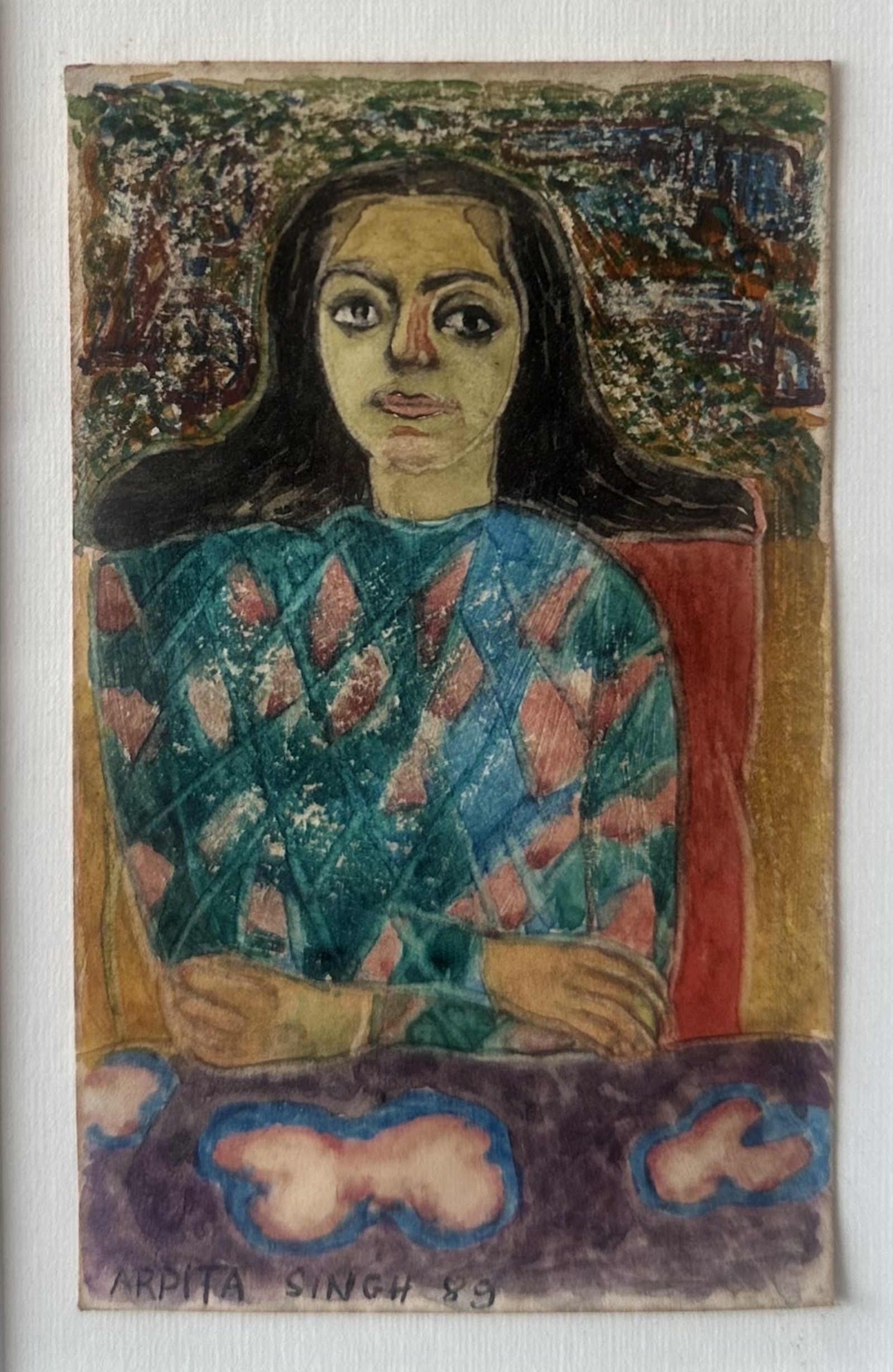 The watercolour Arpita gave Anju
Going back to that morning, while saying our goodbyes she gifted me that little watercolour. “This is for you.” To this day, I treat it like a significant medal and her words as a benevolent pointer that I must keep painting.
Story continues below this ad
Over the years, we became closer and there followed many warm, laughter-filled dinners over conversations about ‘characters’ that we knew and her witty observations about art and life. Her love of fiction obviously enlivened a lot of stories she told, at the dining table and at the easel.
In these last years, we exchanged WhatsApp messages, that were sometimes just very expressive, crazy emojis . I understood that she took the idea of freedom to a height where she refused to be bogged down by a conversation or a serious question if it was not of her interest. She was curious and engaged with the politics and people of her time, yet she shrugged off the idea of intellectual declarations.
Her paintings were the powerful declarations. Her playfulness was her right. And always, it was her joyous identity.
KioskNews shows a cleaned-up reading view extracted from the publisher’s page — the original always lives on their site, not ours.