NEA tracking haze hotspots and sources as earlier investigations under Transboundary Haze Pollution Act continue
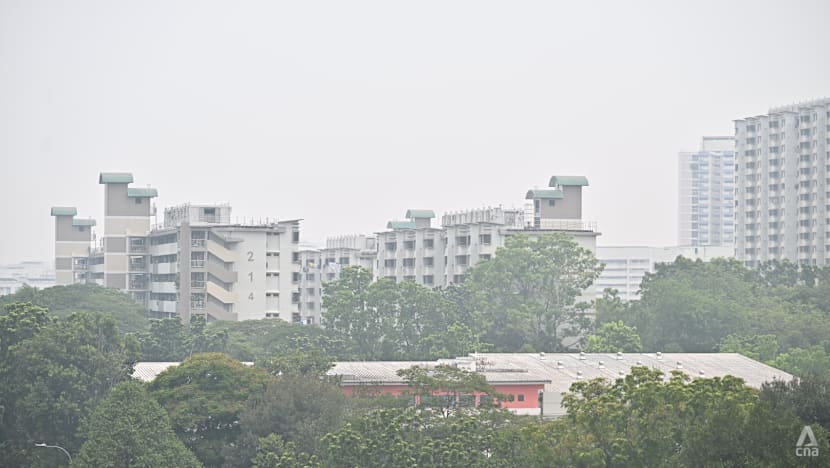
SINGAPORE: The National Environment Agency (NEA) said on Monday (Oct 12) that it is "closely monitoring" the haze situation and gathering information on fire hotspots, their sources and their impact on air quality here.
The agency was responding to CNA's queries on whether action would be taken under Singapore's Transboundary Haze Pollution Act amid the ongoing haze.
NEA did not specify whether it was considering taking action under the law in relation to the current haze situation.
It said that in 2015, it identified fires on concession lands associated with six companies and issued legal notices to all six under the Act.
Investigations into four of the Indonesian companies – PT Bumi Andalas Permai, PT Bumi Mekar Hijau, PT Sebangun Bumi Andalas Woods Industries and PT Rimba Hutani Mas – remain ongoing, NEA said on Monday.
"As such, NEA is unable to disclose further details," it added.
WHAT IS THE TRANSBOUNDARY HAZE POLLUTION ACT?
Singapore periodically experiences severe haze caused by forest and peatland fires in neighbouring countries.
The Transboundary Haze Pollution Act, which came into force in September 2014, allows authorities to take legal action against companies responsible for causing or contributing to haze pollution in Singapore, even if their activities take place overseas.
Under the Act, a poor air quality episode occurs when the 24-hour Pollutant Standards Index (PSI) for PM2.5 reaches 101 or higher in any part of Singapore, and remains at or above that level in the same or another part of Singapore for the next 24 hours or longer.
The 24h PSI reported by NEA has been in the unhealthy range in at least one region in Singapore since Oct 5.
However, meeting the air quality threshold alone does not automatically establish liability under the Act. Authorities must also establish that an entity caused or contributed to haze pollution in Singapore.
Companies found guilty of causing or contributing to transboundary haze pollution can be fined up to S$100,000 (US$78,100) a day, capped at S$2 million.
The law applies to entities operating both within and outside Singapore, including those that condone activities resulting in haze pollution here.
It also empowers authorities to issue preventive measures notices requiring companies to take steps to prevent, reduce or control haze pollution.
Individuals and businesses in Singapore can also pursue civil claims against responsible entities for personal injury, property damage or economic losses arising from haze pollution.
However, enforcement can be challenging, particularly when identifying the companies responsible for fires overseas and obtaining evidence across national borders.
Since the Act was enacted, no one has been fined or sued.
Singapore previously invoked the Transboundary Haze Pollution Act following the severe haze episode in 2015.
NEA identified fires on concession lands associated with six Indonesian companies and issued legal notices to them under the Act.
Investigations into two of the companies were subsequently closed after NEA accepted their explanations that they were no longer associated with the affected land when the fires occurred.
Investigations into the remaining four companies are still ongoing, more than a decade after the 2015 haze episode.
KioskNews shows a cleaned-up reading view extracted from the publisher’s page — the original always lives on their site, not ours.