6 Best Detective Movies Released Since 2000, Ranked
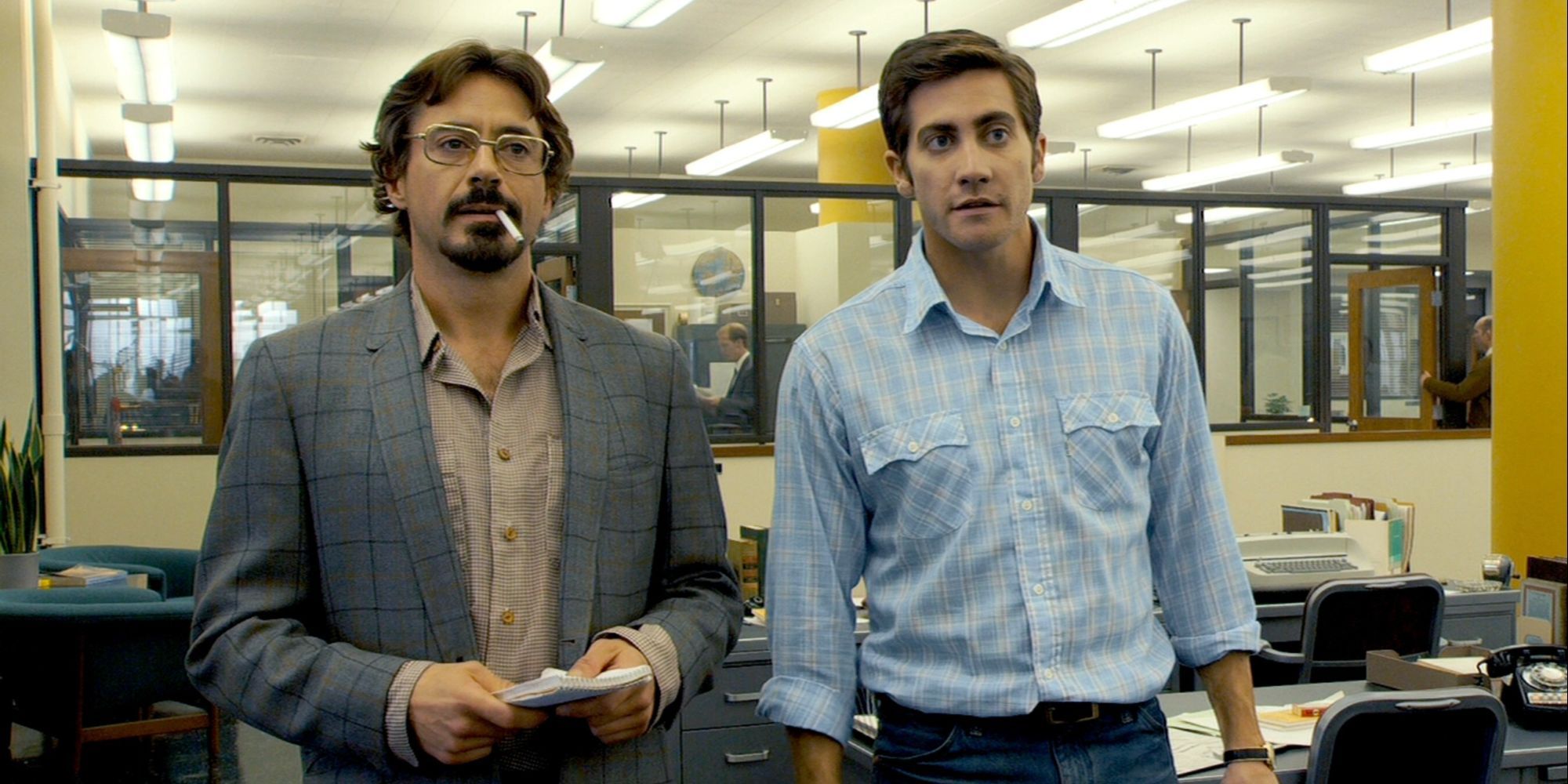
Detective movies become really addictive when solving the case stops looking heroic and shows people actual scenarios and how unhinged the depths can be. The best investigators miss things. They become obsessed with the wrong detail. They bring the case home, ruin relationships over it, stare at evidence until it stops resembling evidence, and sometimes discover that finding the truth will not repair a single thing. Give me that over a genius announcing the answer in a drawing room every time.
What I love about these six is how differently they treat the act of looking. One detective is barely staying awake. Another discovers that morality and legality have quietly separated. Let me explain how the following six films are best detective movies released since the year 2000.
6 'Insomnia' (2002)

Insomnia sends veteran Los Angeles detective Will Dormer (Al Pacino) to an Alaskan town where a teenage girl has been murdered. During a fog-shrouded pursuit of the suspect, Dormer accidentally shoots his partner and then hides what happened, only to discover that the killer witnessed the shooting and now has leverage over the man investigating him.
That setup is vicious. The endless daylight makes the movie stick even strongly. Dormer cannot sleep. The motel curtains never seem thick enough. His judgment deteriorates while Walter Finch (Robin Williams) keeps calling him with this horrible, calm intimacy, almost like they are colleagues discussing a shared inconvenience. Christopher Nolan directed the film, and he turns exhaustion into moral pressure beautifully here. Dormer is supposed to be separating truth from lies while becoming increasingly dependent on his own. By the time he is chasing Finch across floating logs, the case and the cover-up have fused so completely that solving one means destroying the other.
5 'Gone Baby Gone' (2007)

A four-year-old girl disappears from a working-class Boston neighborhood in Gone Baby Gone, and private investigators Patrick Kenzie (Casey Affleck) and Angie Gennaro (Michelle Monaghan) are hired by the child’s family after the police investigation stalls. Patrick knows the neighborhood, knows how people there talk when police are listening, and initially believes that familiarity gives him an advantage. Then the movie asks him a question no detective training can solve.
Ben Affleck directed the film, and what he gets exactly right is that discovering what happened to Amanda is only half the nightmare. The harder part is deciding what “saving” her actually means. Patrick eventually reaches a point where the law, his conscience, Angie, and the child’s likely future are pulling in different directions. I have changed my mind about his final decision more than once over the years, which is exactly why the ending works. The case closes. The argument does not.
4 'Prisoners' (2013)
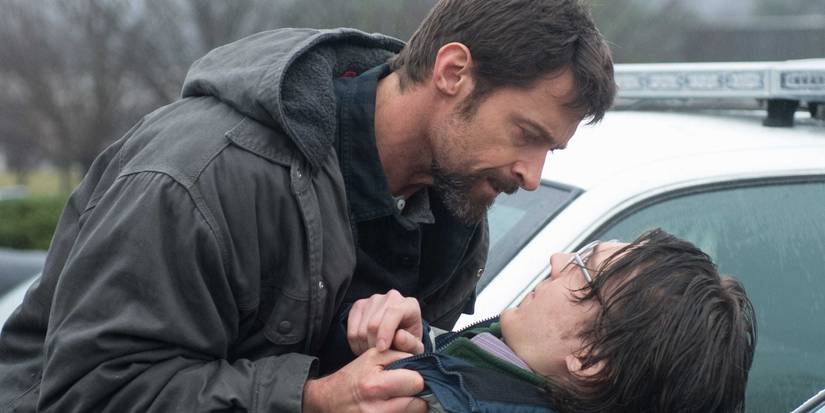
Prisoners begins when two young girls vanish on Thanksgiving and Detective Loki (Jake Gyllenhaal) takes the case while one of the fathers, Keller Dover (Hugh Jackman), decides the police are moving too slowly and abducts the mentally impaired man he believes is responsible. From there, the movie splits into two investigations: one official, one driven by a parent becoming capable of things he would once have considered monstrous.
I could watch Loki think for hours. Gyllenhaal gives him that nervous blink, the tattoos, the buttoned-up shirts, the sense that he has solved ugly cases before and expects this one to surrender eventually. It refuses. A maze pendant appears. A suspect kills himself during interrogation. A priest has a corpse hidden in his basement. Every clue seems to belong to a different nightmare. The film was helmed by Denis Villeneuve and he keeps the atmosphere so heavy that even daylight feels contaminated. Keller gets louder as he loses control. Loki gets quieter. They are both hunting the same truth from opposite ends, and neither understands how close they repeatedly come to it.
Collider Exclusive · Villain Personality Quiz Which Criminal Mastermind Would Be Your Nemesis? Lecter · Joker · Moriarty · Chigurh
Four of the finest criminal minds ever put on screen. One of them would look at you and see something worth their time. Eight questions decide which one comes for you, why they picked you, and what they would want when they arrived.
🍷Lecter
🃏Joker
♟️Moriarty
🪙Chigurh
01
What would a criminal mastermind notice about you first? Great villains choose their opponents carefully. Something about you got their attention.
02
How do they make first contact? The introduction tells you everything about what is coming next.
03
What do you actually believe about right and wrong? Every nemesis is really an argument about the thing you believe most.
04
What finally gets under your skin? Everybody has a pressure point. Finding yours is the whole plan.
05
They have made their move. How do you fight back? This is the part of the film where the audience finds out who you are.
06
What would they use against you? A good villain never brings a weapon you have not already handed them.
07
What do they actually want from you? The money is never the point. Something else always is.
08
How does it end between the two of you? Eight questions in, this is the one that decides who comes for you.
The Case File Is Complete Your Nemesis Is…
Four criminal masterminds. One of them was always going to be yours. Here is who comes for you, why they picked you out of everyone available, and what they want from the encounter.
Hannibal Lecter
Your nemesis does not want to beat you. He wants to know you completely, and he is patient enough to wait for it. The frightening part is how good the conversation is.
- Lecter is the most dangerous kind of opponent: the one who finds you interesting. He never raises his voice, because he has never needed to.
- You keep a great deal to yourself and you are careful about what you show. That reserve is exactly the door he would knock on.
- The films understood something other thrillers missed. The horror is not the violence. It is being perfectly understood by the wrong person.
- He would be unfailingly polite about all of it. That is the worst part.
The Joker
Your nemesis is not after money, territory or revenge. He is after a demonstration, and you are the person he has chosen to prove his point on.
- The Joker only picks opponents who believe in something. Your decency is not a defence against him. It is the entire reason he showed up.
- He has no plan you can predict and nothing you can take away, which removes every tool you would normally reach for.
- His whole argument is that you are one bad day away from being him, and you would spend the rest of your life proving him wrong.
- He would call it a magic trick. You would call it the worst night of your life.
Moriarty
Your nemesis respects you, which sounds flattering until you work out what it means. He chose you because nobody else was worth his time.
- Moriarty is the original criminal mastermind, the template every later one borrows from: a mind the equal of the hero's, pointed the wrong way.
- You enjoy being the cleverest person in the room. He is counting on exactly that, and he has already built the room.
- This is the rare nemesis who would be genuinely disappointed if you lost badly. He needs the game to be worth playing.
- It ends the way these things always end. Two people, one problem, and only one way down.
Anton Chigurh
Your nemesis has no personal interest in you whatsoever, and that is precisely what makes him unsurvivable. You are not a rival. You are a stop on the way.
- Chigurh does not negotiate, gloat or explain. He arrives, he asks one question, and the answer was decided long before you opened your mouth.
- You trust yourself to handle things. He is the one problem in the world that has no interest in how capable you are.
- No Country for Old Men rewrote the screen villain by removing the thing audiences quietly rely on: the sense that talking might work.
- Call it. He will wait.
3 'Knives Out' (2019)

Harlan Thrombey (Christopher Plummer), a wealthy mystery novelist, is found dead after his 85th birthday party, and Knives Out brings private detective Benoit Blanc (Daniel Craig) into a house full of relatives who all insist they loved Harlan while immediately revealing excellent reasons to have wanted him dead. Marta Cabrera (Ana de Armas), Harlan’s nurse, appears to be the one person Blanc can trust, especially because lying literally makes her vomit. And then the movie does something I adore: it appears to tell us what happened absurdly early.
That should kill the mystery. Instead, it changes what mystery we are watching. Rian Johnson directed the film, and he has enormous fun turning the whodunit inside out while keeping the emotional center with Marta rather than the rich family orbiting Harlan’s money. Blanc is entertaining because he notices everything, but his best quality is patience. He lets arrogance expose itself. He lets people underestimate Marta. And when the final explanation arrives, the satisfaction comes less from “Aha, I guessed it” than watching an entire family realize the person they treated as furniture has been standing at the center of the story all along.
2 'Zodiac' (2007)
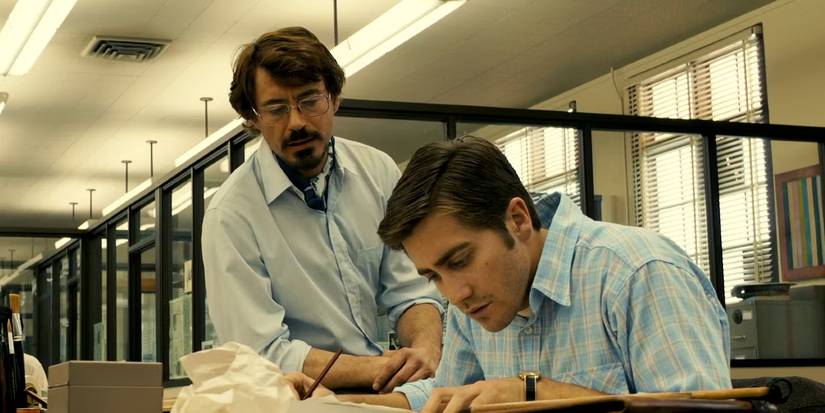
Zodiac follows several men consumed by the real Zodiac killings that terrorized Northern California in the late 1960s and 1970s, particularly cartoonist Robert Graysmith (Jake Gyllenhaal), crime reporter Paul Avery (Robert Downey Jr.), and Inspector Dave Toschi (Mark Ruffalo). The killer sends coded letters to newspapers, claims responsibility for murders, taunts investigators, and then creates the most frustrating condition a detective story can offer: too much information without enough proof.
The basement scene still makes my skin crawl. Graysmith visits a man while chasing handwriting connected to a movie poster, learns that the person who supposedly wrote it may not exist, and then hears footsteps upstairs after being told nobody else is home. Nothing spectacular happens. That is why it is unbearable. David Fincher directed the film, and he understands obsession well enough to make paperwork feel dangerous. Dates, handwriting samples, phone calls, jurisdictions, witness descriptions — Graysmith keeps arranging fragments because he cannot accept that reality may refuse to produce a courtroom-ready answer. The film does not reward obsession with a clean victory. It shows what years of needing one can do to a person.
1 'Memories of Murder' (2003)

Bong Joon Ho’s Memories of Murder follows detectives Park Doo-man (Song Kang-ho) and Seo Tae-yoon (Kim Sang-kyung) investigating a series of rapes and murders of women in rural South Korea during the 1980s. Park trusts instinct, intimidation, and whichever suspect happens to fit the story that day. Seo arrives from Seoul believing evidence and proper procedure will solve what incompetence cannot. The case slowly humiliates both philosophies. There is a moment late in the film when Seo, the rational detective, is so destroyed by the investigation that he is ready to shoot a suspect despite evidence no longer supporting his certainty. Park has to stop him. Earlier in the movie, Park was the reckless one. That reversal says everything.
Years later, Park returns to the drainage ditch where one victim was found. A little girl tells him another man recently stood there looking at the same spot and said he had done something there long ago. Park asks what the man looked like. “Ordinary,” she tells him. Then Park looks directly toward us. No revelation. No triumphant arrest. Just the sickening possibility that the killer was never remarkable enough to look like a monster. For a detective movie, I cannot think of a more haunting final answer than no answer at all. I cannot put anything above it.

Memories of Murder
- Release Date
- May 2, 2003
- Runtime
- 132 Minutes
- Director
- Bong Joon Ho
- Writers
- Bong Joon Ho, Kwang-rim Kim, Sung-bo Shim
KioskNews shows a cleaned-up reading view extracted from the publisher’s page — the original always lives on their site, not ours.