Preppers used to be ridiculed – but we’re all stockpiling now | Zoe Williams
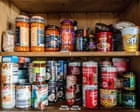
There is no national food stockpile and there hasn’t been since it was wound up in the 1990s. It feels like a metaphor for the delusions of that era: nothing bad can possibly happen again; no two countries with a McDonald’s have gone to war with each other (according to the journalist Thomas L Friedman, also in the 90s). Now, we all have a McDonald’s and wars regularly disrupt food supplies. The problem with metaphors is you can’t eat them – not even satisfying ones.
For people who remember the second world war, or feel as if they do, there is always enough muscle memory to do topical household stockpiling. My mum kept a trunk of food that was mainly filled with condensed milk in case of a nuclear war, all the way through the 80s. When the Berlin Wall came down, we should have had a ceremonial toffee-sauce-making event where we ate it all, but we didn’t; in 1990, she was stockpiling again, to mark the Gulf war.
The spectre of Y2K saw a large amount of bottled water enter the house, but by then I’d left home. When 9/11 happened, the water had gone off, but it was still fine for washing, apparently, so all she needed was a load of new water – and all that remained for the wider family was to call her mad and occasionally steal her anchovies.
The 2008 financial crash may have brought almost 20 years of roiling turmoil to the world, but the period spent wondering whether the cash would stop coming out of the wall was only a couple of days, during which if you had got your arse into gear enough to buy beans, you would have been considered hysterical. It would be dispiriting to go through all the events since that have made stockpiling seem like a good idea and impossible to pinpoint the date on which having a three-day food stash went from “crazy prepper idea from someone who probably also keeps a crossbow” to “something any sensible person who reads the news and listens to the authorities would do”.
The UK government’s resilience campaign, urging households to prepare for threats unknown, doesn’t feel like an overreaction. But nor does it feel realistic.
A record number of households – one in eight, or one in six with children – experience food insecurity already, which is to say can’t be sure they have enough even without external events. The range of possible disasters is so wide that it’s hard to consider them practically without freaking out: are we planning for crop failures in the UK or for the collapse of the global food supply, which would mean us relying on our own crops? Are we anticipating a hostile foreign act such as a cyber-attack, or something more meat-world?
Power outages, extreme weather, floods – they all seem possible, but none of them seem as if they’d be over in three days. You can see that having a torch would be better than no torch, but a stash of tinned pineapple wouldn’t meet the moment. The advice is to have three litres of drinking water a day for each person, but can you seriously imagine having that and not sharing it? There is no household solution that doesn’t hinge on the emergency being very short-lived and a collective response being ready to go within only a few hours. The more you think about emergencies, though, the less likely they seem to be short-lived. The chance of inoculating yourself household by household seems vanishingly small.
The essence of old-school prepping – the reason people who did it were mocked and viewed with suspicion – was that it was implicitly off-grid, or rather planning for a world without a grid and without meaningful order. The modern preppers’ problem is that stockpiling for your own household – even having a workable first aid kit and some non-perishables – feels ridiculous unless you believe there’s a bigger plan under way. The government has the unenviable task of asking us to trust the future less while trusting its authority more. It’s enough to make you want to do something helpful – more helpful, even, than buying a gigantic bag of rice.
KioskNews shows a cleaned-up reading view extracted from the publisher’s page — the original always lives on their site, not ours.