Fantasy Baseball Free Agency Update: Cubs take a big swing with Japanese star Teruaki Sato
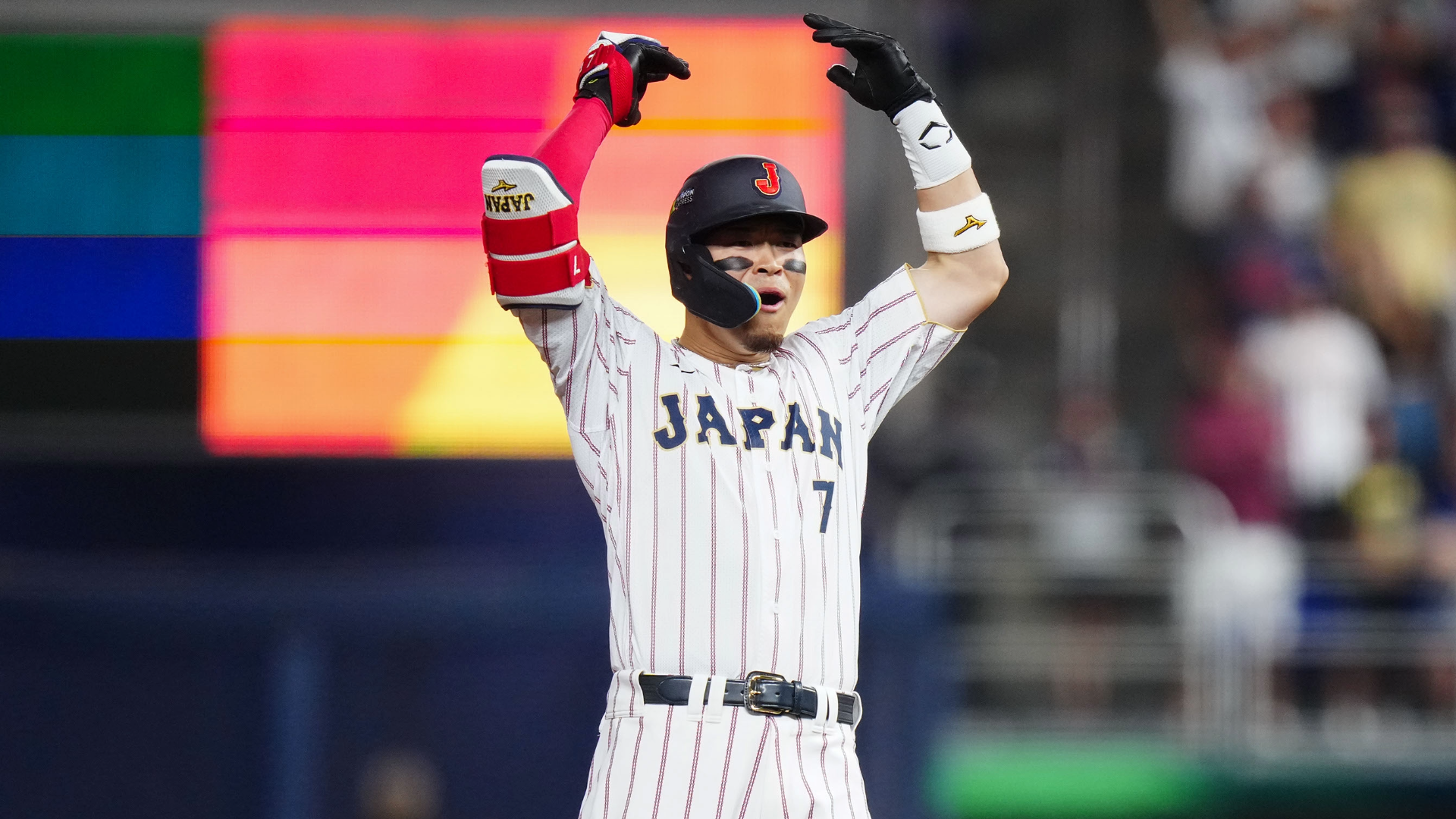
The 2026 NPB Triple Crown winner brings elite power to replace Seiya Suzuki, but high strikeout and chase rates present real risk for fantasy managers

• 5 min read
The hot stove has been heating up in a big way prior to the Thanksgiving holiday, and the Cubs have been at the forefront. Late Monday, they signed Trevor Rogers to a six-figure deal, and then they woke up Tuesday and added Teruaki Sato for a six-figure deal of his own.
Sato joins the Cubs after a standout career with the Hanshin Tigers in Japan. He won the 2025 Central League MVP and is widely expected to win his second in a row after winning the Triple Crown in 2026. The Cubs are, for all intents and purposes, swapping out Seiya Suzuki for Sato. Suzuki hasn't signed yet and will likely command a higher average salary than Sato's $20 million per year, but the $120 million total figure seems likely to end up around where Suzuki settles. Sato also seems all but assured to slot into one of the corner outfield spots recently left vacant by Suzuki and Ian Happ's free agency.
But can Sato be as good as Suzuki? The upside is there, but the Cubs are taking on quite a bit of risk in this swap, especially for a team with a payroll pushing $200 million with designs on contending in 2027. Sato has plus raw power and is coming off consecutive seasons with 79 combined homers, including a Central League Triple Crown in 2026, where he hit .306 with 39 homers and 106 RBI for Hanshin. As a replacement for Suzuki, who hit .270/.368/.473 with 26 homers in 2026, Sato fits the bill.
But it's a risky bet for the Cubs. Suzuki has struck out around 25% of the time since reaching the majors, but he had never struck out more than 22.3% in Japan and was at 16.5% in his final season before joining the majors. By comparison, Sato struck out 27% of the time in his final two seasons and had a season with a strikeout rate of 38% earlier in his career. And while the Central League strikeout rate has risen from 20% in Suzuki's final season to 21.7% in Sato's, that doesn't come close to explaining the gap between the two there.
Of course, Suzuki isn't the only slugger to come over from Japan in recent years and find success in the majors. Last season saw both Kazuma Okamoto and Munetaka Murakami make an impact. Okamoto's case is pretty unique, both because he was a few years older than these other guys, and because he was a legitimately good contact hitter in Japan, something that was definitely not true of Murakami or Sato.
But Murakami feels like a pretty good comp for Sato in many ways. Let's compare what each did in their final two seasons in NPB:
G | PA | HR | R | RBI | SB | AVG | OBP | SLG | K% | BB% | |
Murakami | 199 | 834 | 55 | 116 | 133 | 14 | 0.252 | 0.379 | 0.524 | 29.26% | 16.43% |
Sato | 282 | 1211 | 79 | 183 | 208 | 18 | 0.292 | 0.364 | 0.594 | 27.00% | 10.32% |
Murakami was a bit of a more extreme player – his high points were arguably higher than Sato's, but so were his low points. Both struck out a lot, but they went about it in slightly different ways – Murakami had a lot of swing-and-miss in his game, but he also got himself into more two-strike counts because he was generally a more patient hitter. Sato attacks pitchers much more aggressively, which led to slightly lower strikeout rates, but overall similar swinging strike rates. You see this in Sato, who had just a 9.2% called strike rate in his final season in Japan, compared to an 11.7% rate for Murakami (and it was higher in previous seasons).
Add it all up, and Sato gets to his strikeouts in a different way. He's more aggressive, especially in the strike zone, which should lead to a lower strikeout rate than Murakami's. He wasn't on Okamoto's level as a contact hitter, but he didn't have the same massive holes in his swing Murakami did. Does that mean he's likely to avoid the strikeout issues that sank Murakami's second half of 2026?
Not necessarily. On Monday's episode of Fantasy Baseball Today, Frank Stampfl talked to Yuri Karasawa, who runs the excellent @yakyucosmo account on X.com that focuses on Japanese baseball, which you should definitely check out:
Karasawa talked about the Okamoto/Murakami/Sato trio, naturally, and one quote really jumped out to me:
"It's hard to nail down whether Sato represents a happy medium of the three or the worst profile of the three," Karasawa said. "He has the worst approach – his chase rate is significantly worse than those two."
If you make enough contact, an aggressive approach at the plate can certainly work – Salvador Perez has built his career around that. But you only have to look at someone like Jo Adell to see how a combination of chasing pitches out of the zone without making enough contact can wreck even a profile with legit plus power. Sato might have the right balance of selective aggression to make it all work, but given the jump in quality of competition he's about to face, it's a real risk.
It's a risk the Cubs are willing to take on to the tune of $120 million guaranteed, and they know a lot more about how Sato is likely to translate to the majors than I do. That kind of commitment is a strong signal that MLB teams believe in the talent – though not so big that they are certain he'll be a starter. If Sato is a slightly above-average hitter and a 2.5-WAR-per-season player for the life of the contract, the Cubs would probably take it; this is roughly average starter money on the free agent market at this point.
That's probably how we should view Sato. You can envision some high-end outcomes here – like that one good Jo Adell season! – but the median outcomes probably look more like a typical Jake Burger season, perhaps. There's value in that – Burger had 28 homers and 90 RBI last season, believe it or not – but it's not an especially exciting profile. And the poor plate discipline often leaves Burger with long stretches where he is utterly useless.
Sato could have that kind of all-or-nothing profile. He's almost certainly going to strike out much more often than the average hitter, so he'll likely have to hit for plus power to make it all work. But if he manages to keep the strikeout rate around 28%, you could see some outcomes that look like the good versions of Austin Riley, a similarly aggressive power hitter who was a borderline elite Fantasy player for a while.
What a lot of these comps show is that there is plenty of inherent volatility to this profile, but also some upside. Sato should be drafted more like a fourth outfielder or corner infielder (if he's eligible there, as he is on the NFBC platform) than someone you view as a centerpiece of your lineup. But if you can snag him after, say, the 175th pick in most drafts, he'll be worth the risk. I don't think it'll make much sense to draft Sato much higher than that, but he could very well be worth it.
KioskNews shows a cleaned-up reading view extracted from the publisher’s page — the original always lives on their site, not ours.