The 10 Best Horror Movies in Film History, Ranked

Diego Pineda has been a devout storyteller his whole life. He has self-published a fantasy novel and a book of short stories, and is actively working on publishing his second novel.
A lifelong fan of watching movies and talking about them endlessly, he writes reviews and analyses on his Instagram page dedicated to cinema, and occasionally on his blog. His favorite filmmakers are Andrei Tarkovsky and Charlie Chaplin. He loves modern Mexican cinema and thinks it's tragically underappreciated.
Other interests of Diego's include reading, gaming, roller coasters, writing reviews on his Letterboxd account (username: DPP_reviews), and going down rabbit holes of whatever topic he's interested in at any given point.
Sign in to your Collider account
Throughout history, the world has been treated to many a masterful horror movie. Even since before cinema became a true storytelling art form, filmmakers like Georges Méliès were already figuring out how effective this new medium could be at giving audiences a good scare. Moving into the 20th century and through the history of German Expressionism, horror started to really come into its own as a proper film genre.
We have come an awfully long way since then. From older, absolutely foundational classics, like Jaws; to much newer films that push the limits of what horror can do in the modern day, like Get Out, the best horror movies in film history are, indeed, the absolute pinnacle of what the genre has to offer. Some are downright horrifying, some may focus on other elements aside from horror, but one thing they all share is that they're undeniably brilliant.
10 'Get Out' (2017)
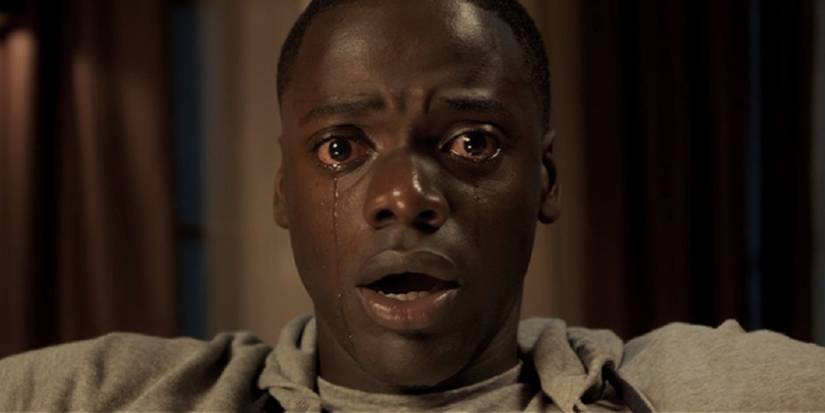
It's not without its detractors, but there are those who would argue that Jordan Peele's Get Out is the single greatest horror film of the 21st century so far, and for good reason. It's nothing short of a career-defining directorial triumph on Peele's part, which began a wave of comedians who have also proven to be exceptional horror filmmakers since 2017.
Get Out is one of the best psychological thrillers of the last 90 years, and though its sprinkles of dark humor may mean that it's not always focused on being absolutely terrifying, its scenes of pure horror are nothing if not effective. What really makes it special is how thematically nuanced it is, however, serving as a scathing critique of systemic racism, the dangers of performative white liberalism, and the commodification of Blackbodies.
9 'The Shining' (1980)

Many would still call Stanley Kubrick the greatest filmmaker in the history of cinema, but even setting all subjective superlatives aside, one thing remains objectively true: Though critics didn't particularly love it at the time of its release, The Shining is nowadays widely remembered as one of the most universally beloved horror films of all time.
The reasons why this is one of the best classic American horror movies are many, from Jack Nicholson and Shelley Duvall's powerhouse performances to Kubrick's powerfully moody and atmospheric direction. Though it doesn't stick particularly close to the Stephen King novel it's based on, it's just as brilliant for reasons that are all its own. Its meticulously crafted, wonderfully multilayered, and a testament to how scary ambiguity can be.
8 'Rosemary's Baby' (1968)
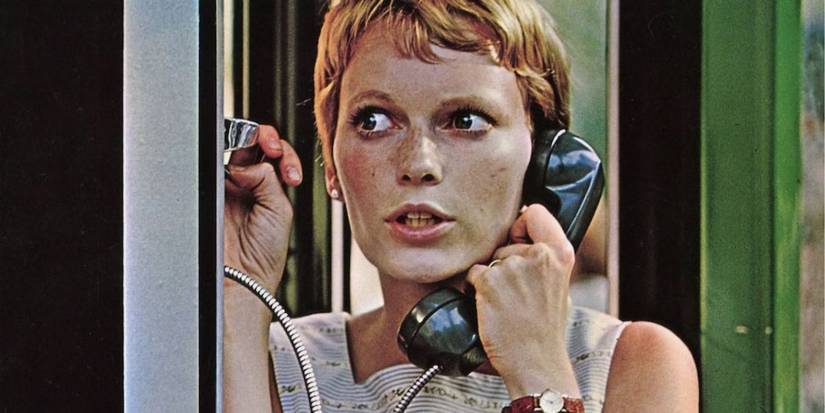
Closely based on Ira Levin's 1967 novel of the same name, Rosemary's Baby was allegedly first offered to Alfred Hitchcock; but after the Master of Suspense declined to direct the project, it fell onto the lap of Roman Polanski, who made it his Hollywood debut. It's still universally hailed as one of the most perfect horror movies ever made, and rightfully so.
Led by Mia Farrow at the absolute top of her game, Rosemary's Baby is not only a vehicle for one of the greatest acting performances in the history of horror cinema, but also a masterwork which proves that psychological realism can be just as effective as monsters and jump scares in creating an atmosphere of dread. It's a film all about atmosphere—and oh, how effectively chilling that atmosphere is.
7 'Cure' (1997)
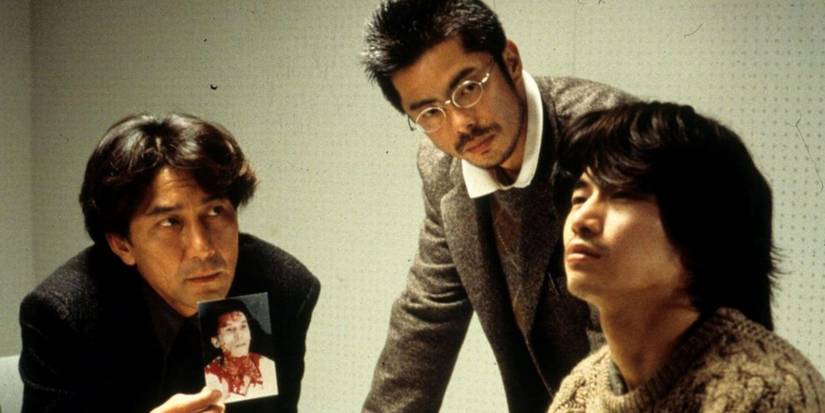
Watching news reports of criminal cases involving seemingly ordinary people, Japanese filmmaker Kiyoshi Kurosawa felt fascinated by the idea of whether everyday people—true everyday people, hiding no pre-existing monster within them—could be pushed to unimaginable violence. From this idea came Cure, which is now considered one of those thriller movies that are a masterclass in suspense.
It's an absolutely chilling portrait of the nature of evil, a thought-provoking and occasionally downright cruel psychological thriller that forces the viewer to confront the darkness and violence that lies deep within them. It's a mean, mean movie that is definitely not fit for every kind of cinephilic palate, but those who like their horror movies to be unforgettably brutal should consider it a must-see.
6 'The Thing' (1982)
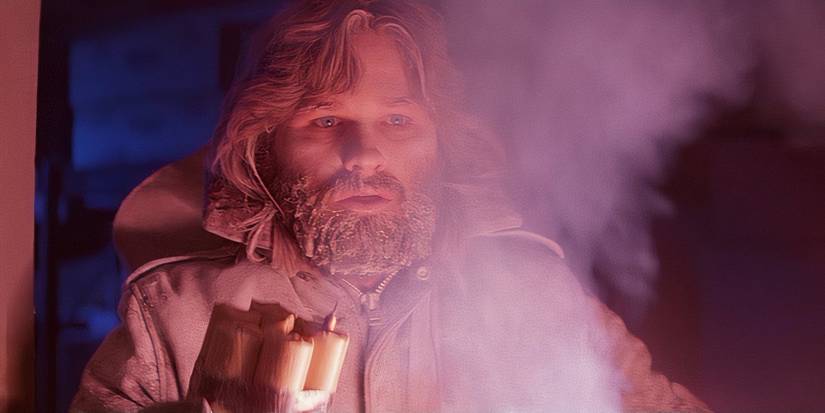
John W. Campbell Jr.'s sci-fi novella Who Goes There? had already been adapted for the big screen back in 1951, but the legendary John Carpenter (before he truly cemented himself as legendary) wanted to make a movie that was far more faithful to the source material. Out of this idea, The Thing was born. It was a critical and commercial flop upon release, but with time, it garnered a significant cult following.
Today, not only is this one of the biggest cult classics of the '80s, it's actually become as mainstream as sci-fi horror masterpieces come. One of the best sci-fi cult classic movies of all time, The Thing blends a suffocating sense of psychological dread with powerful thematic parallels with the paranoia that characterized the Cold War era in the United States. The practical effects still look phenomenal, the bleak story is still incredibly effective, and the ending is still among the best in horror film history.
Collider Exclusive · Horror Survival Quiz Which Horror Villain Do You Have the Best Chance of Surviving? Jason Voorhees · Michael Myers · Freddy Krueger · Pennywise · Chucky
Five killers. Five completely different ways to die — if you're not smart enough, fast enough, or self-aware enough to avoid it. Only one of them is the villain your particular set of instincts gives you a fighting chance against. Eight questions will figure out which one.
🏕️Jason
🔪Michael
💤Freddy
🎈Pennywise
🪆Chucky
01
Something feels wrong. You can't explain it — you just know. What do you do? First instincts are the difference between the survivor and the first act casualty.
02
Where are you most likely to find yourself when things go wrong? Setting is everything in horror. Where you are determines which rules apply.
03
What is your most reliable survival asset? Every survivor has a quality the villain didn't account for. What's yours?
04
What kind of fear is hardest for you to fight through? Knowing your weakness is the first step to not dying because of it.
05
You're with a group when things start going wrong. What's your role? Horror movies are brutally clear about who survives group situations and who doesn't.
06
What's the horror movie mistake you're most likely to make? Honest self-assessment is a survival skill. Denial is not.
07
What's your best weapon against something that can't be stopped by conventional means? Every horror villain has a weakness. The survivors are always the ones who find it.
08
It's the final scene. You're the last one standing. How did you make it? The final survivor always has a reason. What's yours?
Your Survival Odds Have Been Calculated Your Best Chance Is Against…
Your instincts, your strengths, and your particular way of thinking under pressure point to one villain you actually have a fighting chance against. Everyone else — good luck.
Jason Voorhees
Jason is relentless, but he is also predictable — and that is the gap you would exploit.
- He moves in straight lines toward his target. He doesn't strategise, doesn't adapt, doesn't outsmart. He simply pursues.
- Your ability to keep moving, use the environment, and resist the panic that freezes most victims gives you a genuine edge.
- The Crystal Lake survivors were always the ones who stopped running in circles and started thinking about terrain, water, and distance.
- You think like that. Which means Jason, for all his indestructibility, would face someone who simply refused to be where he expected.
Michael Myers
Michael watches before he moves. He is patient, methodical, and almost impossible to detect — until it's too late for anyone who isn't paying close enough attention.
- But you are paying attention. You notice the shape in the window, the car parked slightly wrong, the silence where there should be sound.
- Michael's power lies in the invisibility of ordinary suburbia — the fact that nothing ever looks wrong until it already is.
- Your spatial awareness and instinct to map every room, every exit, and every shadow before you need them is precisely the quality Laurie Strode had.
- You are not a victim waiting to happen. You are someone who already suspects something is wrong — and acts on it.
Freddy Krueger
Freddy wins by getting inside your head — using your own fears, your own memories, your own subconscious as weapons against you. That strategy requires a target who can be destabilised.
- You are harder to destabilise than most. You've faced uncomfortable truths about yourself and you haven't looked away.
- The survivors on Elm Street were always the ones who understood what was happening and chose to face it rather than flee from it.
- Freddy's greatest weakness is that his power evaporates in the presence of someone who refuses to give him the fear he feeds on.
- Your psychological resilience — the ability to stay grounded when reality itself becomes unreliable — is exactly the quality that keeps you alive here.
Pennywise
Pennywise is ancient, shapeshifting, and feeds on terror — but it has one critical vulnerability: it cannot function against someone who genuinely stops being afraid of it.
- The Losers Club didn't survive because they were braver than everyone else. They survived because they faced their fears together, and faced them honestly.
- You ask the questions others avoid. You look directly at what frightens you rather than turning away.
- That directness — the refusal to let fear fester in the dark — is Pennywise's worst nightmare.
- It chose the wrong target when it chose you. You are exactly the kind of person whose fear tastes like nothing at all.
Chucky
Chucky's greatest advantage is that nobody takes him seriously until it's already too late. He exploits the gap between how something looks and what it actually is.
- You don't have that gap. You take threats seriously regardless of how they present — and you never make the mistake of underestimating something because of its size or appearance.
- Chucky relies on surprise, on the delay between recognition and response. You close that delay faster than almost anyone.
- Your instinct to treat every unfamiliar thing with appropriate scepticism — rather than dismissing it because it seems absurd — is the exact quality that keeps you breathing.
- Against Chucky, not laughing is already winning. You are very good at not laughing.
5 'Alien' (1979)
Back in 1979, Ridley Scott completely revolutionized sci-fi horror with what many would still confidently call the best movie that the subgenre has ever delivered: Alien, one of the best sci-fi movies of all time. After working with screenwriter Dan O'Bannon on 1974's Dark Star, a film that featured an alien played for comedic effect, Carpenter was left wanting to make an alien-centric movie where the alien felt fully serious and real. The result couldn't have possibly been more successful.
Practically flawless, potently atmospheric, and fueled by some of the richest thematic subtext in the history of both horror and sci-fi, Alien really is about as close to perfect as a sci-fi horror classic could come. It's a slow-burning masterclass in quiet suspense, something akin to a haunted house in space. Add to that Sigourney Weaver's Ripley, one of the most iconic heroines in film history, and you get a foundational genre classic.
4 'The Silence of the Lambs' (1991)

Jonathan Demme's The Silence of the Lambs' status as a horror movie is not entirely undisputed, but this psychological thriller is so relentlessly bleak and so chillingly violent that history has come to widely accept it as one of horror's greatest masterpieces. Based on Thomas Harris' groundbreaking 1988 novel, it's one of only three movies that have won all Big Five Academy Awards (Best Picture, Director, Actor, Actress, and Screenplay), after It Happened One Night and One Flew Over the Cuckoo's Nest.
What's for horror cinema fans not to love about The Silence of the Lambs? Anthony Hopkins masterfully plays one of the best movie villains of all time, Jodie Foster plays one of the most compelling heroes of '90s thriller cinema, the writing is some of the greatest and most intellectually layered in the history of horror, and Demme's direction is absolutely masterful in virtually every sense imaginable.
3 'Jaws' (1975)
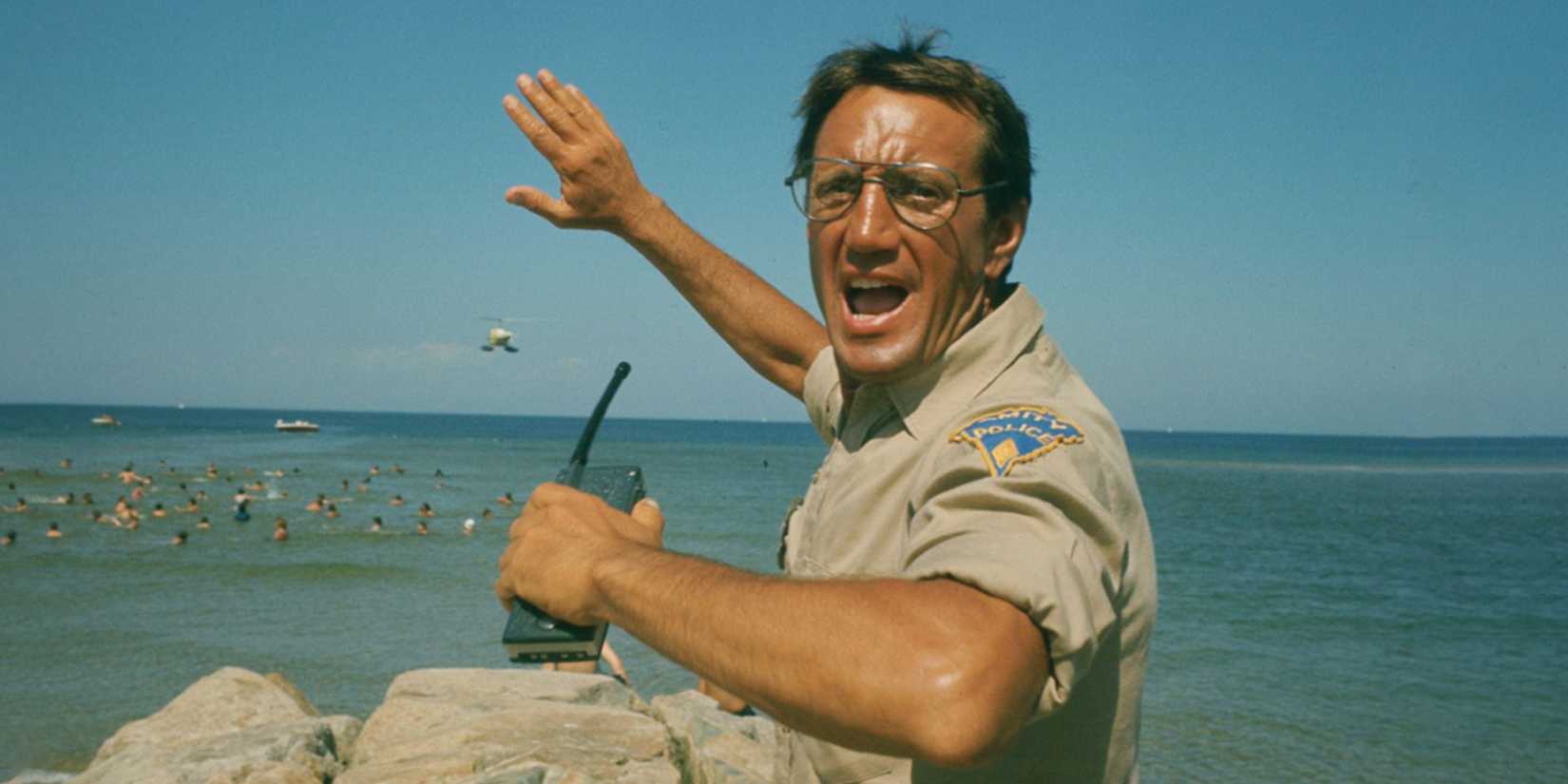
Jaws is another thriller whose status as a horror movie is not necessarily undisputed, but many film buffs and critics over the years have come to regard it as the survival horror masterpiece par excellence. One thing is certain: This Steven Spielberg masterpiece is widely regarded by film historians as the very first true blockbuster in film history, and that's more than enough to make it essential viewing.
One of those adventure movie masterpieces that became the blueprint for the genre going forward, Jaws is not only a testament to Spielberg's unparalleled quality as a master of commercial cinema of the highest quality, but also to the terrifying power of that which is not seen. Indeed, due to constant technical difficulties, Spielberg had to recur to only showing the mechanical shark briefly and very occasionally, which ended up making Jaws one of the biggest masterclasses in cinematic suspense.
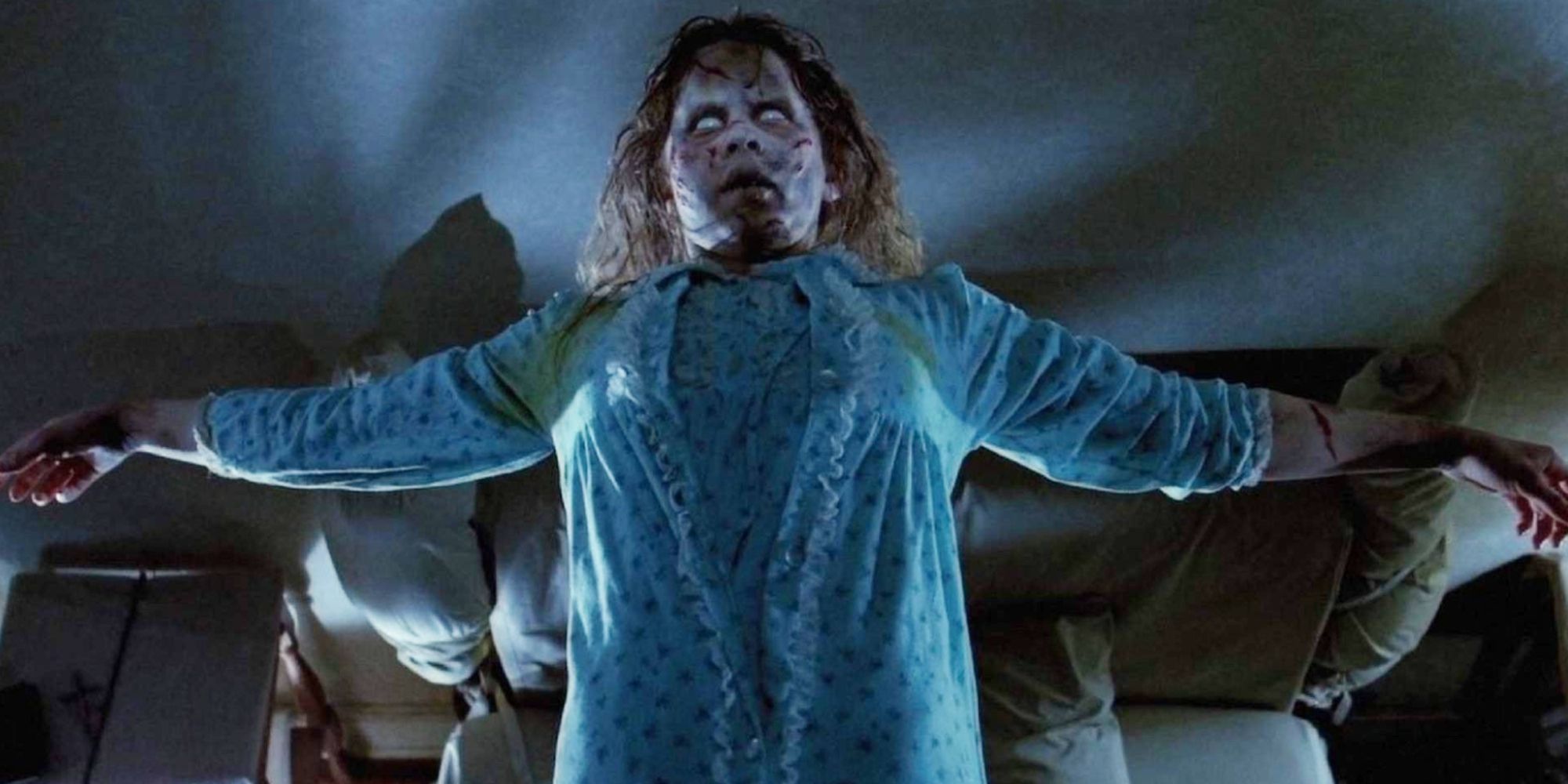
2 'The Exorcist' (1973)

Many people like to say that William Friedkin's The Exorcist is the scariest motion picture of all time, and by no means is that an empty compliment. The question of what the scariest movie ever made is ends up being entirely subjective at the end of the day, but if there is any level of objectivity in analyzing how horrifying a film is, then Friedkin's masterpiece is the closest thing we have to an objectively terrifying movie.
Based on the 1971 novel by William Peter Blatty, who penned the film's screenplay, The Exorcist is one of the most perfect horror movies based on books. Crafted with a sense of realism not often seen in faith-based horror movies, this was an utterly groundbreaking masterpiece at the time of its release, and continues to be among the most universally acclaimed and beloved horror movies of all time 53 years later.
1 'Psycho' (1960)

Alfred Hitchcock is generally regarded as the Master of Suspense, but even though thrillers were his playground throughout the vast majority of his career, he also dipped his toes into horror—most notably in 1960, when he made Psycho. Saying that this is one of the most influential thriller movies of all time would be an understatement. It may not be all that scary by modern standards, but Psycho is nevertheless one of the foundational masterpieces of modern horror for a reason.
It's true that much of Psycho's shock value and horror factor has worn out over the years, but it's still every bit as thrilling and jaw-droppingly bold today as it was back in 1960, right as Hollywood's Golden Age was coming to a close. Packed with memorable performances, transcendentally iconic scenes and set pieces, surprising twists, and other elements whose influence in horror can still be felt across the genre to this day, it's arguably the single best horror movie in film history.

Psycho
- Release Date
- June 22, 1960
- Runtime
- 109 minutes
- Director
- Alfred Hitchcock
- Writers
- Joseph Stefano
KioskNews shows a cleaned-up reading view extracted from the publisher’s page — the original always lives on their site, not ours.