The 10 Best Non-Fiction Books of All Time, Ranked

Jeremy has more than 2700 published articles on Collider to his name, and has been writing for the site since February 2022. He's an omnivore when it comes to his movie-watching diet, so will gladly watch and write about almost anything, from old Godzilla films to gangster flicks to samurai movies to classic musicals to the French New Wave to the MCU... well, maybe not the Disney+ shows.
His favorite directors include Martin Scorsese, Sergio Leone, Akira Kurosawa, Quentin Tarantino, Werner Herzog, John Woo, Bob Fosse, Fritz Lang, Guillermo del Toro, and Yoji Yamada. He's also very proud of the fact that he's seen every single Nicolas Cage movie released before 2022, even though doing so often felt like a tremendous waste of time. He's plagued by the question of whether or not The Room is genuinely terrible or some kind of accidental masterpiece, and has been for more than 12 years (and a similar number of viewings).
When he's not writing lists - and the occasional feature article - for Collider, he also likes to upload film reviews to his Letterboxd profile (username: Jeremy Urquhart) and Instagram account.
He has achieved his 2025 goal of reading all 13,467 novels written by Stephen King, and plans to spend the next year or two getting through the author's 82,756 short stories and 105,433 novellas.
Sign in to your Collider account
Plenty of books are fiction, and some genres are inevitably going to be bound to the world of fiction (see fantasy and science fiction). Then you’ve also got historical fiction books which might play out against real-world events, but focus on largely fictional characters. War and Peace is perhaps the best example, because the Napoleonic Wars were real, and so were some historical figures who show up throughout the novel, though most of the main characters were fictional.
Non-fiction goes a step further, focusing on things that really happened, and on the people who were actually involved. A work of non-fiction can still take some historical liberties if certain things aren’t known for sure, and then there’s also the matter of an author injecting style into the proceedings so it doesn’t just feel like you're reading a textbook. But non-fiction has to be mostly real, and feel largely real, with style adding things (a bit like how documentaries document reality, but can be incredibly creative in their presentation… and sometimes their editing). Anyway, it’s not too hard to understand what this kind of literary work involves, and the following titles really can count themselves among the best non-fiction books of all time.
10 'Vietnam: An Epic Tragedy' (2018)

The start of the Vietnam War is sometimes debated, or at least not as set in stone as the start years for both World Wars, but even if you consider its commencing year as being 1955, Vietnam: An Epic Tragedy still covers more time than “just” the Vietnam War. And yes, the U.S. involvement began later, but this book covers a longer span of time either way, beginning the year World War II ended, as the book’s full title suggests.
It goes really in-depth on top of being expansive, with over 800 pages here (therein does it live up to the word “Epic” in its title). Vietnam: An Epic Tragedy is also very heavy-going, though it has to be, with the conflict it covers and the expansiveness/destruction of it all, with 1945–1975 painted as a very tumultuous time for Vietnam, to say the least.
9 'The Right Stuff' (1979)

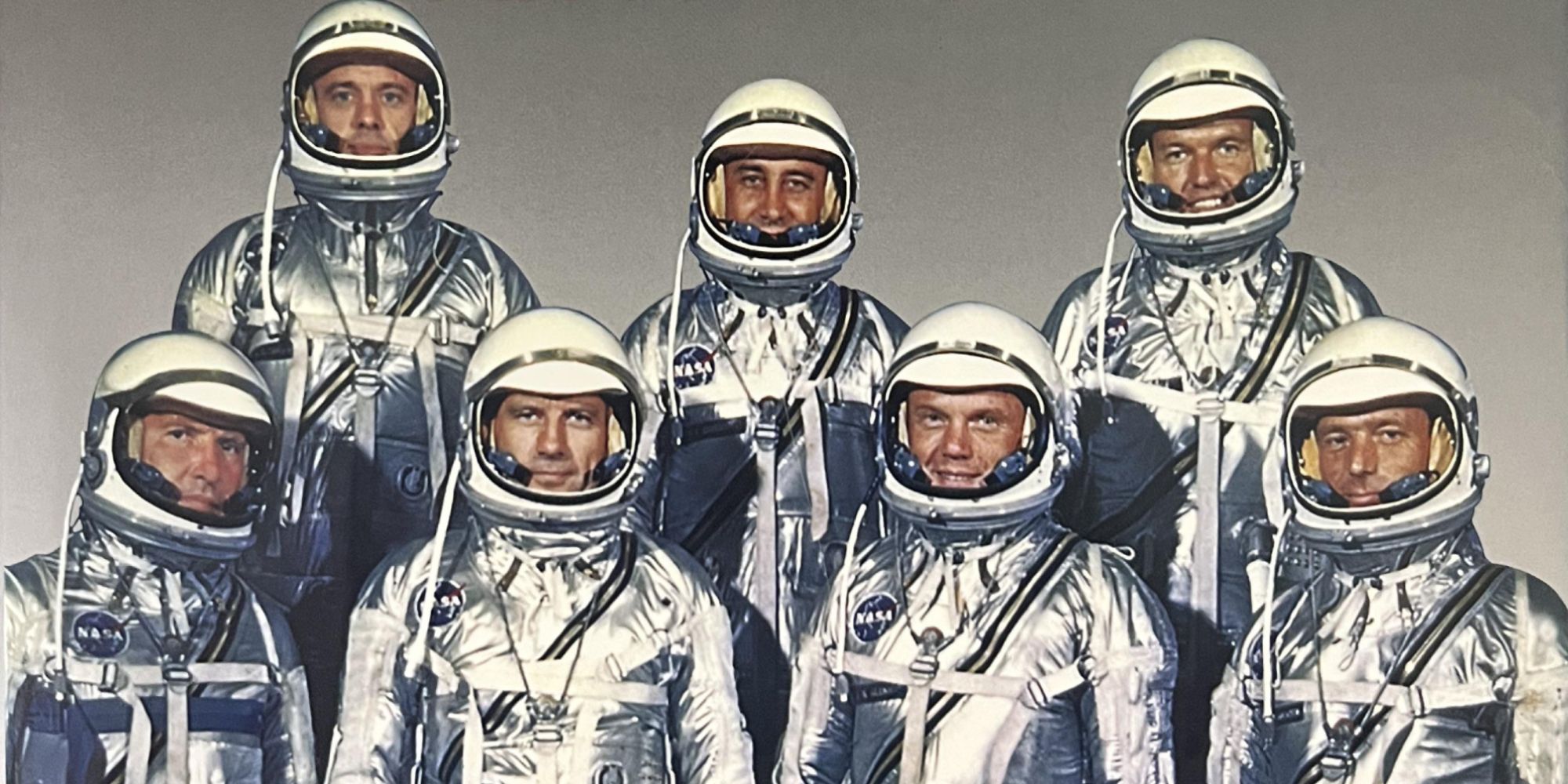
Compared to most of the other books here, The Right Stuff is breezy, albeit not without some intense moments here and there. It’s probably more accurate to call it emotionally varied, with some of it being humorous as a result. And it works, because the Space Race is a comparatively breezier subject, as far as non-fiction topics go (with so much non-fiction being about war, crime, or other more outwardly tragic events).
Tom Wolfe injects a good deal of personality into things, with the style here ensuring The Right Stuff stands out and does more than you might expect a book about aircraft and early space travel to be. Of course, if you're not a fan of his style, it’s not going to be the easiest of reads, but it’s worth at least giving a shot, in the likely event that you do dig the personality this book has.
8 'Schindler's Ark' (1982)

Schindler's Ark might not be as directly non-fiction as some other titles here, in the sense that not everything it covered was well-documented, and author Thomas Keneally acknowledged that some conversations between figures here had to be assumed or guessed. The core story, though, is based on an actual event, and the people here were real, too, with Schindler’s Ark being focused on Oskar Schindler and what he did to save more than 1000 Jewish lives during the Second World War.
It was adapted as Schindler’s List about a decade on from publication, and that movie is also excellent, but has somewhat unfairly eclipsed the source material. It’s one of those instances where both book and movie are worth experiencing, both for their own reasons and then for some shared reasons, too.
7 'A Night to Remember' (1955)

A book that’s almost entirely focused on the night the Titanic sank, A Night to Remember does not mess around or waste time. It can be read in a matter of hours, and that works well when the timeframe covered also spans a handful of hours, with just a little by way of an epilogue. It’s an easy read regarding its length and readability, but more difficult when you consider the intensity and tragedy of the whole event.
A Night to Remember felt comprehensive as a look at the Titanic’s sinking, though 1955 was a while ago, and certain facts have come to light since the wreck was discovered a little over three decades on from this book’s publication.
For its time, A Night to Remember felt comprehensive as a look at the Titanic’s sinking, though 1955 was a while ago, and certain facts have come to light since the wreck was discovered a little over three decades on from this book’s publication. There’s still merit here, as a no-nonsense book about the Titanic, though, and then it can, of course, also be appreciated as a historical document for its time.
6 'Man's Search for Meaning' (1946)

Like A Night to Remember, Man's Search for Meaning is surprisingly short and to the point for something that’s about quite a lot of things. Viktor E. Frankl is focused on what he wants to explore based on his personal experiences, though, with Man’s Search for Meaning decidedly not being a memoir or a detailed account of what he went through as a concentration camp prisoner during the Second World War.
Instead, Frankl’s book uses that event, and those experiences, to talk about psychology and therapy, since his profession was – and remained, post-World War II – a neurologist/psychiatrist more than an author. It’s hard to imagine anyone reading Man's Search for Meaning and not getting something out of it, as it’s all incredibly eye-opening and thought-provoking throughout the entirety of its relatively short page count.
5 'Reclaiming History: The Assassination of President John F. Kennedy' (2007)

There are whole series of books that took years to be published that can probably be read faster than Reclaiming History: The Assassination of President John F. Kennedy, which is like four or five decently lengthy books in one. Or maybe more. It’s about what you'd expect, based on the title, covering the assassination extensively before moving on to critiquing the various conspiracy theories that have sprung up regarding the event itself in the years/decades since.
And it’s beyond comprehensive, attempting to tackle everything across thousands of pages (at least 2500, if you take the footnotes into account, and these pages also have more words on them than you'd find from more “normally” formatted books). So, Reclaiming History is a challenging and almost too-dense read, but it’s admirable as one of the most ambitious books of all time. Honestly, it’s a contender for the crown of “most ambitious non-fiction book of all time,” too.
4 'Empire of Pain' (2021)

A 21st century release that spends a good deal of time on 20th-century history, Empire of Pain covers a handful of generations within the Sackler family, and continually builds toward the opioid epidemic, highlighting the role they played in that problem spiraling out of control the way it did. Everything’s well-researched and thoughtfully written, though, so it doesn’t feel purely like an attack, and it instead provides understanding (maybe some empathy for certain people, but plenty aren’t let off the hook overall).
And yes, as a 21st-century book, Empire of Pain is recent, and so throwing it in with some more established all-timers could be a bit eyebrow-raising, or it would be if the thing wasn’t written so well. This moves faster and surprises more often than a good many genuine thrillers, and alongside Say Nothing (2018), it helped establish Patrick Radden Keefe as one of the great non-fiction authors of the century so far.
3 'Wiseguy' (1985)
With some of the other books here, it goes without saying that they became movies, thanks to sharing titles, but it’s a bit difficult to know with Wiseguy, since that’s a fairly different title to Goodfellas. Between Wiseguy and Goodfellas there was also a TV show called Wiseguy (unrelated), so the change was made to the Martin Scorsese film’s title.
The main thing is that if you like Goodfellas, Wiseguy is also a must-read, just because it’s more Goodfellas, and feels easy to liken to something that’s almost like an extended cut of that famed gangster movie. Lots of that film’s great narration was taken straight from the book, and then on its own, it would also be a compelling read (in all likelihood), on account of it being so well-done as a piece of true crime literature.
2 'On Writing: A Memoir of the Craft' (2000)

Undeniably, Stephen King’s fiction is where you have to start, if you're new to his writing (for whatever reason), since that’s what he specializes in authoring, and that’s what he’s tackled for most of his career as a published writer. Also, it helps to be familiar with King’s best works before tackling On Writing: A Memoir of the Craft, since his approach to talking about some of his past work does involve him technically spoiling a few stories of his.
But also, come on, he’s Stephen King, so those spoilers are for stories you're likely familiar with, either from reading the source material or from any number of adaptations his works have had over the years. On Writing is just as great as some of his best works of horror (or any other genre), and it really does balance being a memoir, a look behind the scenes, and a book with tons of solid writing/self-discipline-related advice all at once.
1 'In Cold Blood' (1966)

There are already-mentioned books that came out before In Cold Blood, so to say that In Cold Blood invented non-fiction would be ridiculous, but it did arguably elevate this form of book. It’s very literary as well as well-researched, giving it a bit more artistic value than comparatively more dry non-fiction books, even to the extent that it can be compared to – and ranked alongside – more traditional novels, if you feel so inclined.
Also, In Cold Blood did a lot for true crime, as a sub-genre, and it handled that kind of thing better than so many books that likely took some influence from it in the decades since its release. In Cold Blood is In Cold Blood, and there doesn’t have to be a whole lot more said regarding why it’s reached the #1 spot here. It’s not a controversial take, and it is an undoubtedly exceptional book in just about every regard.

In Cold Blood
- Release Date
- December 15, 1967
- Runtime
- 134 Minutes
-

Robert Blake
Perry Smith
-
Richard Hickcock
-
John Forsythe
Alvin Dewey
-
Paul Stewart
Jensen
KioskNews shows a cleaned-up reading view extracted from the publisher’s page — the original always lives on their site, not ours.