How far can you track a Samsung SmartTag?
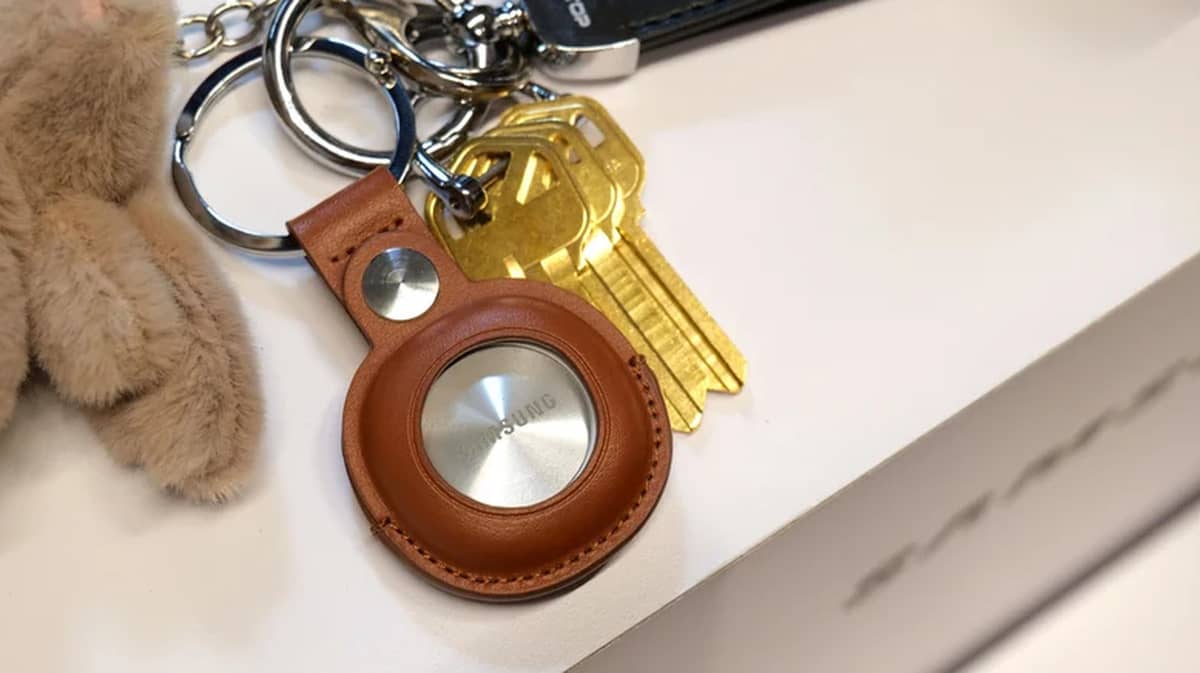
Finding keys in the next room and finding a suitcase in another city take very different kinds of tracking.
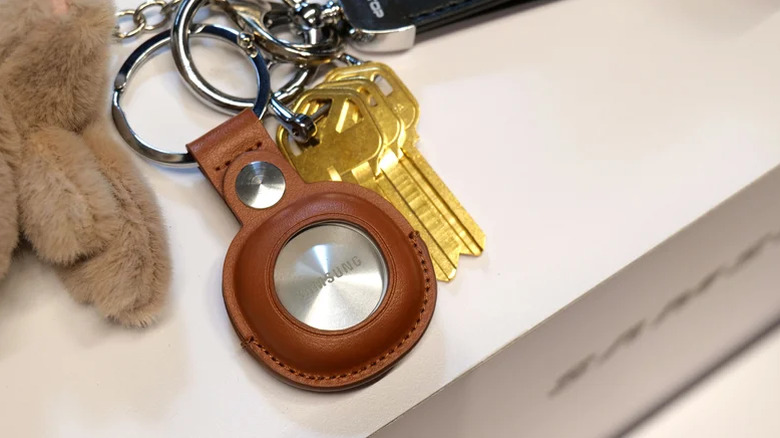
Sam Rutherford/Engadget
We may receive a commission on purchases made from links.
If you're always misplacing your keys and don't want to worry about your luggage ending up in the wrong place when you travel, a Bluetooth tracker can help. Samsung's Galaxy SmartTags have been around since 2021, and the company recently released a third generation that promises a longer reach than its predecessors. The real question is just how far you can track a Samsung SmartTag.
The Galaxy SmartTag3 is smaller than previous models, has a rounded-square shape instead of an oblong one and offers much better battery life. These improvements matter, but just how good is the actual tracking part? Samsung says the SmartTag3 can be detected roughly three times farther than previous generations, thanks to a mix of Bluetooth and ultrawideband technology.
That said, "far" is relative. There's quite the difference between tracking something that's still within Bluetooth range and tracking something that's gone completely out of your phone's range. Understanding both scenarios and how Samsung's crowdsourced Galaxy Find Network works will help set realistic expectations before you spend any money on a SmartTag.
What is the SmartTag's actual tracking range?
Samsung says direct, close-range tracking is where the SmartTag3 gets its biggest improvement. Bluetooth 6.0 Channel Sounding allows the Compass View feature to provide distance and directional guidance from around 200 feet away. Over a Bluetooth LE connection, you can also check signal strength and adjust settings from up to 400 feet. There's an important caveat: that range is a best-case scenario with a direct line of sight, so walls, furniture or other electronic devices between you and the tag will shorten it.
Channel Sounding currently requires a compatible Galaxy device, and only a few are supported so far, with more expected over time. Unless you have a Samsung Galaxy Z Fold8 Ultra, Z Fold8, S26 Ultra or S26 Plus, you won't get the extended Compass View range.
But what happens when your SmartTag wanders completely out of Bluetooth range? Other Galaxy phones around it can act as your online search party. Samsung says the Galaxy Find Network includes more than 900 million participating Galaxy devices worldwide, and they can all help detect a nearby tag and relay its location back to you.
Say you have a tag in your backpack and you forget the bag on the bus. You can use Samsung's SmartThings Find app to track its location. If a Galaxy device with an internet connection, Bluetooth and GPS turned on is nearby, it will send the tag's location to the cloud, and you can see where your tracker (and your belongings) ended up. The more Galaxy devices in the area, the faster and more reliable your location updates will be. The downside is that updates can lag in regions with fewer Samsung phones.
Is the Samsung SmartTag a GPS tracker?
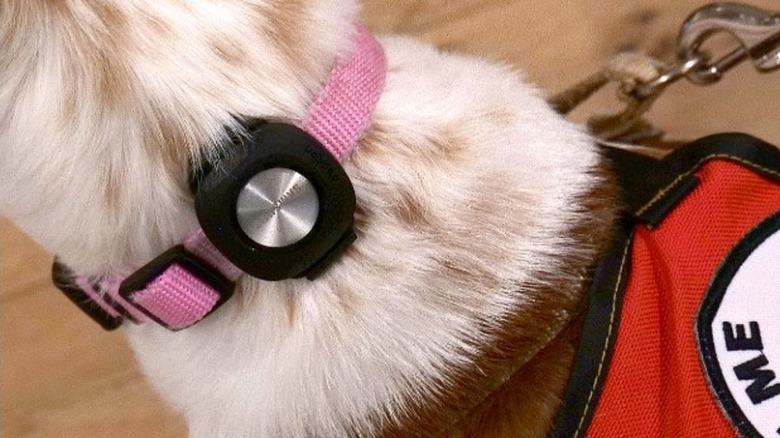
Sam Rutherford/Engadget
Neither the new SmartTag3 nor the previous models are GPS trackers. Just like Apple's AirTags, Ugreen's FineTrack, Life360's trackers or Google's new Pixel Tag, Samsung's trackers rely on a Bluetooth connection and a nearby network of participating devices. That makes sense because a Bluetooth tracker uses a lot less power than a GPS chip would, so it lasts much longer on a small battery. With the new SmartTag3 lasting up to 550 days on a single coin-cell battery, that's quite an advantage.
On the other hand, GPS trackers provide continuous coverage and report their location anywhere, anytime. They also don't rely on other devices being nearby. A Bluetooth tracker cannot do that, so if you're tracking something moving through a remote area, you'll be out of luck until your SmartTag encounters a participating Galaxy device.
The good news is that you won't have to pay a subscription to use the Galaxy SmartTag, unlike with quite a few GPS trackers. You just pay once and that's it. Unfortunately, unlike past generations, the new Samsung tracker no longer has a built-in keychain loop, so you'll need a case for it, which brings the cost up sharply. Instead of buying a tracker for $30, you now have to add a $20 case to your order; more if you're getting a four-pack. Still, a tracker can be worth much more than its price when you actually misplace something.
KioskNews shows a cleaned-up reading view extracted from the publisher’s page — the original always lives on their site, not ours.