After 70 Years, John Wayne's Best Movie Remains One of the Greatest Westerns Ever

Charlie Ridgely is a writer from Maryland, currently residing in Nashville, Tennessee. He may be new to Collider, but he's been writing, editing, conducting interviews, and podcasting around the industry for 10 years. From 2016 to the start of 2026, Charlie was a full time writer and critic at ComicBook.com. A lifelong movie fan, avid reader, and renowned (fictional) dungeon explorer/dragonslayer, Charlie is a jack-of-all-trades throughout the fandom multiverse and has covered everything under the sun.
The Western genre may not be popping up on modern movie screens very much these days, but it was once the most popular and bankable genre in all of Hollywood. Honestly, you could argue there were a couple periods in time where the Western was at the top of the food chain, with the 1990s renaissance producing some of the genre's all-time great entries. Still, the heights of the careers of John Wayne and Clint Eastwood remain the peaks of Western filmmaking, and nothing the genre has delivered since 1956 can quite stand up to the visual power of the former's greatest film.
Wayne is certainly a polarizing figure now, and for good reason, but his status as an icon of the screen is undeniable. He ruled theaters for years and years, churning out tons of movies and sprinkling in some stone-cold classics every once in a while for good measure. True Grit, The Man Who Shot Liberty Valance, Stagecoach, and Rio Bravo stand out as some of the best Westerns with Wayne in the lead, but none of them stand quite as tall as The Searchers.
'The Searchers' Is Still an All-Time Great
John Wayne and director John Ford partnered for numerous Westerns over the years and made some of the genre's very best entries together. In 1956, they released their masterpiece, as Ford directed Wayne in a film about a veteran of the Confederate Army on a quest to find his kidnapped niece. It's a brutal tale of revenge and redemption that, at the time, tested the limits of what Western storytelling could accomplish. The film is so revered, in fact, that it has been named on countless lists as one of the best movies ever made. The American Film Institute considers it to be the "Greatest American Western," in addition to placing the film 12th on its list of the 100 Greatest American Movies of All Time.
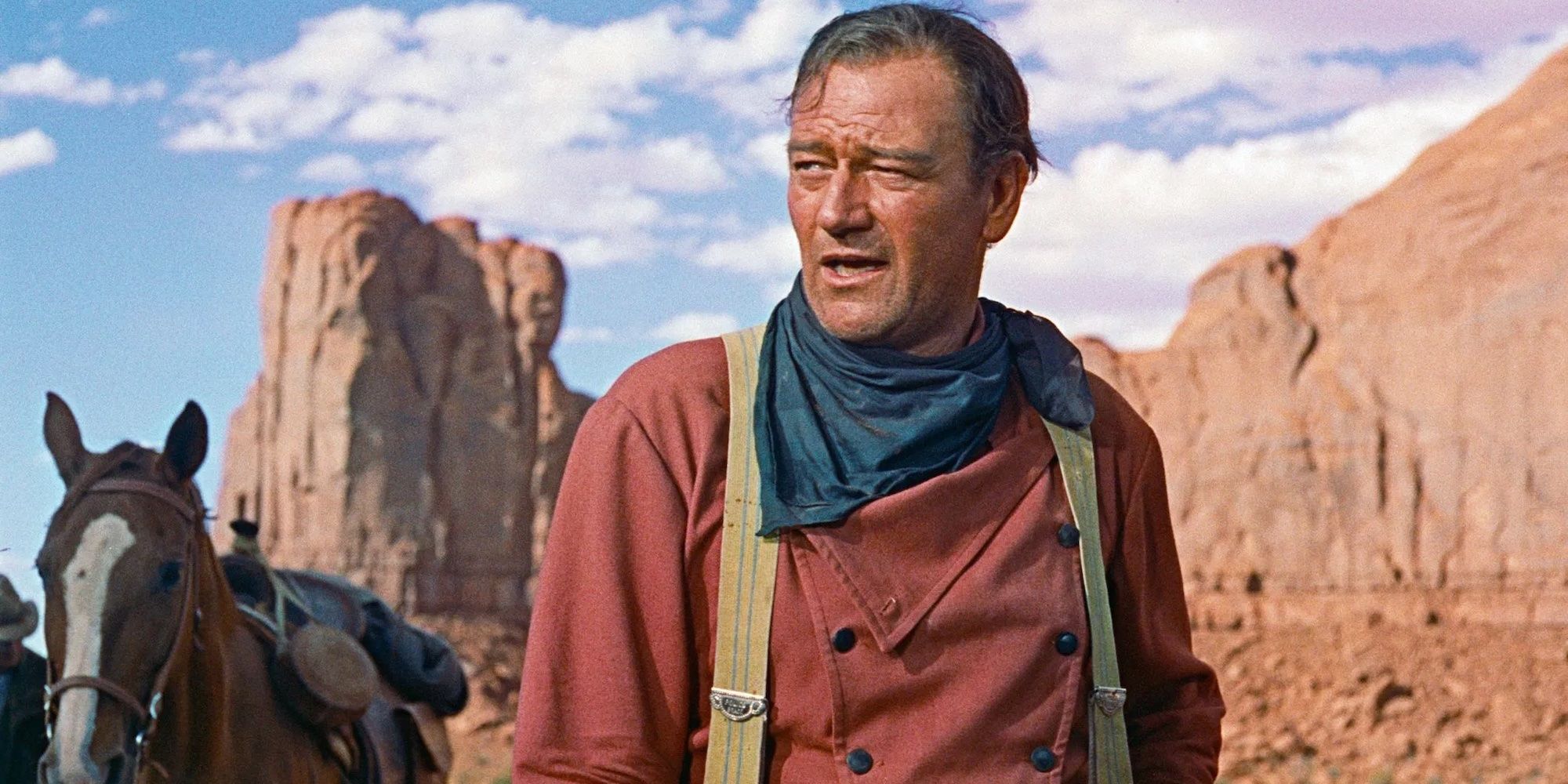
While the challenging story and uncharacteristically antagonistic performance from Wayne are certainly among the reasons The Searchers has remained such a lasting piece of film history over the years, it's John Ford's visual prowess that has cemented the picture as one of the greatest in history. Shot in VistaVision (an absolutely stunning film format that wasn't used nearly enough), The Searchers makes incredible use of the wide landscapes of the American West. The warm orange tones are striking against Ford's brilliant use of shadows, and that contrast helped create some of the most iconic shots in Western history. The film's final shot, featuring Wayne's Ethan Edwards walking out the front door, is perhaps the most influential image across the entire genre. Warner Bros. put out a 4K restoration of The Searchers a couple of years ago, and it is widely regarded as one of the best classic 4K transfers to ever be released, right up there with Lawrence of Arabia.
There is a lot of debate about how well certain elements of the plot and characters have aged since its release, with Ethan's attitude towards and treatment of Native Americans creating the biggest issue all these years later. The complaints are more than valid, but it can be argued that much of the prejudice is contained to Ethan's character, whose hatred towards Native people is made more complicated by the fact that his nephew and traveling companion, Martin (Jeffrey Hunter), is part Cherokee.
If you watch the movie with the idea that Martin is an infallible Western hero, as many of Wayne's previous characters were written to be, then The Searchers is certainly problematic in the way Ethan treats the Native Americans, falling into the long-tired trope of painting those people as the villains. However, The Searchers has a lot more on its mind, and it isn't as straight-forward as other films of the time. Ethan may be the main character, but he isn't directly written as a hero. If anything, his hatred is often used to directly point out how flawed his way of thinking is, and how evolving beyond his worldview is the only way forward.
John Wayne's Best Performance
Ethan is a complicated figure, spending much of the movie doing the right thing for all the wrong reasons. It often feels as though he's more concerned with getting revenge against the Comanche, rather than actually trying to do what's right for his niece. He's a not-so-good guy who is ultimately doing something helpful, which makes him the perfect character for Wayne.
It's impossible to talk about John Wayne's legacy without discussing the prejudices that he shared with his character in The Searchers. By portraying Ethan, Wayne was able to explore a side of himself that wasn't often put up on the big screen, which made the character feel much more authentic than most of the actor's other parts. Wayne seemingly played Ethan to be a grizzled hero who was serving deserved justice, adding even more layers to the film's ultimate portrayal of the character. It's almost as if he's working hard to act against who the character is supposed to be, clinging to a version of the world that is actively leaving him behind, creating a perfect parallel to Ethan himself.
The intertwining of Wayne's legacy and Ethan's journey make for an even more compelling argument as to why The Searchers stands up so well today. 70 years later, it's a film that is not only gorgeous to behold, but it generates a lot of conversation about our heroes, the past, our world as a whole, and our place within it.
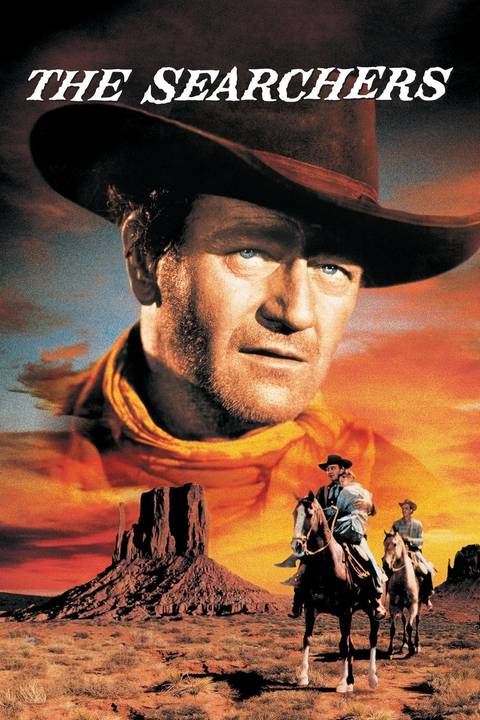
- Release Date
- May 26, 1956
- Runtime
- 119 minutes
- Director
- John Ford
- Writers
- Frank S. Nugent
- Producers
- C.V. Whitney
KioskNews shows a cleaned-up reading view extracted from the publisher’s page — the original always lives on their site, not ours.