10 Detective Movies From The 1940s Are Basically Perfect

Zoë Miskelly is an editor and second in command for Screen Rant's Movies team, having covered the entertainment industry for almost 10 years now. Zoë's love of superheroes and all things Marvel & DC started out in childhood, and has blossomed into a career getting to talk about some of the biggest and best movies and shows of all time, having previously focused on comics while working at WhatCulture.
Even 80 years later, plenty of detective movies from the 1940s still hold up well, with many releases from this time still being near perfect. The world of mystery and detective stories arguably had a golden era of sorts in the 1940s, with the time period being a prime one for the genre as the world of cinema grew on a steady diet of crime dramas figure-headed by clever and oftentimes eccentric investigators who got to the bottom of things.
In a time before the elaborate CGI we see used in films frequently today, movies had to often rely on more grounded stories, which opened the floor for detective capers in a big way, since these stories of faked deaths, hardened criminals, and almost impossible to solve puzzles still feel enjoyably larger-than-life, despite being a little more grounded in many senses overall.
These 10 detective movies are some of the best examples of what the 1940s had to offer filmgoers, with an assortment of stories that are near perfect other than either small details, or elements that haven't held up as well as their core mystery, making them still solid watches even almost a hundred years down the line.
The Killers
1946

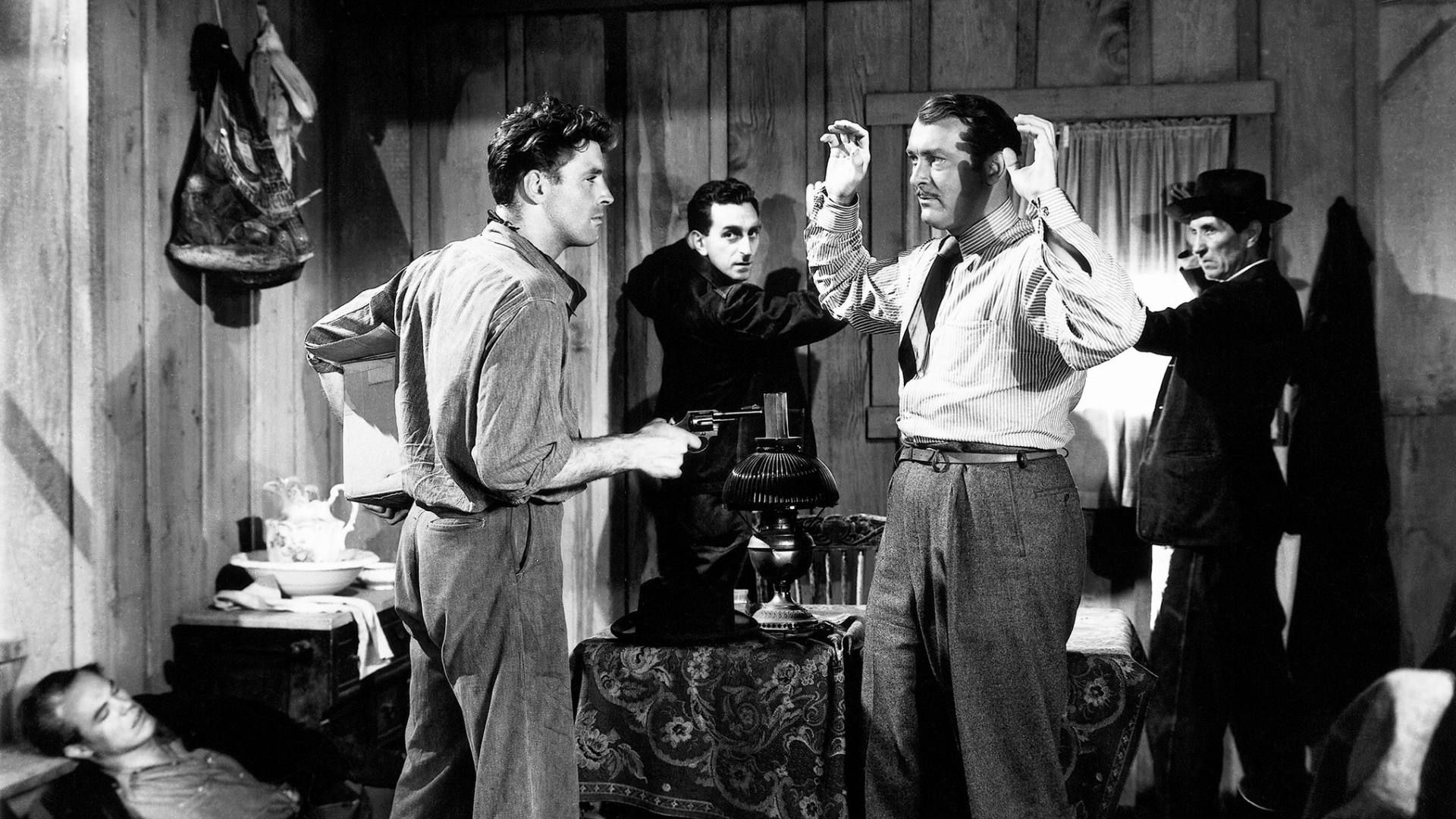
The Killers is one of the most classic-feeling 1940s detective movies out there, as it leans into a wide range of tropes within the genre, but in a way that feels like celebrating these trends and the wider genre itself rather than being cliché.
For those who want a detective movie that fully embraces the tradition of the genre, The Killers is hard to beat. The film centers on the murder of Pete "The Swede" Lund, whose life and death revolve around a group of hitmen, including crime boss "Big Jim" Colfax, and Jim's girlfriend, Kitty, with Pete immediately falling for the femme fatale.
The Killers splits its runtime between showing the extensive and larger-than-life backstory of Lund, and life insurance investigator Jim Riordan hunting down what happened to him, and why Lund left all his life insurance to a seemingly random woman, creating an engaging experience that also provided the first film appearance of celebrated actor Burt Lancaster.
Song Of The Thin Man
1947

Unlike most of this list, which veers into the thriller side of things in a way that naturally meshes with detective stories, Song of The Thin Man delves into a more comedic tone, with its story of detective couple Nora and Nick Charles solving a murder tied to the S.S Fortune balancing being an interesting mystery, and being a release that's in many ways more light-hearted than its peers.
Song of the Thin Man also has the benefit of being the sixth installment in The Thin Man mystery comedy series, meaning that Song of the Thin Man is also able to kick off with the series having found its footing and set itself up already, allowing the final installment of the series to go out in style.
Sherlock Holmes And The House Of Fear
1945

The classic Basil Rathbone Sherlock Holmes movies can still be seen to influence other Holmes films and the murder mystery genre more specifically even near a century on, and a good part of this is because of how well the mysteries within these installments hold up, and how lastingly interesting many of the performances within these films are.
The House of Fear is a prime example of both. The mystery of why an ever-increasing number of people appear to be dying after receiving an envelope with orange pips in it - and who is responsible - becomes more and more interesting as the on-screen cast becomes increasingly small, encouraging viewers to speculate about what the answers they're searching for could possibly be.
Similarly, while Watson is perhaps made to be perhaps overly buffoonish for the sake of comedy alone, the dynamic between this Watson and Holmes is an endearing one, and is supported by a range of eccentric characters embroiled in the murder mystery, each of whom you could easily suspect for their own reasons.
The Third Man
1949

The Third Man is not a detective movie in the conventional sense, which arguably is what makes it so compelling, as protagonist Holly Martins is not as equipped as other Noir detective heroes to deal with the mystery he's been handed around the matter of his friend Harry Lime's death, though he certainly commits to finding out what happened in a major way.
This also doesn't diminish the mystery in the story itself, as the reveal that Lime's death may not be as it appears - and everything that unfolds from this point - makes The Third Man a story that only becomes more interesting the more time goes on, and that indeed arguably hits its peak right after its initial murder mystery is solved, giving it a unique sense of pacing that works in its favor.
Shadow Of A Doubt
1943

Shadow of a Doubt places three different detectives of different sorts into the narrative, with two conventional detectives being hot on the trail of the Merry Widow Murderer, and with Charlotte "Charlie" Newton becoming an unofficial detective of sorts as she grows to suspect her dear Uncle Charlie may actually be the very person they're after.
Though the mystery of Shadow of a Doubt works in its own right, the movie's strength is more seeing how the two Charlies interact with one another and how their relationship changes over the course of the film, and leads to a range of action-packed sequences that can come as an enjoyable surprise timing-wise contrasted with the more psychological investigation.
Stray Dog
1949

Created by director Akira Kurosawa, who is considered to be one of the most important and influential directors in the history of cinema, it's perhaps no surprise that Stray Dog packs a punch in its depiction of post-war Tokyo and its underworld.
Stray Dog centers around homicide detective Murakami attempting to recover his own stolen gun, which becomes even more crucial when said gun is then used for a series of crimes, making the investigation far more personal for the detective himself, and even more compelling for viewers both back when the film released, and even still today.
Green For Danger
1946

Green for Danger's detective mystery being set in the midst of WWII - with the movie's actual release date coming only shortly after the end of the war - immediately makes it fascinating to revisit, and gives it further dimension and depth that blends well with its mystery.
The case of who's responsible for the death of Joseph Higgins and the mysterious goings on in the rural English hospital where he died becomes a layered whodunnit almost immediately, leaving you torn between not trusting a single soul in the cast, and being naturally inclined to believe that the hospital staff do have their patient's best interests at heart.
This contrasts makes the twists in the story all the more potent, especially because of how they tie into the story's WWII setting, giving the film a unique flavor that few other movies replicate.
Laura
1944

Laura has been a celebrated movie ever since its debut, in no small part because of how the story handles its titular character, whose story manages to become more and more interesting throughout the narrative even as things begin with detective Mark McPherson having to investigate her death.
In true detective movie fashion, Laura's death is far, far more complex than it initially appears, as we see various figures who knew Laura reveal further information about the character, and set the stage for a series of later plot twists that are still just as capable of surprising viewers now as they were back in the 40s themselves.
The Maltese Falcon
1941

The Maltese Falcon is one of the most famous Noir films of all time, and not without good reason. As the name suggests, the film follows a private detective uncovering the secrets of the titular Maltese Falcon statue, which is introduced as having been believed to be lost at the start of the movie, though the reality of the situation is revealed to be increasingly complex.
This premise is one that is handled well by the ever-twist-filled narrative of the film, and the actors within it, who imbue the movie and story with a level of legitimacy even when it delves into what are clear film tropes. Every aspect of The Maltese Falcon has clearly been crafted with great care - from the acting to the cinematography to the script itself - and this pays off in a striking way for the entire run of the film itself.
KioskNews shows a cleaned-up reading view extracted from the publisher’s page — the original always lives on their site, not ours.