Home advantage: can Hong Kong turn sports bodies’ arrival into global influence?
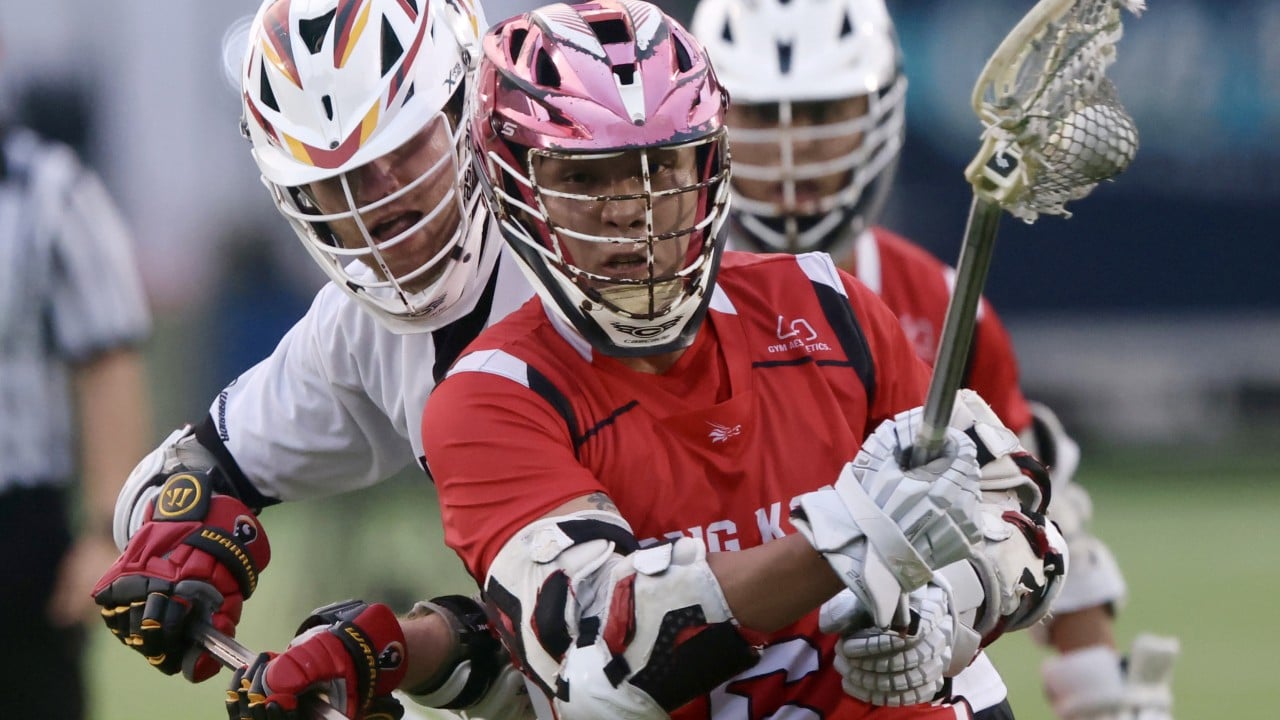
Next month’s Association of National Olympic Committees Congress in Hong Kong offers an ideal opportunity for the city to present its case to more than 1,000 delegates.
Kenneth Fok Kai-kong, vice-president of the Sports Federation and Olympic Committee of Hong Kong (SF&OC), believes the balance of power is shifting as Asian sporting standards continue to rise.
“This is not a coincidence. Hong Kong’s distinctive strengths of being ‘backed by the motherland [China] and connected to the world’, our robust legal system, our access to the China market and our capacity in sports dispute resolution together make the city a compelling choice for a global or regional headquarters,” he said.
“We can also see that many Chinese brands are now sponsors or partners of international mega sports events and international sports governing bodies, further underscoring the value of being close to this market.”
Hong Kong is not without rivals. The city was home to Asia Rugby before the local governing body’s influence on the game began to wane and operations were moved to the United Arab Emirates, where it joined a variety of other governing bodies including the Asian Paralympic Committee.
Asia Rugby’s legal base, however, remains in the city rather than the Middle East. That distinction matters, according to Dr Lobo Louie Hung-tak, a senior lecturer in health and physical education at the Education University of Hong Kong.
“I think Hong Kong’s irreplaceability lies first in the fact that it is China’s only common law jurisdiction,” he said.
“For international sports organisations, this means that athletes’ contracts, sports-related intellectual property, sponsorship agreements and dispute resolution can operate within a legal framework highly compatible with the international sports governance system.
“On the other hand, although Dubai or Abu Dhabi become regional operating centres, they cannot provide an equivalent channel for entering the Chinese sports market and participating in a China-led international sports governance agenda.
“Middle Eastern cities use financial capital to buy headquarters whereas Hong Kong’s advantage is to sell institutional capital and market access. For example, the decision by the International Dragon Boat Federation to move its global headquarters from London back to Hong Kong recently is an example for observing this difference.”
Louie cautioned against getting carried away, saying the presence of six governing bodies was not yet enough to suggest Hong Kong could challenge other jurisdictions.
“I don’t think we can make such a conclusion at this stage,” he said. “Six sports is still a small number compared with over 80 NSAs under the SF&OC. Perhaps this is a positive sign for such movement going forward.”
Warren Allderige, president of the ALA and chairman of the Hong Kong, China Lacrosse Association, said the city was the “perfect location” for the regional governing body.
“Our modern airport and infrastructure make travel convenient for both teams attending tournaments as well as administrators attending meetings,” he said.
“Hong Kong’s strong service economy assures that the ALA’s administrative needs will be met efficiently. Hong Kong’s common law legal system is clear for parties from all parts of Asia to understand, allowing the ALA to execute agreements under Hong Kong law.”
Aside from various Asian offices, international federations have also moved their bases, with the International Dragon Boat Federation relocating its global headquarters from London to Hong Kong where it was first established 35 years ago.
The dragon boat governing body became the first to benefit from the Culture, Sports and Tourism Bureau’s three-year pilot scheme to support international sports bodies establishing a base in the city.
As part of the scheme, an annual subsidy of HK$800,000 (US$101,966) for three years is available for any international or regional sports federation relocating its office to Hong Kong.
Bowling, squash, the International Shuttlecock Federation, the Asia Flying Disc Federation and the Asian Rowing Federation have all taken part.
In a written reply to a question posed in the Legislative Council this month, the bureau said it would “continue to support, through national sports associations in Hong Kong, Asian or international sports associations to establish a presence in Hong Kong, and encourage NSAs to strengthen ties with the relevant associations”.
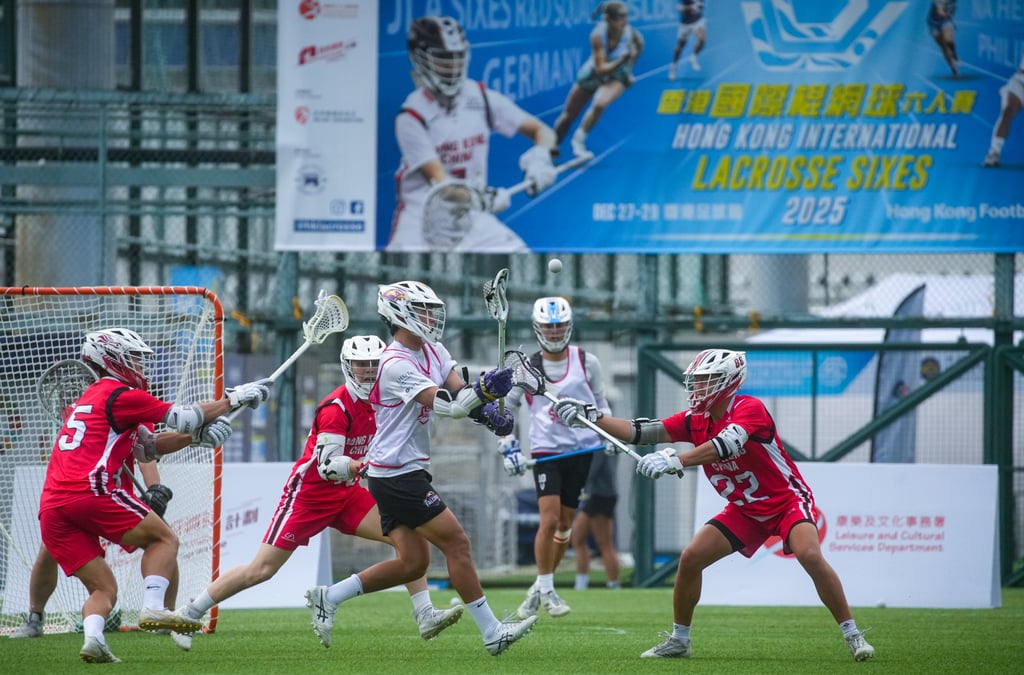
Allderige said the ALA also chose Hong Kong because of “its efficiency and its familiarity to lacrosse organisations across Asia”, while adding that the city had repeatedly proved its credentials as a host of international sport.
“Operating in Hong Kong ensures that our administrative and legal matters can be handled efficiently and at a reasonable cost,” he said.
“The success of the many Pan-Asian tournaments that the HKLA has hosted demonstrates that lacrosse teams enjoy travelling to Hong Kong.
“Everyone – coaches, players and fans – who visited absolutely loved the hospitality of the Hong Kong people, the quality of food and lodging and the many sightseeing opportunities that the city provides.
“The future is bright for lacrosse in Asia, and Hong Kong is the right place to be at the centre of the growth of the sport of Asian lacrosse.”
Instrumental in bringing the dragon boat federation back to its founding city, Fok also believes the willingness of administrators to set up offices in Hong Kong has naturally strengthened the city’s role as an internationally important sporting hub.
“They enhance the discourse power of Hong Kong in the international sporting community, attract talent, sponsors and events, and help drive the professionalisation and further development of local sport,” said Fok, who served as the president of the Asian Electronic Sports Federation (AESF) between 2017 and 2025.
“They also demonstrate, in practical terms, Hong Kong’s ability and readiness to serve as a key platform for international sports exchange.”
While the government policy of supporting regional and international federations to establish a presence in Hong Kong was first brought up by Chief Executive John Lee Ka-chiu in last year’s policy address, squash brought its presence to the city more than a decade ago.
Former Hong Kong Squash chairman David Mui Ying-yuen took charge of the Asian Squash Federation in 2013 and remained at the presidential helm for three four-year terms, before being succeeded by Duncan Chiu, who was secretary general during Mui’s reign.
“Squash was probably one of the earliest sports in Hong Kong to lead its regional body, and we have contributed a lot over the years,” Mui said.
“From pushing squash into the 2028 Los Angeles Olympic Games to setting the standards and the rules, as well as sending technical directors to the past Asian Games, we were at the forefront of all these. I believe we are one of the few sports to amass such an influence.”
The Sports Dispute Resolution Summit on December 1 and the Olympic congress, which starts on the same day, are two examples of global sport coming to Hong Kong for reasons beyond competition on the pitch or court.
Chiu said these events attracted people of a “certain status”, each with their own networks, offering a real “chance to promote Hong Kong through them”.
He added that Hong Kong boasted an advantage in its easy accessibility, while the ability to operate in both Chinese and English “simplifies administration and documentation”.
“Also, Hong Kong’s strong legal system and newly promoted sports arbitration services provide a trusted, neutral ground for resolving disputes and ensuring fair governance,” he said.
However, it should be noted that it is not uncommon for a regional or international sporting governing body to move its office to the origin – city or country – of its leading figures.
During Fok’s presidency, the AESF had its office in Cyberport. Thailand’s Santi Lothong took over in July 2025, and the office has since moved to Bangkok.
The International Shuttlecock Federation also moved its headquarters to Hong Kong in late 2024 after Edmond Yue Kwok-yin was elected president.
Olympian and former athlete Fay Ho Kim-fai, who has been involved in World Rowing since 2002 and was appointed president of the Asian Rowing Federation (ARF) in October, believed the increasing presence of global and regional sporting governing bodies in the city, as well as having more Hong Kong representatives at those federations, was a “positive trend”.
“Chiu and I were both at the Olympic Committee Asia meeting in Doha [last] week, so the more Hongkongers we have at such meetings, which are usually about the Olympic or Asian Games, the better,” she said.
“We can communicate, share and centralise our views on related issues before proposing ideas about it. It’s going to be a much bigger voice.
“As for moving the office to Hong Kong, it’s an ongoing process, and we hope to get it done by the first quarter of next year. We can expect to have a lot of meetings, training for coaches, athletes and umpires, and of course, there will be tournaments, too.”
Ho, who is also the chairman of the city’s rowing association, added that her home city had “a deep-rooted foundation” for organising regional and even international competitions and training programmes, thanks to its abundance of expertise in all walks of life.
“All these will further elevate the status of Asian sports, which will be beneficial to the overall development of the sport,” the 64-year-old former Asian Games silver medallist said.
“We often say that Asian sports are often slightly behind those in Europe because Europe developed earlier, so it takes time to catch up. Therefore, we have the patience to take it one step at a time, but we need to do it in an organised manner. I hope to play this key role.”
As the first athlete from the city to compete in two different sports at the Olympics, Ho also said she wanted to bring the younger generation into local and regional sporting governing bodies.
“It’s the same as developing an athlete; it takes time to turn them into a gold medallist. It’s the same with these leadership roles,” said Ho, who competed in canoeing in Los Angeles in 1984, and in rowing eight years later in Barcelona.
“I hope what we have been doing could be seen as a pathway for those to come.
“We also want to encourage more women to take up coaching and leadership positions and for female athletes to transition into these roles when they retire, because Asian sports are still very male-dominated.”
KioskNews shows a cleaned-up reading view extracted from the publisher’s page — the original always lives on their site, not ours.