Facebook groups trusted over mainstream media in asylum hotel protest towns, report shows
Facebook groups became “town squares” with admins acting as “de facto local information gatekeepers” in towns hit by asylum hotel protests, a new report has found.
Communities across the UK turned to local social media groups rather than mainstream media or local authorities to share information during a wave of anti-immigration protests in the summer of 2025, the analysis from Demos suggests.
It found anti-migrant posts on social media vastly outnumbered pro-immigration content by as much as 42 posts to one, including narratives migrants are “invading” the country, implementing “Sharia law” and staying in “luxury five-star hotels”.
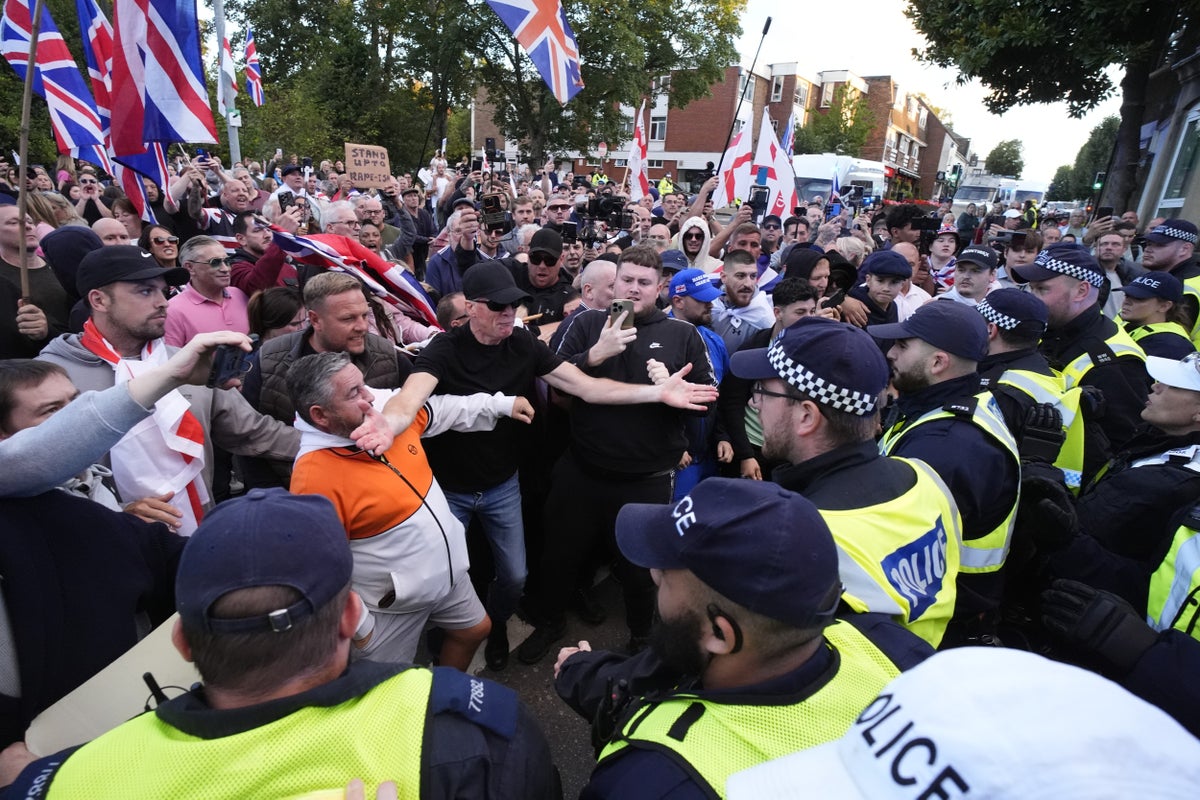
It comes after protests broke out across the country sparked by the government’s use of hotels to house asylum seekers. In the market town of Epping, Essex, which became the epicentre of the discontent after Ethiopian migrant Hadush Kebatu sexually assaulted a teenage girl, protests turned into violent clashes with police after bottles and flares were thrown.
Researchers analysed nearly half a million social media posts made about the use of hotels for asylum seekers in Dudley, Greater Manchester, and Epping, between January 2024 and December 2025. They found “recurring harmful narratives”, including that asylum seekers are criminals or sexual predators, which significantly outweighed the number of positive posts online.
It also said livestream content made by “auditors” is now a “trusted source” for many in local communities, in part because it is seen as more authentic than reports from mainstream news outlets.
“It was clear in all three locations that these provocative pieces of false information carried significant weight with the residents who encountered and believed them,” the study’s authors said.
The study pointed to information “voids” left by local newspapers, councils, and other authorities, which had left gaps open for unreliable, and sometimes false narratives to fill”.
While it said it was “not totally surprising” to see online conversations around asylum hotels skew negatively, this extreme split online was far more exaggerated than in real life. Data from YouGov this year shows 69 per cent of Britons think immigration over the past 10 years has been too high and 43 per cent believe immigration has been mostly bad for the country. But in Epping, researchers found there were 42 posts that were negative about immigration for every one positive post.
There were differing levels of scepticism over social media claims across the three locations, with those in Dudley being the least likely to challenge them and those in Greater Manchester being the most sceptical.

The study highlighted how local social media pages and groups are “by far the most accessed and the most trusted source of information on local topics, including the asylum hotel policy” and pointed to low numbers of relevant posts by local councils, which it said left a gap for less reliable sources to take their place.
Local councillors and officials are also “self-censoring or retreating to in-person-only engagement because of abuse or backlash” and warned that protecting and resourcing them to stay visible online is essential for rebuilding trust and resilience within their communities, “not a separate HR issue”, it added.
Facebook group admins should also be offered support to make sure they are fully equipped for their role, it said, because of their “immense influence”.
Researchers also called on the government to fund experiments in creating healthier online spaces that support debate and can provide access to verified information for locals.
“Online platforms aren’t serving the UK’s local communities,” they said. “This paper’s analysis reveals the influence of different platforms and how they amplify mis/disinformation, support a polarising information environment, and degrade local deliberation, with local people left not knowing if what they’re seeing is true or not.
“Without healthier online local spaces, local democracy will struggle. In all three locations researched, people feel reliant upon, yet unhappy with, social media platforms in their current form.
“Central government should actively support the creation of healthier online social spaces and view this as a vital element of the UK’s epistemic security.”
A Department for Culture, Media, and Sport spokesperson said: “Through our Local Media Action Plan we are helping local newsrooms across the country innovate and adapt for the online world, while incentivising the production of high-quality, trustworthy news that Britain’s towns and villages deserve and rely on.
“Social media platforms have clear responsibilities under the Online Safety Act to remove illegal content, including material that incites violence, and prevent the spread of illegal misinformation to protect communities from harm. We are also considering options to require social media companies to ensure trustworthy news sources are prominent and easy to find on their platforms.”
KioskNews shows a cleaned-up reading view extracted from the publisher’s page — the original always lives on their site, not ours.