Berlin Defense: The opening that decided the 2000 Chess World Championship
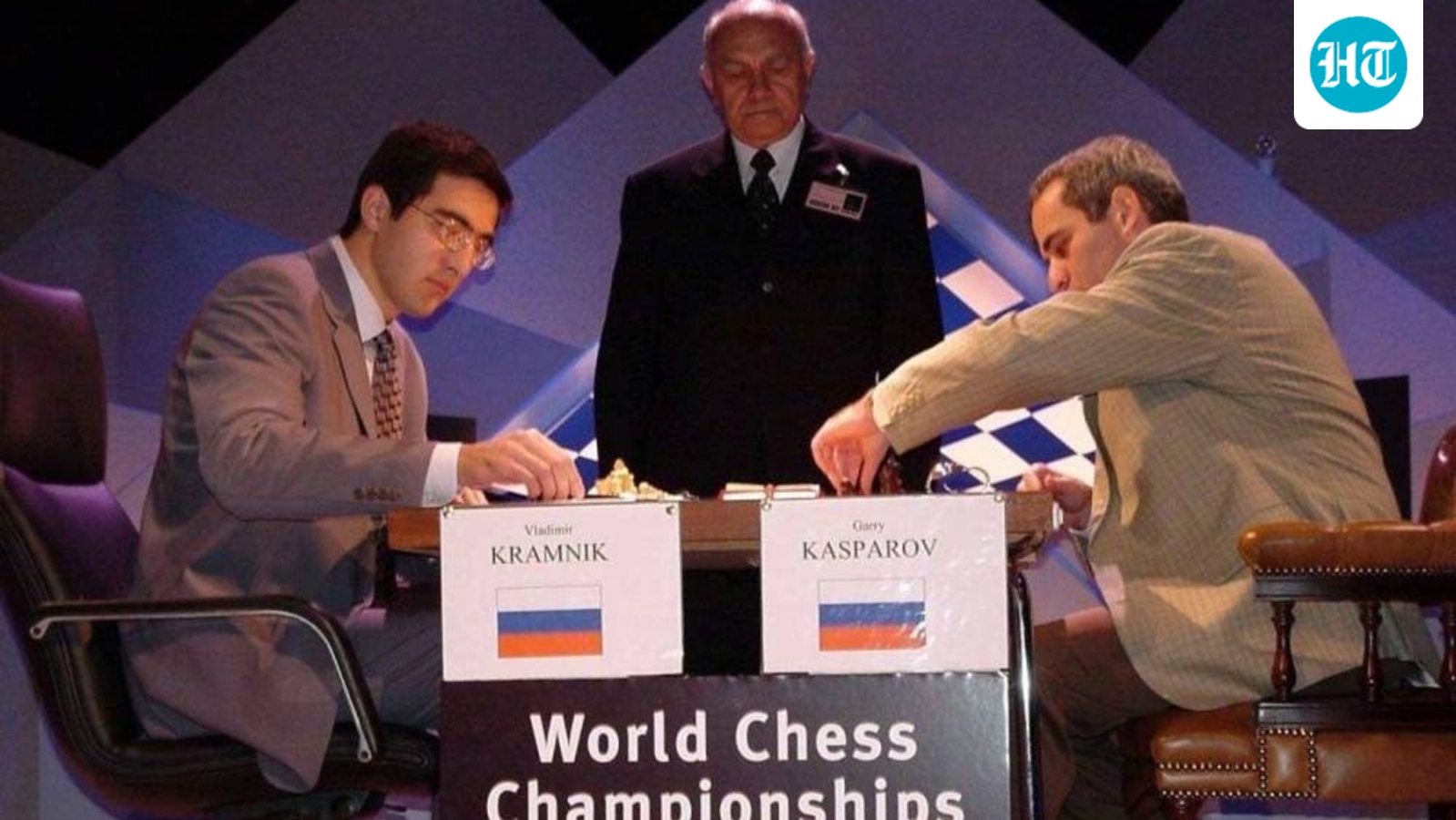
The Berlin Defense, which defending world champion D Gukesh opted for as Black in the opening game of the World Chess Championship against Javokhir Sindarov on Tuesday, favours solidity over aggression, and earned its place in the sport’s history when Vladimir Kramnik used it to neutralise Garry Kasparov and claim the title in 2000.
At times derided for its perceived passivity, the opening revolves around Black neutralising White’s attacking chances by exchanging pieces, often queens, early in the game.
Narrow margins
The central idea of the opening is to exploit small positional advantages or mistakes over the course of a long game by navigating the notoriously solid and drawish endgame known as the “Berlin Wall”.
But its reputation for solidity does not make the Berlin an easy opening to utilise. As Judith Polgar, one of the strongest chess players in history, put it while commentating on the Gukesh- Sindarov game, the opening is filled with tricky nuances.
“I am worried a bit for Gukesh choosing this opening, because if it's not your type of position it can be very unpleasant to play. Garry [Kasparov] was the biggest example of that—he just felt that he couldn't be himself. You have to like really the nuances, the very small things that are going on in this opening, and especially if you have it as a new opening, it can be dangerous,” she said.
Kasparov’s undoing
The 2000 clash between Kasparov and his former second, Kramnik, was a battle of aggressive play and resilience. Kramnik deployed the Berlin Defense as a surprise defensive weapon against Kasparov’s signature aggressive play. Rather than trying to out-attack Kasparov, Kramnik steered the games into early queenless endgames to neutralise his Soviet compatriot’s initiative and frustrate him.
“The Berlin Defence suited my strategy for the match. I had a defensive strategy – Actually, I had in my pocket some other sharper stuff to fall back on – but first I wanted to try the defensive strategy with Black and it worked so well," Kramnik said in an interview in 2000 after defeating Kasparov.
The opening gave Kramnik specific structural advantages, effectively bypassing the middlegame and taking Kasparov to a grinding endgame where his attacking prowess were severely restricted. Over the course of the match, Kasparov could not win a single game with the white pieces and ultimately lost his world title to Kramnik, who deployed the Berlin Defense in four games.
“It is only the smallest exaggeration to say that the Berlin cost me my World Championship title against Kramnik in 2000," Kasparov said in 2005.
KioskNews shows a cleaned-up reading view extracted from the publisher’s page — the original always lives on their site, not ours.