Why did Trump and Xi seal a deal on World War II soldiers’ missing remains?
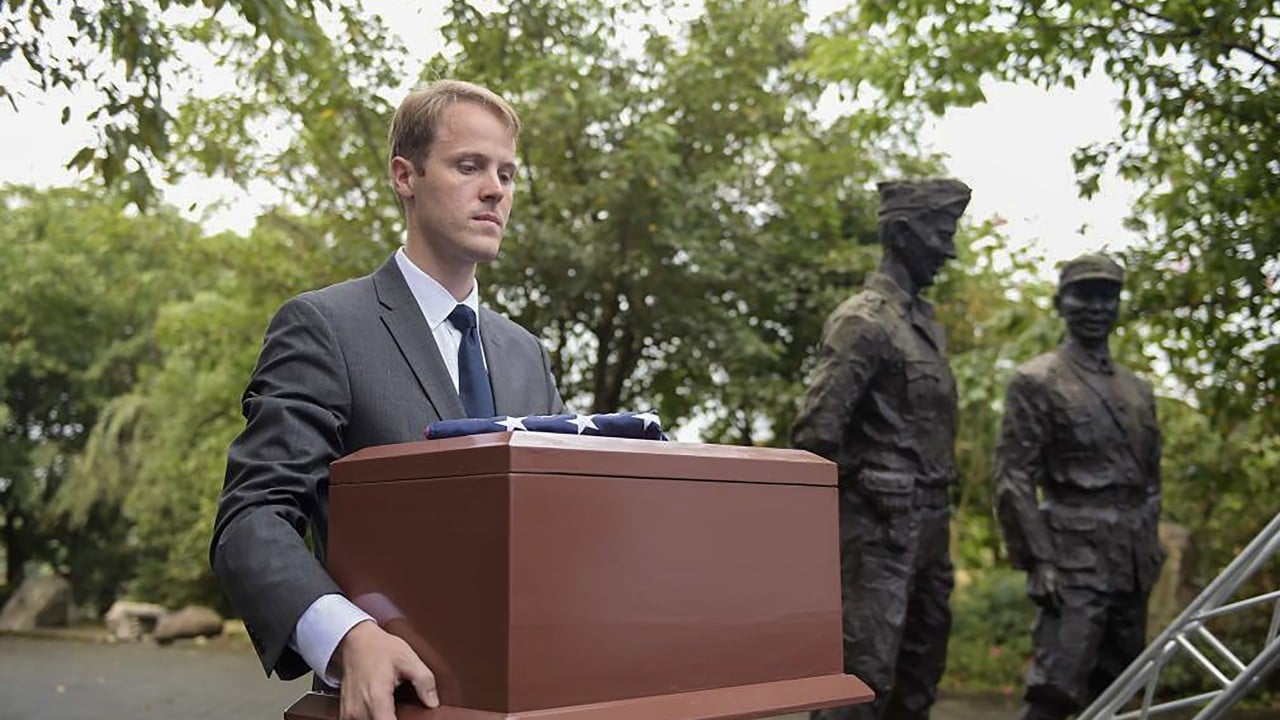
A decades-long effort by Beijing and Washington to recover the remains of US servicemen missing in China since World War II has resurfaced in the wake of the summit between the nations’ leaders.
The commitment was included in an eight-point list of outcomes from Chinese President Xi Jinping’s three-day state visit last week, alongside other agreements covering issues including artificial intelligence and trade.
According to a statement issued by China’s foreign ministry after the summit, the two sides agreed that their militaries would “continue to cooperate in searching for the remains of missing US service members in China”.
Why was cooperation over the remains included in the summit outcomes?
Against that backdrop, the continued search for remains provides a practical area in which the two sides can cooperate, observers say.
Zhou Bo, a senior fellow at the Centre for International Security and Strategy at Tsinghua University and a retired senior colonel in the People’s Liberation Army, said the search for remains was “politically one of the least controversial” areas in which the two sides could cooperate.
“Since this is something we have done before, continuing it gives both sides an additional area of cooperation,” Zhou said.
What does the cooperation mean for China-US relations today?
The agreement comes as Beijing and Washington compete over security, technology and trade while their militaries seek to manage the risk of confrontation.
At the welcome ceremony on Thursday, Trump praised the “brave American pilots” of the Flying Tigers, the American volunteer pilots who fought Japanese invaders in China. He said the pilots had volunteered to “fight for the very survival of the legendary country” and expressed his willingness to work with Xi in a similar spirit.
And at the state dinner, Xi, recalled how Chinese and American people “stood shoulder to shoulder” against Japanese aggression and described the wartime relationship as a “friendship forged in blood and fire”.
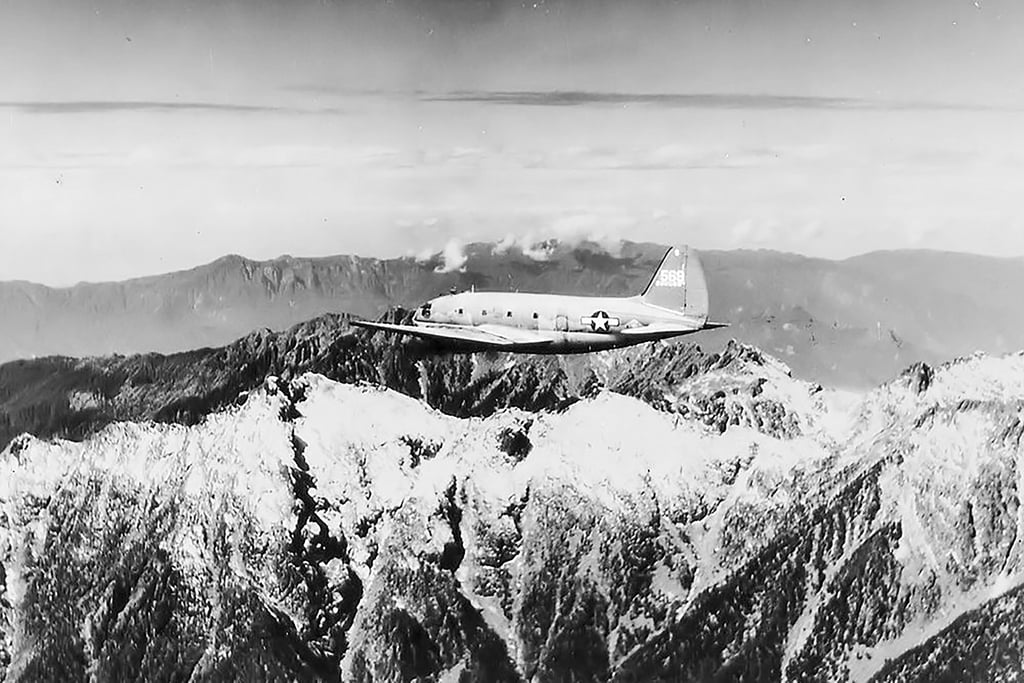
According to Chinese state news agency Xinhua, Xi mentioned how the two countries worked together to open “The Hump” air route across the Himalayas, and that Chinese soldiers and civilians had rescued hundreds of American pilots during the war, at the cost of hundreds of thousands of Chinese lives.
Dai Boyuan, an assistant research fellow at the Institute for International Affairs, Qianhai, at the Chinese University of Hong Kong, Shenzhen, said the remains search agreement represented “a renewed confirmation of historical facts”.
“This historical memory, jointly confirmed by the presidents of China and the United States, carries special relevance as a modern warning,” Dai said.
He said the cooperation showed that China-US relations were not defined solely by competition and confrontation.
“This also serves to reaffirm historical facts, especially against attempts by right-wing elements in Japan to blur, downplay or deny the country’s responsibility for the war,” Dai added.
Japanese Prime Minister Sanae Takaichi met Trump in New York shortly before Xi’s visit and stressed the importance of the US-Japan alliance.
09:49
Japan weighs bold era of militarisation as Tokyo races to meet defence spending goals
Beijing has repeatedly called on Japan to reflect on its wartime aggression, with this year marking the 80th anniversary of the opening of the Tokyo Trial, the military tribunal that prosecuted Japan’s wartime leaders.
Who were the American servicemen whose remains are still being sought?
The US military presence in wartime China was far larger than the Flying Tigers.
More than 120,000 American servicemen were deployed to China during the 1940s, according to US military records and historical research. Their missions included providing air support, transporting supplies and helping keep China connected to the Allied war effort after Japanese forces cut off major overland routes through Southeast Asia.
One of the most important links was “The Hump,” a dangerous air route across the Himalayas that linked Allied bases in India with southwestern China. American pilots and crews flew supplies and personnel into China, often in difficult weather and while facing Japanese attacks.
Some never returned.
The US Defence POW/MIA Accounting Agency (DPAA) estimates that the remains of about 690 American personnel unaccounted for during World War II are believed to be located in the Chinese mainland.
The search for them has evolved with bilateral ties over the decades.
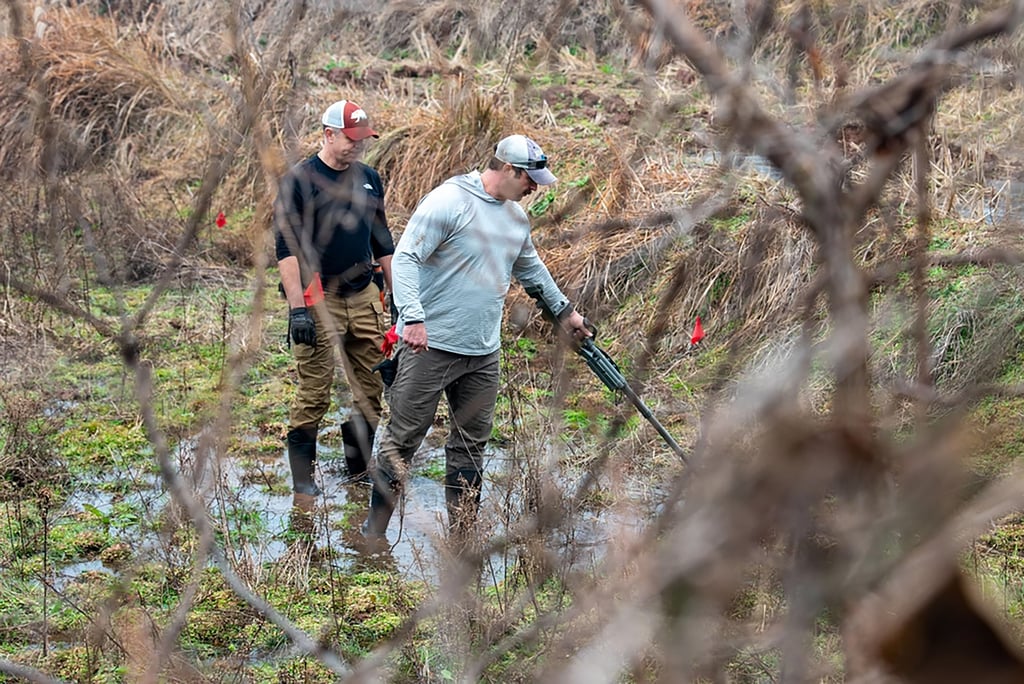
Efforts to locate American war dead in China date back to the 1940s, when Chinese authorities and the US military worked together to find missing servicemen. The cooperation was interrupted by the Chinese civil war and the subsequent breakdown in relations between Beijing and Washington, before resuming after the two established diplomatic ties in 1979.
That cooperation was interrupted by the Covid-19 pandemic and turbulence in bilateral relations under the Biden administration, particularly after then-US House speaker Nancy Pelosi visited Taiwan in 2022 and the “spy balloon” incident in early 2023.
The remains search resumed after Xi and then-US president Joe Biden agreed at their meeting in San Francisco in November 2023 to restore military-to-military communications.
In January 2024, a US DPAA team conducted field surveys in Guangxi Zhuang autonomous region and Hunan province, marking the first such field activity in China since the pandemic. China’s defence ministry then said the military had helped the US in surveying sites linked to American servicemen.
In December 2025, the two militaries held a video conference on archival cooperation and reached a preliminary agreement on a cooperation plan for this year, according to China’s defence ministry.
KioskNews shows a cleaned-up reading view extracted from the publisher’s page — the original always lives on their site, not ours.