5 Best Alan Moore Quotes In Comic History

Emedo Ashibeze is a tenured journalist and critic specializing in the entertainment industry. Before joining ScreenRant in 2025. he wrote for several major publications, including GameRant.
Alan Moore is widely regarded as one of the most influential comic book writers ever, having crafted stories that helped redefine how people viewed the medium. His work spans superhero stories, horror, fantasy, and political fiction, with each genre serving as an avenue for him to explore complex ideas through polarizing individuals and unforgettable dialogue.
His characters are often defined by their unique personalities, unusual philosophies, and profound views on morality. This makes their discussions particularly important, as seemingly simple conversations can reveal deeper ideas about power, identity, freedom, justice, and humanity. As a result, several lines from Moore’s comics have remained noteworthy long after their original publication.
Some of these quotes come from outright villains, while others belong to heroes whose actions are far more complicated than their labels suggest. Whether delivered by Doctor Manhattan, V, the Joker, or other notable figures, they communicate something essential about the character speaking them as well as their fictional and real-world contexts.
With so many celebrated works across his career, Moore has produced an enormous collection of impressive lines, making it difficult to narrow them down. Still, a handful stand above the rest for their impact, meaning, and sheer memorability. These are some of the best Alan Moore quotes to ever appear in comic history.
5 “None of you understand. I’m not locked up in here with you. You’re locked up in here with me.”

Rorschach is a central figure in Alan Moore and Dave Gibbons’ Watchmen, introduced as a grim vigilante with an uncompromising sense of justice. Beneath his battered appearance is Walter Kovacs, a deeply disturbed man whose experiences have convinced him that the world is fundamentally corrupt and that only absolute action can confront it.
The quote is delivered while Rorschach is incarcerated after being arrested for investigating the Comedian’s murder. During his imprisonment, he is attacked by another inmate in the cafeteria and responds by throwing scalding cooking oil into the man’s face. As guards drag him toward confinement, Rorschach turns toward the surrounding prisoners and delivers the declaration.
The statement is Rorschach’s way of warning the inmates that their threats do not frighten him. He knows many prisoners around him are criminals he personally helped apprehend, yet he remains completely unshaken by their hostility. Instead of viewing prison as a place where he is at the mercy of others, he sees himself as the dangerous presence within it.
That makes the line an especially effective summary of Rorschach’s character. He does not recognize the boundaries that normally restrain other people, and his rigid worldview leaves little room for fear or compromise. Even while physically confined, his determination remains untouched, turning an ordinary prison threat into another example of his relentless defiance.
4 “We’re all puppets, Laurie. I’m just a puppet who can see the strings.”
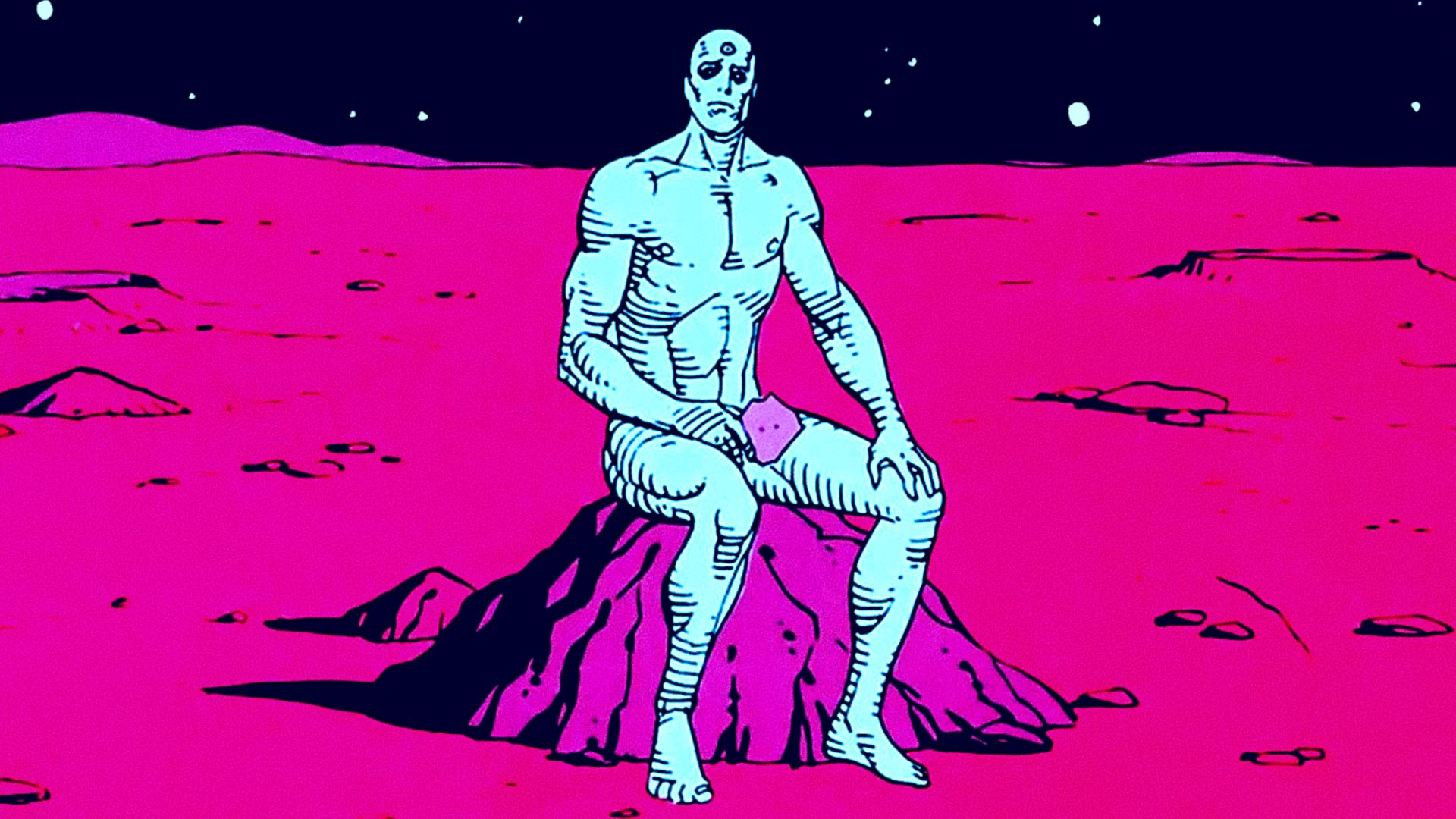
This quote is another that comes from Watchmen. It was uttered by Doctor Manhattan, one of the most powerful figures in the series. He experiences past, present, and future simultaneously, making even his ideas and feelings about choice and consequence almost meaningless. Notably, this perspective eventually distances him from humanity.
The quote appears during a conversation between Manhattan and Laurie Juspeczyk. Laurie is frustrated by his apparent acceptance of events he already knows will happen, especially because his extraordinary abilities seem to suggest he should be able to change them. She therefore questions whether he is simply following a predetermined script.
Manhattan’s response reveals the fatalistic outlook created by his strange perception of existence. He does not believe that only ordinary people are subject to forces beyond their control, because even his own decisions are part of the sequence he observes. The difference is that Manhattan possesses enough awareness to recognize those invisible constraints.
Consequently, the puppet metaphor becomes one of the clearest expressions of his relationship with free will. Everyone is supposedly being guided along predetermined paths, and Manhattan can actually perceive those forces operating around him. That knowledge does not necessarily grant him freedom, however, making the quote a fitting reflection of his isolation and detachment.
3 “There’s no flesh or blood within this cloak to kill. There’s only an idea. Ideas are bulletproof.”
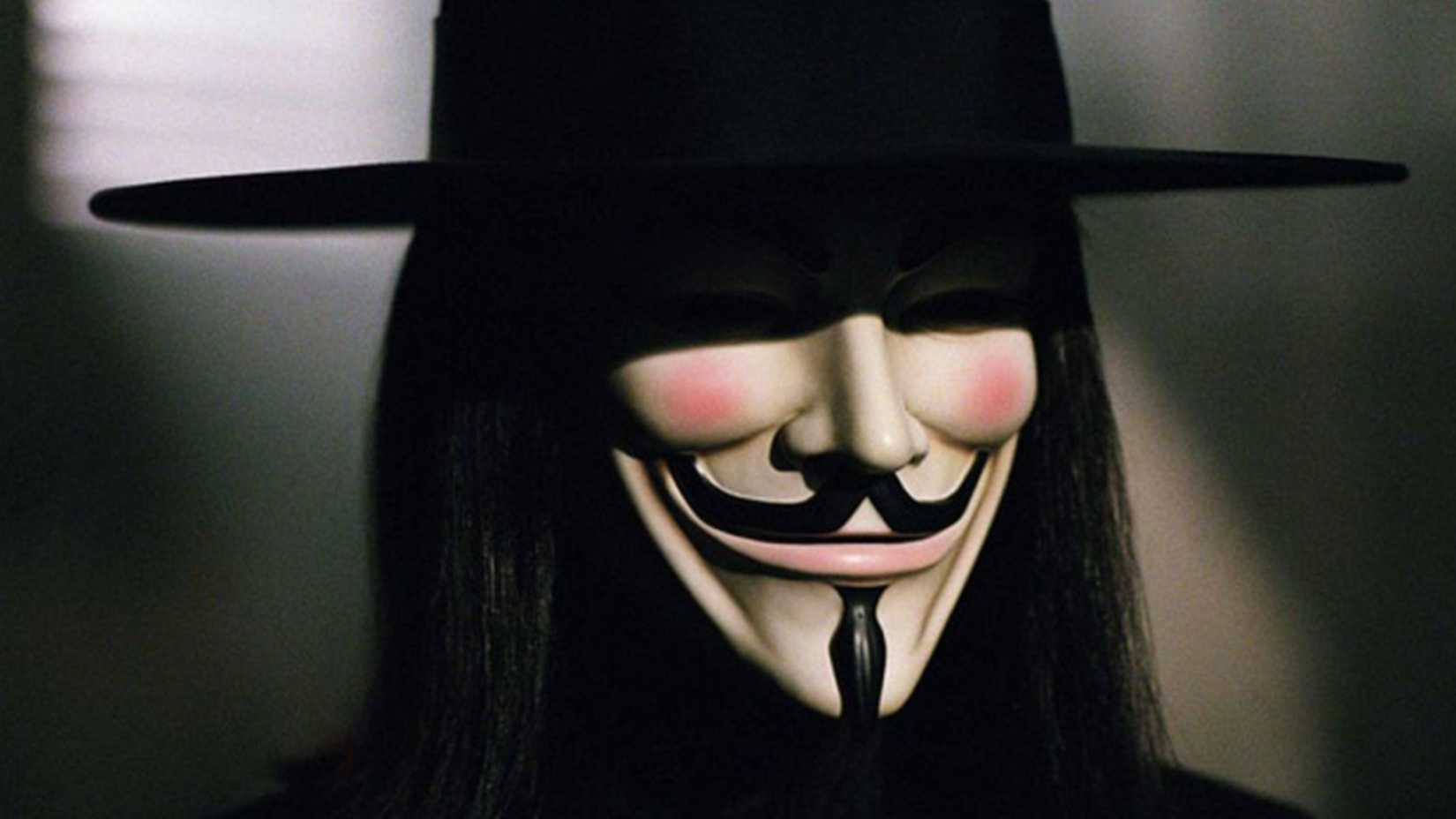
V is the mysterious revolutionary at the center of Alan Moore and David Lloyd’s V for Vendetta. He conceals his identity behind a Guy Fawkes mask and wages a violent campaign against the authoritarian Norsefire government. Much of his character revolves around the distinction between an individual and the larger cause he chooses to represent.
The quote comes near the end of the story, after Eric Finch tracks V down and shoots him. Despite suffering a fatal injury, V refuses to accept that his defeat means the end of what he represents. He argues that eliminating the man beneath the mask cannot destroy the principles that inspired his rebellion.
This idea explains why V deliberately keeps his true identity hidden throughout the story. His anonymity prevents the government and its enemies from reducing his actions to those of a single ordinary man. The mask instead becomes a symbol of resistance, allowing anyone who shares his beliefs to potentially assume the identity and continue the struggle.
That makes the declaration one of V’s most important statements, because it captures the philosophy behind his entire campaign. He understands that people can be imprisoned or killed, but beliefs can survive their creators. His physical body may be vulnerable, yet the idea he embodies can continue inspiring others long after his death.
2 “All it takes is one bad day to reduce the sanest man alive to lunacy. That’s how far the world is from where I am. Just one bad day.”

The Joker is Batman’s most infamous enemy, and Alan Moore’s interpretation in The Killing Joke gives him a particularly disturbing philosophy. He believes sanity is far more fragile than most people realize, and that ordinary individuals can be pushed into madness when subjected to enough suffering. This belief becomes the foundation for one of his cruelest experiments.
The plan centers on Commissioner James Gordon, whom the Joker abducts after shooting and paralyzing his daughter, Barbara. He takes the commissioner to an abandoned amusement park and exposes him to a series of psychological tortures designed to destroy his faith in humanity. The Joker later confronts Batman and insists that his experiment has proven its point.
Gordon is meant to represent an ordinary but exceptionally decent man who has spent his life believing that justice still has value. The Joker wants to demonstrate that even someone this upright can be broken after experiencing a sufficiently horrifying event. By reducing Gordon to despair, he hopes to prove that sanity is merely a temporary condition.
The quote therefore summarizes the Joker’s warped worldview more effectively than almost anything else in the story. He sees himself not as fundamentally different from everyone else, but as someone who has simply crossed a boundary they are all capable of reaching. Gordon’s refusal to abandon his principles ultimately undermines that argument, leaving the Joker’s experiment as a disturbing failure rather than proof of his theory.
1 “I did it thirty-five minutes ago.”

Adrian Veidt, better known as Ozymandias, is one of Watchmen’s most formidable characters and arguably its most consequential. Once celebrated as a costumed hero, he eventually becomes convinced that the world can only survive if someone is willing to make an impossible choice. His intelligence and resources allow him to pursue that objective without relying on anyone else.
Near the end of the story, Rorschach and Nite Owl reach Veidt’s Antarctic headquarters after piecing together evidence surrounding his mysterious activities. They confront him about what he has done and attempt to stop his plan, believing they have arrived before its completion. Veidt, however, calmly informs them that they are already too late.
Veidt has spent much of the story operating several steps ahead of his former colleagues, making this response as calculated as it is mind-blowing. He deliberately keeps his intentions hidden while assembling the resources necessary to execute his scheme. By the time his enemies finally understand what he has been planning, the decisive action has already taken place.
That gives the quote its chilling quality, because Veidt is not boasting about something he is merely preparing to accomplish. He is informing his opponents that the outcome they hoped to prevent has already occurred. The line therefore summarizes both his meticulous planning and his willingness to place his judgment above everyone else’s.
KioskNews shows a cleaned-up reading view extracted from the publisher’s page — the original always lives on their site, not ours.