The 8 Most Critically Acclaimed Books of All Time, Ranked

Luc Haasbroek is a writer and videographer from Durban, South Africa. He has been writing professionally about pop culture for eight years. Luc's areas of interest are broad: he's just as passionate about psychology and history as he is about movies and TV. He's especially drawn to the places where these topics overlap.
Luc is also an avid producer of video essays and looks forward to expanding his writing career. When not writing, he can be found hiking, playing Dungeons & Dragons, hanging out with his cats, and doing deep dives on whatever topic happens to have captured his interest that week.
Sign in to your Collider account
Critics have spent a long, long time debating which books deserve to be considered the greatest, with no end to their disagreements in sight. However, there are nevertheless a few consensus picks, classics that have been praised widely and for generations, pleasing both the public and reviewers, and influencing writers who followed.
These novels are the focus of this list. They are the true heavyweights of literary acclaim, the prize winners and centerpieces of the canon, still taught and discussed decades (or even centuries) after they were published.
8 'The Corrections' (2001)

"You could feel it: something terrible was going to happen." Critics flipped out over this one, immediately throwing around phrases like 'new Great American Novel'. Jonathan Franzen's masterpiece (although Freedom and Crossroads are pretty close) revolves around the Lambert family, whose elderly parents, Alfred and Enid, hope to gather their three adult children for one final Christmas together. However, each family member is struggling: professional disappointments, marital problems, financial troubles, deteriorating mental health.
One of The Corrections' greatest strengths is its extraordinary characterization. Franzen creates a family of deeply flawed individuals whose behavior can be infuriating, endearing, hilarious, and painfully recognizable, sometimes within the same paragraph. Tastemakers responded: the book won the National Book Award, and has since appeared on both the NYT 100 Best Books of the 21st Century list, as well as Time's All-Time 100 Novels.
7 'Infinite Jest' (1996)

"I am in here." One of the most analyzed novels of the 1990s, Infinite Jest is an ambitious, challenging, colossal book, clocking in at over 1000 pages, replete with sprawling digressions and nearly 100 pages of endnotes (which themselves have sub-notes). Set in a bizarre near-future society where corporations sponsor calendar years, the plot (such as it is) follows several interconnected characters and institutions, particularly a prestigious tennis academy and a nearby addiction recovery facility.
Meanwhile, a mysterious film known as Infinite Jest possesses such extraordinary entertainment value that viewers become incapable of doing anything except watching it (a prescient metaphor for the attention-consuming devices we all now carry around in our pockets). Several critics hailed the book on release, and even a few that were initially lukewarm about it declared it a classic in the years to follow.
6 'The Sound and the Fury' (1929)
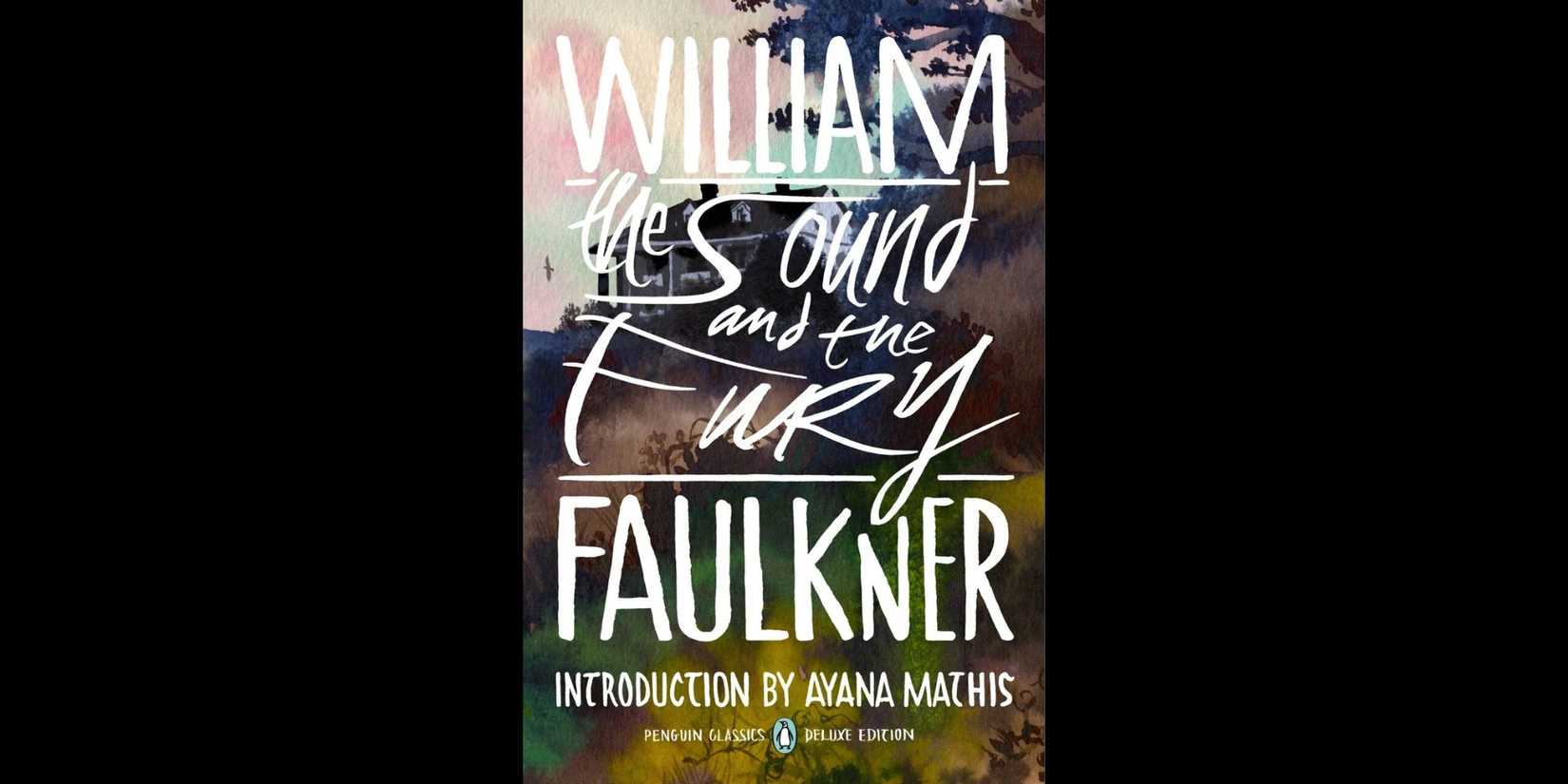
"Caddy smelled like trees." William Faulkner has written several books that continue to be discussed and taught in literature courses around the globe, though perhaps the most well-regarded of them is The Sound and the Fury. It's a modernist landmark, chronicling the decline of the once-prominent Compson family in the South. The book is divided into four sections, each presenting a different perspective on the family's troubled history.
The first is narrated by Benjy Compson, a man with an intellectual disability, and the writing immerses us inside his fragmented perception of time. Subsequent sections explore the psychological struggles of his brothers Quentin and Jason, before the final portion zeroes in on the Compsons' Black housekeeper. Initially, all this received a muted reaction, but in the decades to follow, Faulkner was awarded the Nobel Prize, and this novel has placed highly on several publications' lists of the greatest novels ever.
5 'Moby-Dick' (1851)
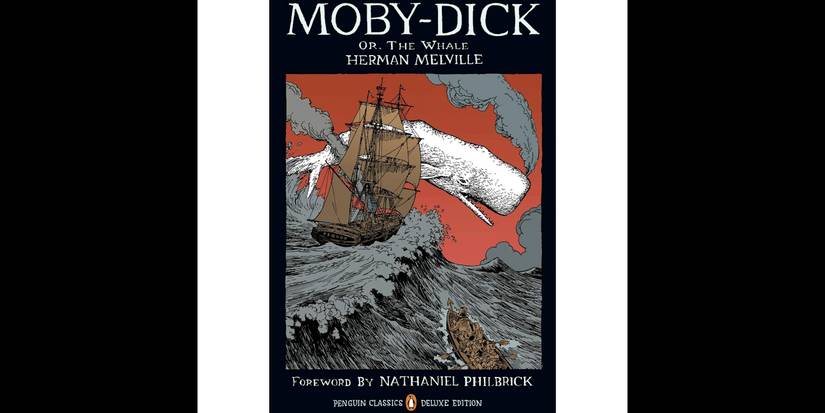
"Call me Ishmael." Here, we meet Ishmael, a sailor who joins the crew of the whaling ship Pequod, commanded by the formidable Captain Ahab. However, Ahab has little interest in conducting an ordinary whaling expedition. Instead, he's consumed by an obsessive desire to kill Moby Dick, an enormous white sperm whale responsible for taking his leg during an earlier encounter. As the Pequod ventures across the oceans, Ahab's increasingly destructive obsession threatens to doom everyone aboard.
Although the main storyline may seem relatively straightforward, Moby-Dick is really a much more complicated, layered work. It incorporates philosophical reflections, elaborate symbolism, Biblical allusions, theatrical dialogue, and extensive discussions of whale anatomy and the whaling industry. These digressions can occasionally test readers' patience, but they're essential to the overall effect. Once again, this is a book that wasn't fully embraced on release, but nowadays, many consider Moby-Dick to be the Great American Novel.
4 'One Hundred Years of Solitude' (1967)
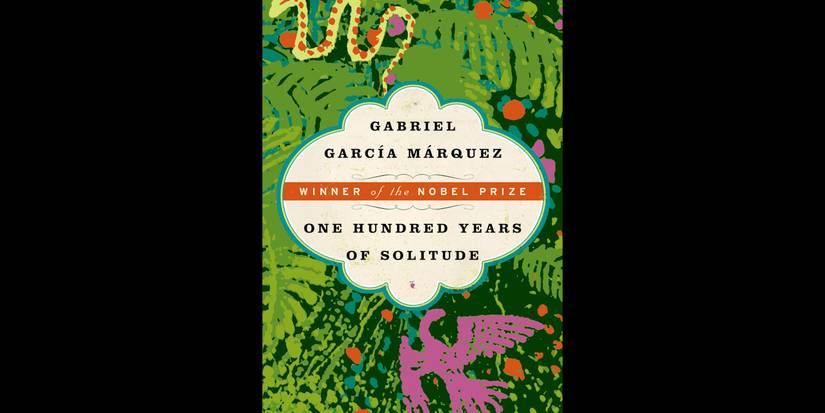
"…remember that distant afternoon when his father took him to discover ice." This gem follows generations of the Buendía family in Macondo, a fictional Colombian settlement founded by José Arcadio Buendía and his wife, Úrsula Iguarán. Their marriage gives the early chapters much of their comedy and establishes a pattern that outlives them both. From here, Gabriel García Márquez weaves an expansive tale of magical realism, a cornerstone of the whole subgenre.
Indeed, the influence of One Hundred Years of Solitude is immense, with countless writers drawing inspiration from it. Authors such as Salman Rushdie, Toni Morrison, and Carlos Fuentes have all praised it, while Chilean poet Pablo Neruda famously called it "the greatest revelation in the Spanish language since Don Quixote." The book won a bevy of awards when it came out, and contributed to the author receiving the 1982 Nobel Prize in Literature.
3 'The Great Gatsby' (1925)

"So we beat on, boats against the current, borne back ceaselessly into the past." A vivid time capsule of the Roaring Twenties, as well as a timeless statement on the promises and disappointments of the American Dream. The tale is told by Nick Carraway, a young bond salesman who becomes fascinated by his mysterious, fabulously wealthy neighbor, Jay Gatsby. Behind Gatsby's carefully cultivated persona lies an obsessive desire to reunite with Daisy Buchanan, a married woman he loved years earlier.
What might have been a glamorous romance instead develops into a devastating examination of wealth, class, ambition, and the impossibility of reclaiming the past. There is so much wisdom and bittersweet emotion here, despite the book's relatively modest length of 180 pages. When The Great Gatsby was first published, peers like T.S. Elliot and Gertrude Stein praised it. Today, it appears on countless 'greatest novels' lists and is taught in high schools all over the world.
2 'War and Peace' (1869)

"There is no greatness where there is not simplicity, goodness, and truth." This one is so highly regarded worldwide that its title is sometimes used as a shorthand for literary excellence. Set against the Napoleonic Wars, War and Peace follows several aristocratic Russian families as they become entangled with some of the most consequential events in European history. The cast includes the idealistic Pierre Bezukhov, the disillusioned Prince Andrei Bolkonsky, and the spirited Natasha Rostova.
Each of these characters undergoes a profound personal transformation over the course of the book. Through their experiences, Tolstoy explores everything from love and mortality to the nature of history and the forces that shape human destiny. It's remarkable that he's able to nimbly combine all these elements. Indeed, his prose moves effortlessly between lavish aristocratic gatherings, devastating battlefield scenes, and quiet moments of introspection, making for a detailed portrait of Russian society.
1 'Ulysses' (1922)

"History, Stephen said, is a nightmare from which I am trying to awake." Many regard this cryptic, boundary-pushing book to be the greatest English-language novel of the 20th century. Taking place over a single day in Dublin, June 16, 1904, Ulysses centers on three characters: Leopold Bloom, an advertising salesman; Stephen Dedalus, a young intellectual; and Molly Bloom, Leopold's wife. Their seemingly ordinary experiences form the foundation of an extraordinarily ambitious literary experiment, loosely modeled on Homer's 'Odyssey'.
Rather than depicting heroic adventures, writer James Joyce transforms everyday encounters, mundane activities, and private thoughts into an epic exploration of human consciousness. The prose itself conveys this. The author employs a dizzying assortment of narrative techniques, including stream of consciousness, elaborate wordplay, parody, and radical stylistic experimentation. Not for nothing, many literary heavyweights have declared Ulysses to be a masterpiece, including Faulkner, Hemingway, and T.S. Eliot.
Collider Exclusive · 8 Questions · 2 Minutes Which Agatha Christie Character Are You? Poirot · Marple · Ariadne Oliver · Hastings
Answer eight quick questions and we will tell you which one you are. Christie is the best selling novelist in history and she only ever needed about four kinds of person to do it, all of whom are still turning up on screen a century later.
🥚Poirot(33 novels)
🧶Miss Marple(12 novels)
🍎Ariadne Oliver(8 novels)
🎖Hastings(8 novels)
01
How tidy is your home? Pick the one that sounds most like you.
02
How would your friends describe you? Be honest.
03
How do you work out what somebody is really like? One answer only.
04
Pick a snack. No wrong answers here.
05
How do you handle a long train journey? Pick the closest answer.
06
How do you feel about being underestimated? Pick the closest answer.
07
What is your role in a group project? Think about work.
08
How would you want to be described in a book? Last one. This is the one that decides it.
The Drawing Room, After Dinner You Are…
Toni Collette and Kit Harington are shooting a new Miss Marple and 20th Century has several more Christies in development, so the drawing room is busier than it has been in decades. Here is which of them you are, and the case for yours being the best.
Hercule Poirot
Order, method, and a quiet confidence that you are the cleverest person present. Poirot is a retired Belgian police officer who solves murders by sitting still and thinking, and who is vain enough to make the reveal a performance every single time.
- You need things to be in their right place and you are not remotely sorry about it.
- David Suchet played him for twenty four years and filmed every single Poirot story Christie wrote.
- Kenneth Branagh has made three as director and star, from Orient Express in 2017 to A Haunting in Venice.
- Your flaw is that the performance of being right can get in the way of simply being helpful.
Miss Marple
People tell you things because they cannot imagine you being a threat. Marple solves murders by comparing everybody to somebody she once knew in St Mary Mead, which sounds like a joke until you notice it works every time, because human beings are not as original as they think.
- You are the quietest person in the room and you leave knowing the most.
- Joan Hickson is still the definitive television Marple, and Christie herself wrote to her hoping she would one day play the part.
- Toni Collette and Kit Harington are making a new Marple film, announced this summer.
- Your risk is that people only work out how formidable you are once it is far too late.
Ariadne Oliver
You have far too many ideas and roughly a fifth of them are excellent. Ariadne Oliver is a successful crime novelist who is sick of her famous foreign detective and keeps saying so, which is Christie writing about Christie and getting away with it completely.
- You think out loud, change your mind twice, and arrive somewhere nobody else would have found.
- She was Christie's own stand-in, right down to being tired of the detective who made her rich.
- Tina Fey played her opposite Branagh in A Haunting in Venice and gave her the comic timing the part always wanted.
- Your flaw is that fourteen ideas take as long to sort through as they do to have.
Captain Hastings
You are steady, decent and the reason the difficult genius has anybody at all. Hastings narrates the early Poirot novels, misses most of the clues, and is the only character in the books that Poirot is unambiguously fond of, which tells you what he is really for.
- You are the one who turns up, which sounds small and is not.
- Christie gave him the narrator role so readers would have somebody to be as lost as they were.
- Hugh Fraser played him across the ITV series and made him warm rather than slow, which earlier versions never managed.
- Your weakness is taking people at their word, which is lovely right up until it is not.
KioskNews shows a cleaned-up reading view extracted from the publisher’s page — the original always lives on their site, not ours.