Amid learning crisis, PH to lead ASEAN bid to boost reading, math skills
Already have Rappler+?
to listen to groundbreaking journalism.
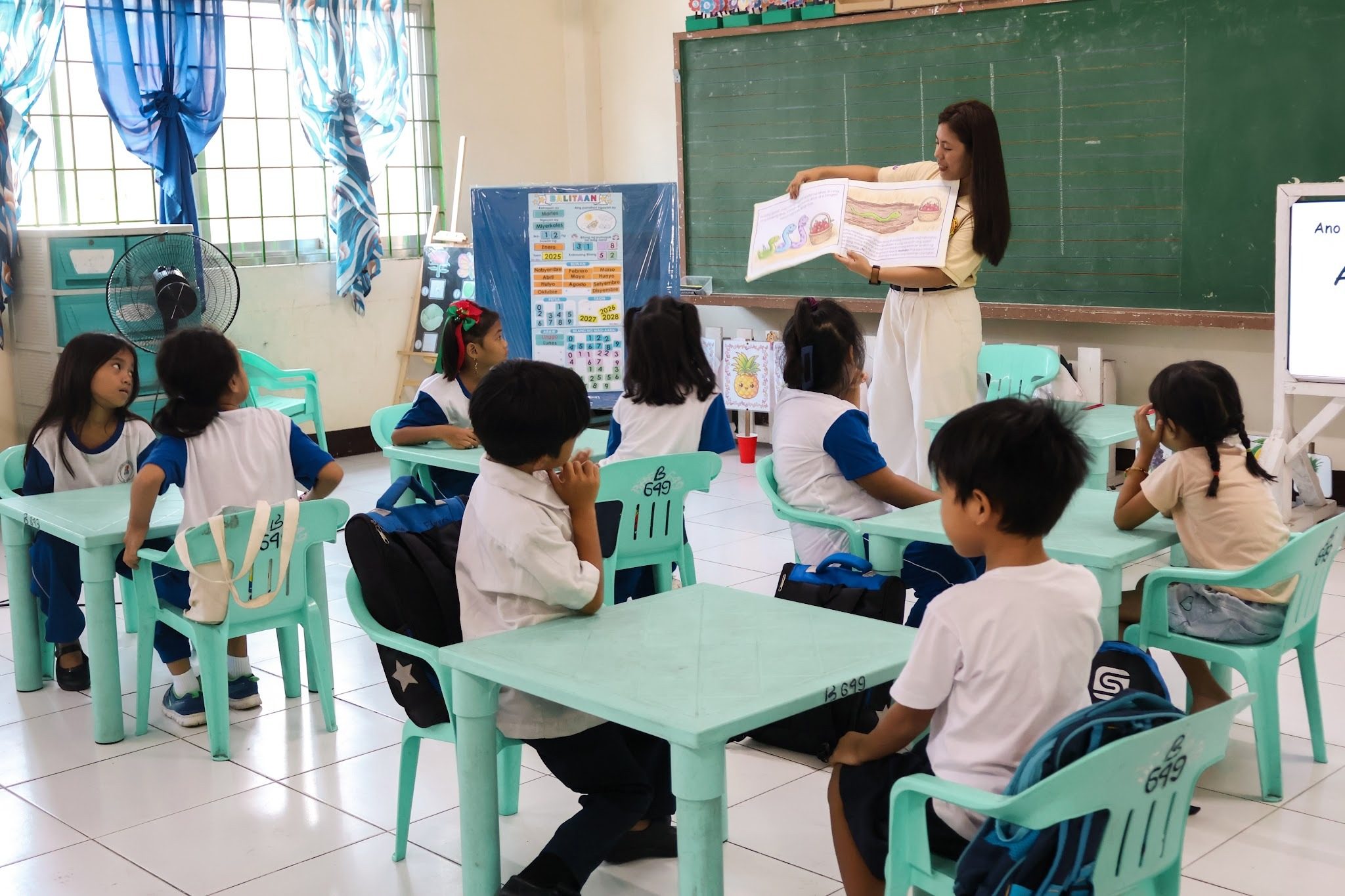
ARAL PROGRAM. Pupils attend a remediation session under the Academic Recovery and Accessible Learning Program at the Senator Benigno S. Aquino Jr. Elementary School in Manila, May 26, 2026.
Second Congressional Commission on Education
While developing ASEAN's learning recovery plan, the Philippines will also have to ensure that its own ARAL Program has enough funds to effectively help struggling Filipino students
AT A GLANCE
- ASEAN aims to enhance reading, math, and socio-emotional skills across member states, as outlined in the ASEAN Declaration on Foundational Learning.
- The Philippines will lead initiatives such as the ASEAN Academic Recovery and Catch-up Program to address learning gaps and improve education standards.
This is AI-generated. Read the article for full context. Report any errors.
MANILA, Philippines – The Association of Southeast Asian Nations (ASEAN) will move to improve reading, math, and socio-emotional skills of students in the region, according to the Philippine Department of Education (DepEd).
It is the core of the ASEAN Declaration on Foundational Learning (ADFL), adopted during the 49th ASEAN Summit and Related Summits in Manila.
By making foundational learning a regional priority, the 11 member states of ASEAN will support early learning, inclusive education, learning recovery, teacher development, responsible use of technology and artificial intelligence, data-driven policies, and sustained investment.
“This declaration goes beyond high-level policy; it is our shared commitment across Southeast Asia to make sure every young learner gets the early support they need to succeed,” Education Secretary Sonny Angara said on Monday, November 16.
“When we strengthen fundamental learning in our classrooms today, we are directly opening doors to real jobs, practical skills, and a brighter future for our youth.”
Under the Philippines’ 2026 ASEAN chairmanship, the DepEd proposed the ADFL in February. It has since undergone extensive regional consultations.
The pitch came amid the Philippines’ attempts to reverse its decades-long learning crisis, documented through national literacy surveys and dismal performances in global evaluations such as the Programme for International Student Assessment.
What will the Philippines do exactly?
The ADFL is just one of the boxes to be ticked under the ASEAN Work Plan on Education 2026-2030. The Philippines will take the lead in ensuring that the regional bloc is implementing the plan.
Aside from this, the Philippines will design and disseminate the ASEAN Academic Recovery and Catch-up Program (ARC-UP), with a timeline of 2027 to 2029, according to the work plan.
The DepEd said ARC-UP will serve as an “integrated regional mechanism” to enable ASEAN member states to share data, target resource allocation, and scale proven strategies to address learning gaps.
While developing ASEAN’s learning recovery plan, the Philippines will also have to ensure that its own Academic Recovery and Accessible Learning or ARAL Program has enough funds to effectively help struggling Filipino students.
The Philippines is also tasked with leading the development of standards for the professionalization of early childhood care and development workers.
Education performance across ASEAN
“Although access to and completion of primary and secondary education have expanded significantly, foundational learning remains highly uneven across the region, with large disparities across countries and education levels,” according to the ASEAN work plan.
The document states that Singapore, Vietnam, and Malaysia reported over half of their students meeting minimum proficiency benchmarks in reading and mathematics at the primary level, with “Singapore’s rates near universal and Vietnam performing particularly well” in math.
It added that several other ASEAN member states, including Laos, Myanmar, and Cambodia, have less than 20% of students reaching the minimum proficiency level.
According to the PISA 2025 results, 15-year-old Filipinos had performance gains in reading, science, and mathematics. The DepEd partly attributed these gains to the implementation of the ARAL Program. Still, work continues as the Philippines remains ranked in the bottom 20.
Not all ASEAN member states participated in the latest round of PISA, which is administered by the Organisation for Economic Co-operation and Development.
Cambodia’s PISA trajectory is similar to the Philippines’, posting improved scores but still having more than half of tested students classified as low-performing.
The co-lead for the ADFL is Cambodia, which will contribute to the formation of regional models by sharing Phnom Penh’s experiences on teaching methods as well as literacy and numeracy strategies, among others.
According to the work plan, Cambodia will also pilot a catch-up program model and document learnings for regional replication.
Observers will now look to how Singapore would be moving forward education reform talks during its ASEAN chairmanship in 2027. Singapore’s PISA 2025 results showed a decline in reading scores, reflecting the global trend. – Rappler.com
KioskNews shows a cleaned-up reading view extracted from the publisher’s page — the original always lives on their site, not ours.