The 10 Greatest War Movies Based on Books, Ranked

Sign in to your Collider account
Book-to-movie adaptations are kind of a common thing in cinema, and they have been for about 100 years now. In fact, there are many movies out there that some don't even realize have literary origins, as the movies have practically outgrown their sources and have achieved more success. This is true for any genre, from comedy to fantasy, sci-fi, and horror. Yes, this is the case with war movies, too. Many in the world have survived war, and many have taken it upon themselves to document their experiences in memoirs. Others still may choose to write a fictitious story with war as a backdrop.
Many of the finest war films ever made are adapted from books, bringing these extraordinary stories to life so that audiences get to witness the horrors of war from the comfort of their own home, even though no movie can ever truly portray what war is really like. These are the best war movies based on books, which have stunned audiences and kept themselves ingrained in their memories for years.
10 'The Last of the Mohicans' (1992)
Based on 'The Last of the Mohicans: A Narrative of 1757' (1826) by James Fenimore Cooper

The Last of the Mohicans takes place during the Seven Years' War, a global conflict that spread to multiple continents in the mid-18th Century. This fictional story, based on a novel that came out almost 200 years earlier by James Fenimore Cooper, stars Daniel Day-Lewis as Hawkeye, a European man who is raised by an Indigenous tribe and who finds himself fighting against the French Empire during the North American theater of the war.
The 1992 film is far from the first movie to be made that is based on the novel, but it is unquestionably the best, with its sweeping adventure and romance keeping things entertaining for a wide variety of audiences. The movie won an Oscar for Best Sound, and sports a sky-high production value, making it not just a good story, but a feast for the eyes, as well.
9 'The Thin Red Line' (1998)
Based on 'The Thin Red Line' (1962) by James Jones

The Thin Red Line takes place during the Battle of Guadalcanal, a pivotal moment in the Pacific Theater of World War II. Like The Last of the Mohicans, the 90s version of the movie isn't exactly the first film adaptation of an already-established work, but it is undoubtedly the best and most popular adaptation to date. Set in what is now the nation of the Solomon Islands, The Thin Red Line details the defense of Guadalcanal against the invading Japanese force, a crucial fight to ensure that Japan is unable to breach the last Allied line of defense before Australia.
The Thin Red Line earned seven Oscar nominations, yet astonishingly, didn't receive a single win, which is honestly kind of criminal. Sure, maybe it didn't deserve the award for Best Picture, but it definitely deserved something. Regardless, it is a tense, thrilling movie about one of the most important battles in World War II, one that often gets overlooked when contrasted to the ones taking place in Europe, half a world away. It's a movie that really shows the unmatched scale of the war, proving that there were very few places that were safe during the time period.
8 'Black Hawk Down' (2001)
Based on 'Black Hawk Down' (1999) by Mark Bowden

Black Hawk Down is based on a non-fiction book of the same name by Mark Bowden, which in turn is based on the Battle of Mogadishu, one of the most disastrous US operations in recent history. In the film, a group of special forces is dispatched to the Somali capital during the peak of the Somali Civil War, hoping to capture the advisors of nefarious warlord Mohamed Farrah Aidid, who has been stealing UN supply drops from the Somali populace. Unfortunately for the US, they have severely underestimated Aidid, who has studied US battle plans.
What should have been a quick snatch-and-grab spirals out of control both literally and figuratively when an American helicopter is shot down, and fierce resistance arrives. The 30-minute operation descends into a nearly 24-hour standoff resulting in thousands of deaths and injuries, and comes as a bitter defeat for Task Force Ranger. Black Hawk Down is absolutely thrilling, with its tense portrayal of combat and the chaos that it entails. From start to finish, it is pretty much non-stop action, and is sure to keep the blood pumping all the way through.
7 'All Quiet on the Western Front' (1930)
Based on 'All Quiet on the Western Front' (1929) by Erich Maria Remarque

All Quiet on the Western Front has seen multiple film adaptations in the years since the original novel's release, with the most recent one coming out in 2022. But the 1930 one is often regarded by critics as being the best one. Coming out just a year after the novel, All Quiet is the story of a young German man who becomes enthralled by the propaganda that his country produces during World War I, resolving to join the war effort with his friends from school. Unfortunately for them, they have no idea what they have gotten themselves into.
The novel was actually based on Erich Maria Remarque's personal experience serving in "the war to end all wars," and the squalid conditions he faced in the trenches, along with the people he lost and the nightmares he endured years later. One of the most classic anti-war movies, All Quiet on the Western Front is a movie that shows the state of the world's nations at the time, along with the biggest destruction of life that the world had seen up until that point.
6 'The Pianist' (2002)
Based on 'The Pianist' (1946) by Władysław Szpilman

The Pianist is based on a memoir by Polish-Jewish piano player Władysław Szpilman, who suffered greatly at the hands of the Third Reich during the Holocaust. The film, naturally, is a biopic, with Adrien Brody playing Szpilman in a role that won him an Oscar. The film dives deep into the darkest part of Szpilman's life, exploring the terrible things he felt and witnessed from 1939 all the way up until 1945, when the fascist regime plaguing his life finally crumbled.
The movie received seven Oscar nominations and three wins, and has resonated with audiences due to its emotional factor, depicting one man's struggle against the greatest of evils, losing loved ones and pieces of himself along the way. There are very few films that can really capture the true nature of how horrible the Holocaust was, but The Pianist is one that absolutely nailed it, and that is sure to induce tears in anyone who watches it.
Collider Exclusive · Oscar Best Picture Quiz
Which Oscar Best Picture
Is Your Perfect Movie?
Parasite · Everything Everywhere · Oppenheimer · Birdman · No Country
Five Oscar Best Picture winners. Five completely different visions of what cinema can be — and what it can do to you. One of them is the film that was made for the way your mind works. Ten questions will figure out which one.
🪜Parasite
🌀Everything Everywhere
☢️Oppenheimer
🐦Birdman
🪙No Country for Old Men
01
What kind of film experience do you actually want? The best movies don't just entertain — they leave something behind.
02
Which idea grabs you most in a film? Great films are driven by a central obsession. What's yours?
03
How do you like your story told? Form is content. The way a story is shaped changes what it means.
04
What makes a truly great antagonist? The opposition defines the protagonist. What kind of opposition fascinates you?
05
What do you want from a film's ending? The final note is the one that lingers. What do you want it to sound like?
06
Which setting pulls you in most? Where a film takes place shapes everything — mood, stakes, what's even possible.
07
What cinematic craft impresses you most? Every great film has a signature — a technical or artistic element that makes it unmistakable.
08
What kind of main character do you root for? The protagonist is the lens. Who you choose to follow says something about you.
09
How do you feel about a film that takes its time? Pace is a choice. Some films sprint; others let tension accumulate slowly, deliberately.
10
What do you want to feel walking out of the cinema? The best films leave a mark. What kind of mark do you want?
The Academy Has Decided Your Perfect Film Is…
Your answers have pointed to one Oscar Best Picture winner above all others. This is the film that was made for the way your mind works.
Parasite
You are drawn to films that operate on multiple levels simultaneously — that begin in one genre and quietly, brilliantly migrate into another. Bong Joon-ho's Parasite is a film about class, desire, and the architecture of inequality that manages to be darkly funny, deeply suspenseful, and genuinely shocking across a single extraordinary running time. Your instinct is for cinema that hides its true intentions until the moment it's ready to reveal them. Parasite is exactly that — a film that rewards close attention and punishes assumptions, right up to its devastating final image.
Everything Everywhere All at Once
You want it all — and this film gives you all of it. The Daniels' Everything Everywhere All at Once is one of the most maximalist films ever made: action comedy, multiverse sci-fi, family drama, existential crisis, and a genuinely earned emotional core that sneaks up on you amid the chaos. You are someone who responds to ambition, who doesn't want cinema to choose between being entertaining and being meaningful. This film refuses that choice entirely. It is overwhelming by design, and its overwhelming nature is precisely the point — because the feeling of being crushed by infinite possibility is exactly what it's about.
Oppenheimer
You are drawn to cinema on a grand scale — films that understand history not as a backdrop but as a force, and that place their characters inside that force and watch what happens. Christopher Nolan's Oppenheimer is a film about the terrifying gap between what we can do and what we should do, told with the full weight of one of the most consequential moments in human history behind it. You want your films to feel important without feeling self-important — to earn their ambition through sheer craft and the gravity of their subject. Oppenheimer does exactly that. It is enormous, complicated, and refuses easy comfort.
Birdman
You are drawn to films that foreground their own construction — that make the how of the filmmaking part of the what it's about. Alejandro González Iñárritu's Birdman, shot to appear as a single continuous take, is cinema examining itself through the cracked mirror of a fading actor's ego. You respond to formal daring, to the feeling that a film is doing something that probably shouldn't be possible. Michael Keaton's performance and Emmanuel Lubezki's restless camera create something genuinely unlike anything else — a film that is simultaneously about creativity, relevance, self-destruction, and the impossibility of ever truly knowing if your work means anything at all.
No Country for Old Men
You are drawn to cinema that trusts silence, that refuses to explain itself, and that treats dread as a form of meaning. The Coen Brothers' No Country for Old Men is a film about the arrival of a new kind of evil — implacable, arbitrary, and utterly indifferent to the moral frameworks we use to make sense of the world. It is one of the most formally controlled films ever made, and its controlled restraint is what makes it so terrifying. You want your films to haunt you, not comfort you. You are not interested in resolution if resolution would be dishonest. No Country for Old Men is honest in a way that most cinema never dares to be.
5 'Come and See' (1985)
Based on 'Khatyn' (1971) & 'I Am from the Fiery Village' (1977) by Ales Adamovich

Come and See is a Belarusian movie that is actually based on two books: Khatyn, a novel, and I Am from the Fiery Village, a collection of survivors' testimonies, both of which were written by Ales Adamovich, who also co-wrote the movie. Set during World War II, this visceral film shows the atrocities committed by the Nazis during their invasion of the Soviet Union, including how they burned multiple settlements to the ground and slew millions of innocent people just to further their genocidal agenda.
The movie follows Flyora (Yuri Kravchenko), a 16-year-old boy who is drafted into fighting for the partisans against the Nazis, as he is subjected to horrors beyond anyone's imagination. The psychological war film explores the effects of trauma, loss, and genocide, and doesn't pull any punches when it does this. It has become infamous as being among the most realistic depictions of war ever found in cinema, one that may be too emotionally distressing for even the most steadfast of viewers. Still, it is a brilliant movie, one that really lets the viewer understand just how bad the Second World War was.
4 'Lawrence of Arabia' (1962)
Based on 'Seven Pillars of Wisdom' (1926) by T. E. Lawrence
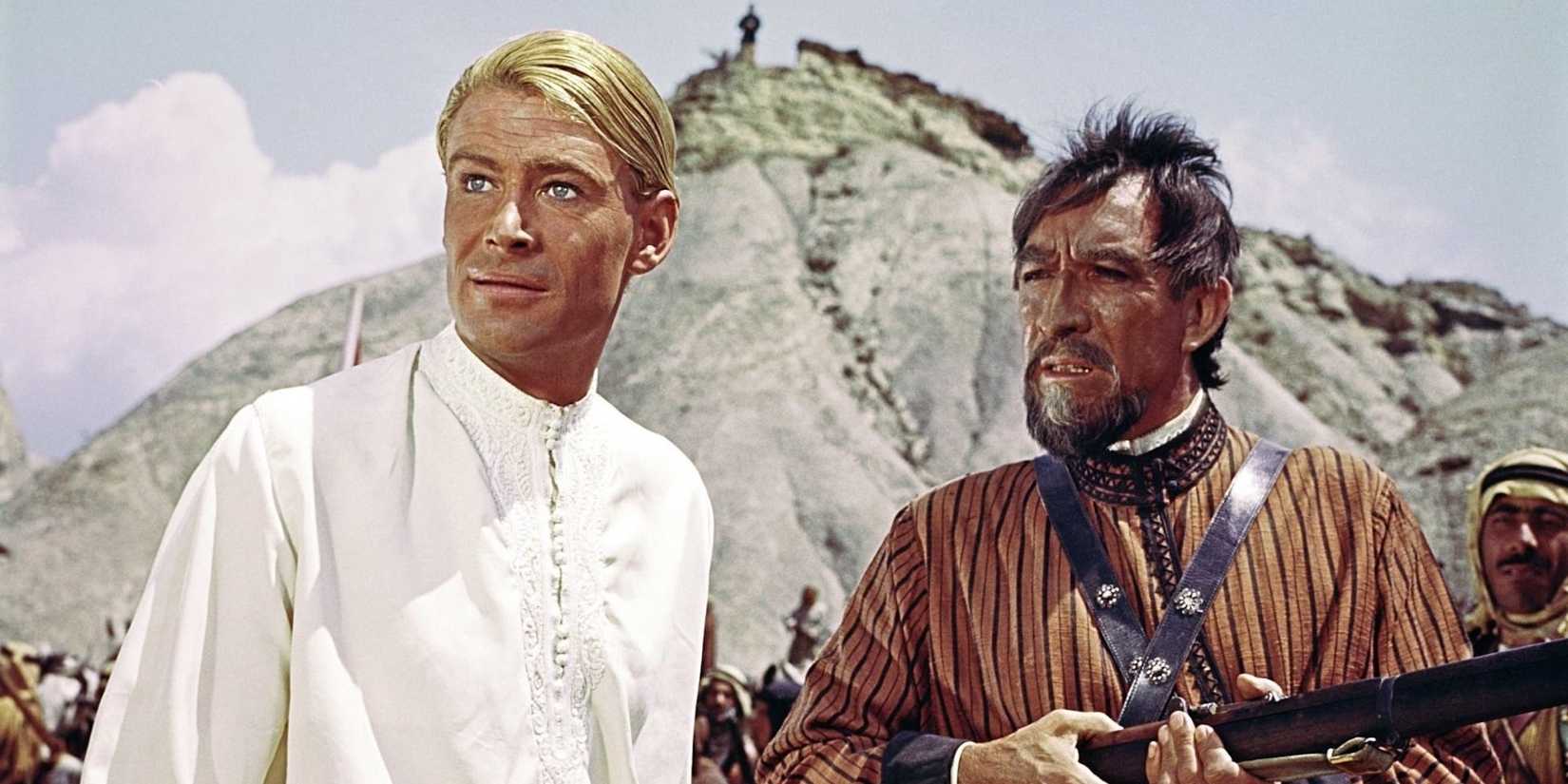
Lawrence of Arabia is based on the personal accounts of T. E. Lawrence, a British military officer who was sent by the Crown as a liaison between them and the Arab insurgents during the First World War. Lawrence's job was to aid the insurgents in waging desert warfare against the rising Ottoman Empire, which was quickly expanding and intending to overtake the Ottoman Empire.
Sure, there are some glaring historical inaccuracies in the film, but for the most part, Lawrence of Arabia is an exhilarating epic war movie that takes viewers to an area of World War I not often talked about, and it received a whopping ten Oscar nominations for this effort. Of those ten, it won seven of them, including the award for Best Picture. Lawrence of Arabia is an essential and timeless World War I movie that absolutely must be seen by any cinephile.
3 'Schindler's List' (1993)
Based on 'Schindler's Ark' (1982) by Thomas Keneally

Schindler's List is a drama film based on the historical fiction novel Schindler's Ark by Thomas Keneally. Though this novel is presented as fiction, it is actually based on a true story: that of Oskar Schindler (Liam Neeson), a factory owner and member of the Nazi Party who becomes disillusioned with the practices of his party and makes it his personal mission to save the lives of countless Jewish prisoners during the Holocaust by employing them at his factory.
This monochrome flick is arguably among the saddest films ever made, exploring the horror of the Holocaust without sugar-coating anything, and also taking a long, hard look at Schindler's loss of belief and identity, and his quest to be a better person. Schindler's List is often regarded by many as being among the finest World War II movies ever made, one that is compassionate, harrowing, yet somehow spectacular through it all.
2 'Grave of the Fireflies' (1988)
Based on 'Grave of the Fireflies' (1967) by Akiyuki Nosaka
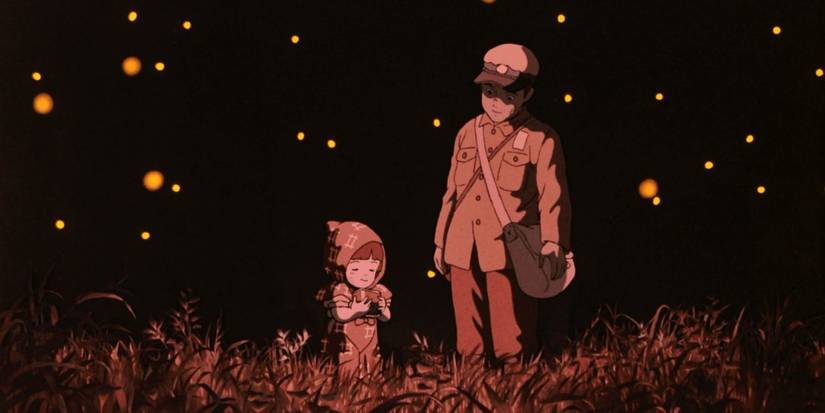
Grave of the Fireflies is based on the semi-autobiographical novelette by Akiyuki Nosaka, who wrote the story as an apology letter for his younger sister, who died of starvation during World War II. This Studio Ghibli film is a serious departure from the whimsical, colorful adventures they often produce, instead taking a distinctively adult approach, making it one of the most depressing movies ever made. The story details the lives of Seita and Setsuko, two young Japanese siblings who survive a firebombing and are left struggling to survive in the "everyone-for-themselves" type of environment.
Seita and Setsuko are subject to immense horrors that no child should ever have to witness and become victims of malnutrition and disease as food becomes scarcer and scarcer as Japanese war efforts fade and the Empire begins to fall to the Allies. They have nowhere to go following the loss of their parents and are forced to make some soul-crushing decisions just to survive. Grave of the Fireflies is emotionally moving, heartbreaking, and bitterly crushing, showing what war looks like for average civilians, who are always the ones who suffer the most.
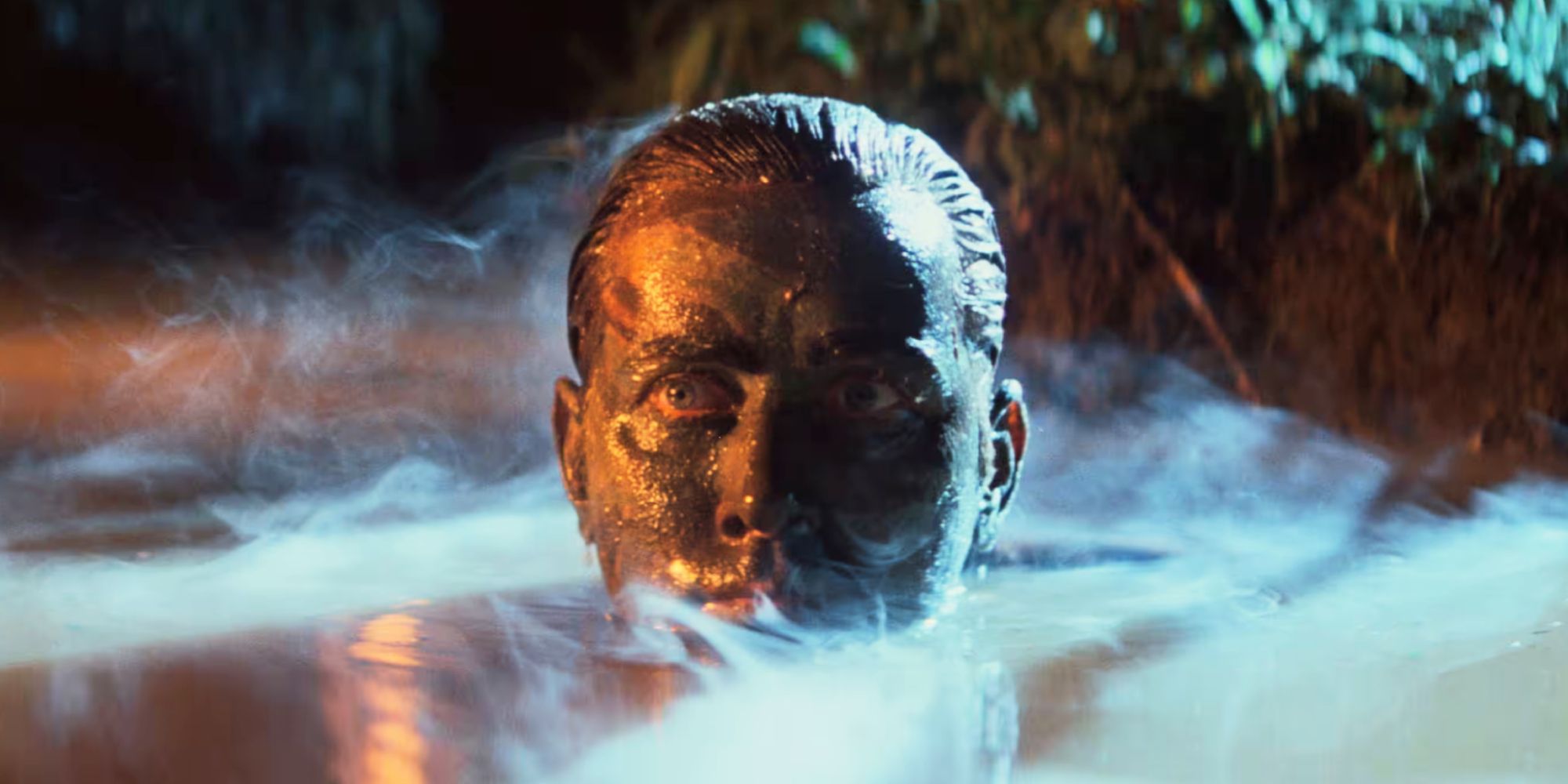
1 'Apocalypse Now' (1979)
Based on 'Heart of Darkness' (1899) by Joseph Conrad
Apocalypse Now takes place during the Vietnam War, which occurred long after the original novella by Joseph Conrad was written. The original book, Heart of Darkness, was about merchants in the Congo region of Africa, but the broad strokes of the story are pretty much the same: someone has gone AWOL, and someone is sent upriver to find out what happened to them, with their sanity beginning to spiral out of control as the jungle becomes increasingly perilous.
Even though the movie is in an entirely different genre than the book, it surprisingly keeps most of the same themes of trauma and the things humans will do to survive, as well as criticisms of colonialism and imperialism. Apocalypse Now comes from Francis Ford Coppola, who also directed The Godfather, and is of a quality comparable to that of his widely acclaimed mafia films. A more modern reimagining of a timeless story, Apocalypse Now is definitely the best war film based on a book, even if the book wasn't a war story per se.
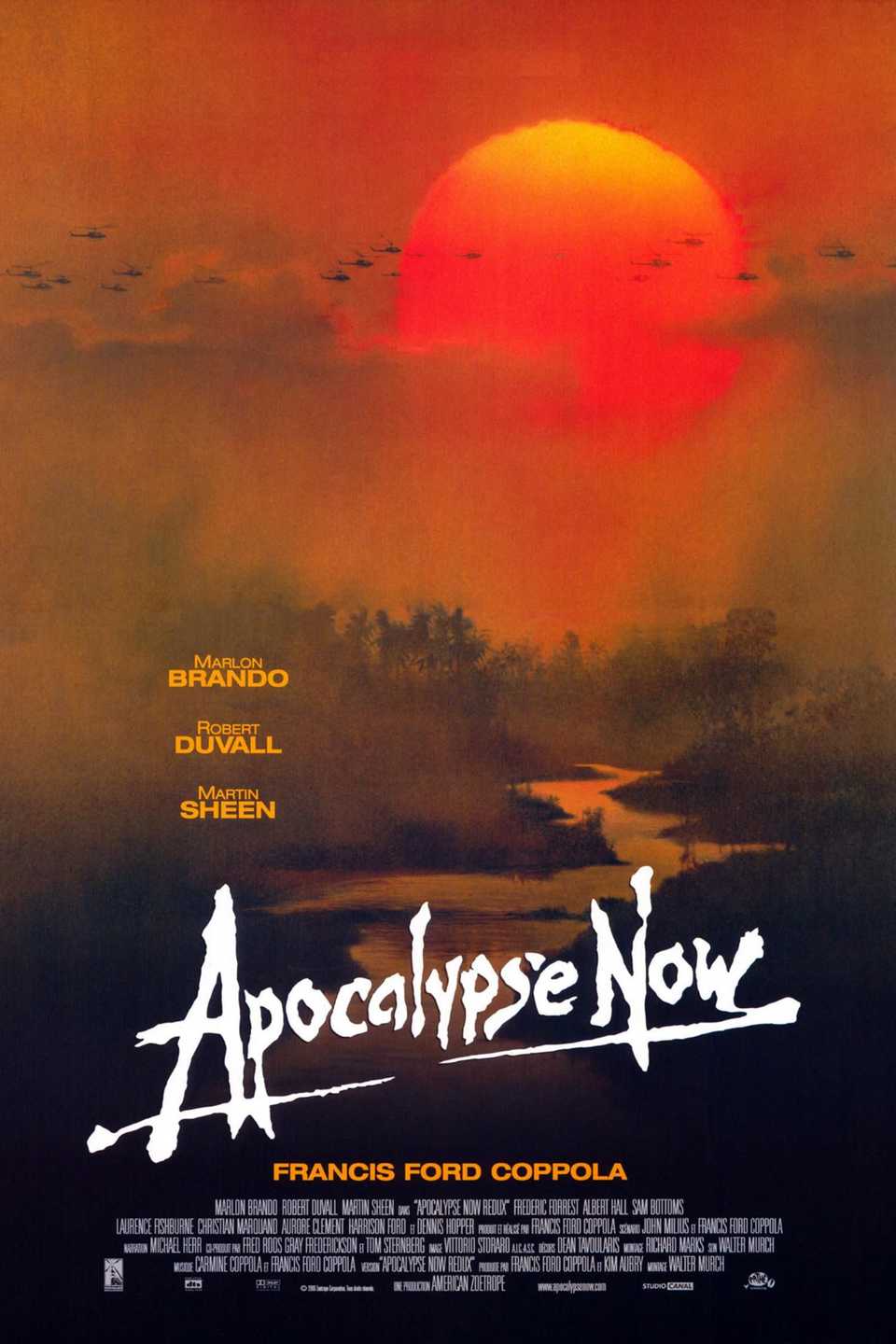
Apocalypse Now
- Release Date
- August 15, 1979
- Runtime
- 147 minutes
- Director
- Francis Ford Coppola
- Writers
- Joseph Conrad, John Milius, Francis Ford Coppola, Michael Herr
KioskNews shows a cleaned-up reading view extracted from the publisher’s page — the original always lives on their site, not ours.