Malaysia court clears way for former Malaysian PM Najib to start house arrest
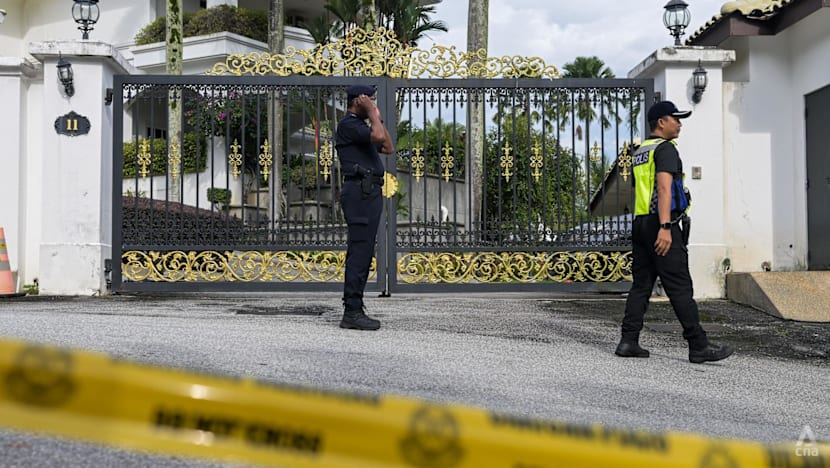
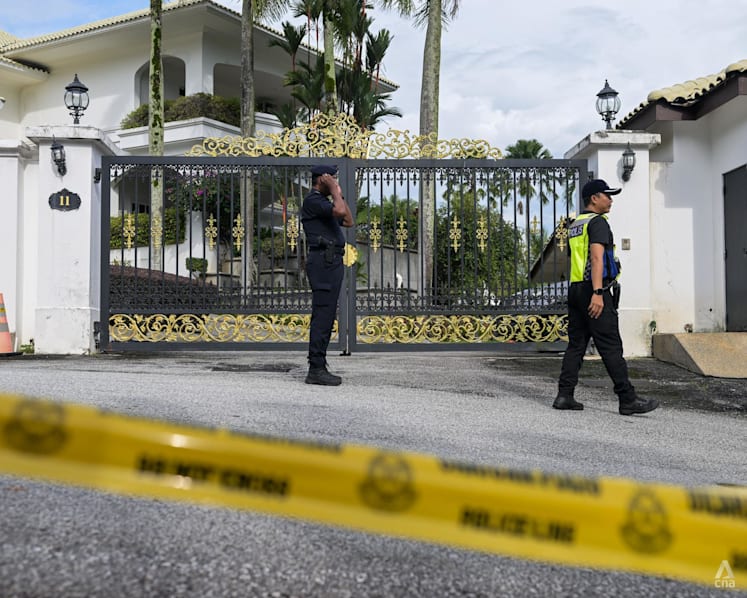
Police put up yellow tape to cordon off the road leading to the house of former Malaysian prime minister Najib Razak ahead of a decision on his house arrest bid on Nov 10, 2026. (Photo: CNA/Fadza Ishak)
10 Nov 2026 05:29PM (Updated: 10 Nov 2026 05:30PM)
SINGAPORE: Former Malaysian prime minister Najib Razak is set to be released from prison again after the High Court issued a new order on Tuesday (Nov 10) allowing Najib to serve the remainder of his SRC International prison sentence under house arrest.
Najib had left the Kajang Prison on Nov 6, after his political party paid a RM50 million (US$12.3 million) fine required to enable the house arrest order to be carried out.
But he was brought back to prison hours later after the Attorney-General temporarily blocked Najib’s transfer from prison to house arrest, saying more legal clarification was needed.
The Attorney-General on Tuesday filed an application with the High Court to review Najib's discharge order.
“The order of discharge on payment of fine dated Nov 6 is hereby annulled and fully replaced by the following order," said Justice Aslam Zainuddin following the attorney-general's application," the Free Malaysia Today reported.
“In line with the conditional pardon (granted by the King), the accused is to serve the remainder of his reduced six-year jail term under house arrest at 11, Jalan Langgak Duta, Taman Duta, Kuala Lumpur until Aug 23, 2028,” said Aslam.
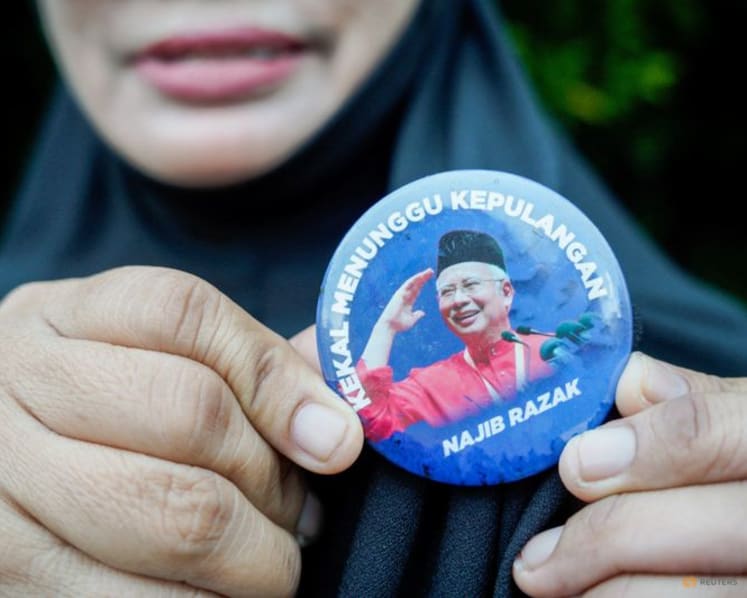
The latest development comes amid a rare public clash between the national palace and the government's top legal office over the implementation of a royal decree.
Najib, 73, has been imprisoned since August 2022 when Malaysia’s top court upheld his conviction for abuse of power, criminal breach of trust and money laundering involving funds from SRC International, a former subsidiary of 1MDB, in his first graft trial linked to the multibillion-dollar looting of the state investment fund.
His original 12-year prison sentence was halved to six years by Malaysia's Pardons Board in 2024, while his fine was reduced from RM210 million to RM50 million.
In September this year, Malaysia King Sultan Ibrahim Iskandar granted Najib a conditional pardon allowing him to serve the remainder of his sentence under house arrest until Aug 23, 2028, subject to payment of the court-ordered fine.
His party, United Malays National Organisation, paid the fine on Nov 6 following a crowdfunding campaign organised by supporters of the former prime minister.
The house arrest applies only to his reduced six-year sentence in the first trial. It does not cover a separate 15-year prison sentence imposed in December 2025 for corruption and money laundering in a second major trial tied to the 1MDB scandal. Najib is appealing that sentence.
After Najib was brought back to prison on Nov 6, the royal palace issued a public rebuke, with Sultan Ibrahim saying that the power to grant pardons is a royal prerogative under Article 42 of Malaysia's Federal Constitution.
“The exercise of this power must be respected in accordance with the position of the Constitutional Monarchy and the principle of the rule of law,” Sultan Ibrahim said.
“Given that all the conditions stipulated in the conditional pardon order have been fulfilled, any argument disputing the order would amount to defying the command of His Majesty the Yang di-Pertuan Agong.”
The Attorney-General's Office later defended its handling of the house arrest order, stressing it was not disputing or defying the royal pardon, and that any allegations of insult or treason against the king were baseless.
It said court clarification was needed on the effect of the High Court's discharge order Friday after the fine was paid. It said the key question was whether the discharge order meant Najib had completed his first sentence or still had time left to serve, as this would determine when his second sentence begins.
KioskNews shows a cleaned-up reading view extracted from the publisher’s page — the original always lives on their site, not ours.