‘One Last Shot’ closes an ambitious DTV action trilogy with style
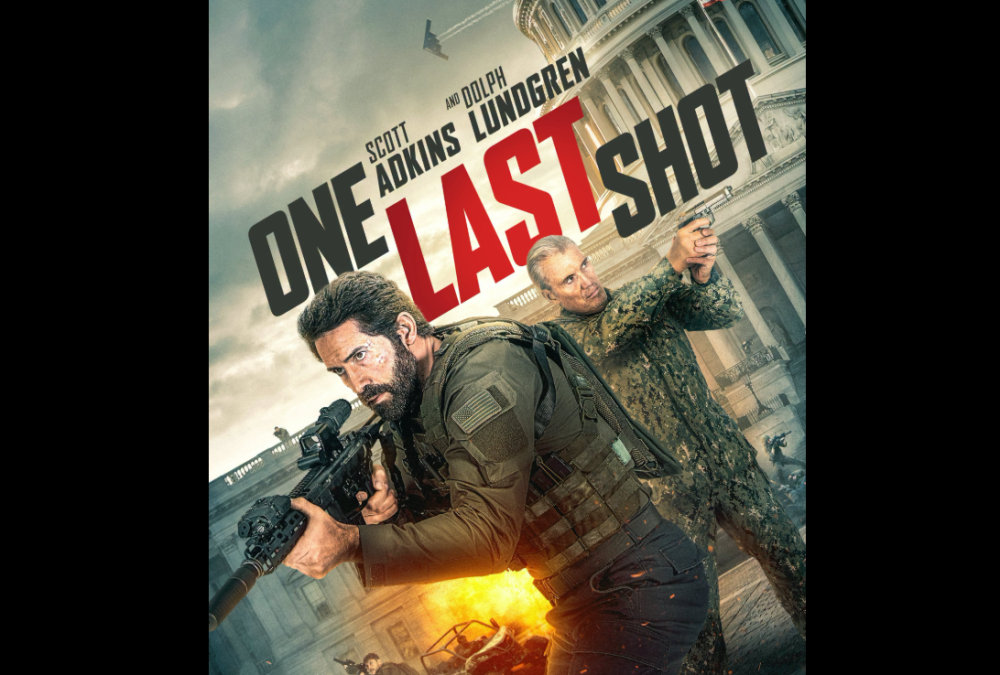
OCTOBER 10 — The “oner” or the single, unbroken continuous shot, is hardly a new phenomenon in cinema.
Film historians and cinephiles have been obsessing over the technique for decades, tracing its lineage back to masterworks like Alfred Hitchcock’s grand illusion in Rope or the legendary, pulse-pounding opening sequence of Orson Welles’ Touch of Evil.
In the modern era, the single-shot sequence has become the ultimate calling card for directors eager to flex their technical bravado.
We’ve seen it elevated to breathtaking art in Alfonso Cuarón’s Children of Men, deployed with inventive kinetic energy in the iconic tracking shot from Episode 4 of Season One of True Detective, and used to quite astonishing effect in Sam Mendes’ 1917.
But if I’m being completely honest, my absolute personal favourite remains that mind boggling, multi-storey stairway brawl in Tony Jaa’s Tom Yum Goong, a sequence of raw, unadulterated physical endurance that remains a high water mark for action filmmaking.
Attempting an entire feature length movie structured around the single-shot gimmick, however, is a much rarer and far more dangerous beast.
Alexander Sokurov famously pulled it off without a single hidden edit in Russian Ark, Alejandro González Iñárritu rode the technique all the way to Oscar glory with Birdman (admittedly with clever hidden cuts) and genre cinema has dabbled in it via claustrophobic horror exercises like Silent House and its original Uruguayan predecessor, La Casa Muda.
But using it for a relentless, heavy duty action franchise? That is a whole different level of madness.
Which brings us to One Last Shot, directed by James Nunn and starring the perpetually underrated action powerhouse Scott Adkins.
In ‘One Last Shot’, Adkins returns as Navy SEAL Jake Harris, who finds himself plunged into yet another high stakes, real time nightmare. — Screengrab via Facebook/Scott Adkins
This film marks the concluding chapter in what has turned out to be an astonishingly ambitious experiment in the world of Direct-To-Video (DTV) action cinema, a full trilogy of continuous, real-time “one-shot” action thrillers.
Starting with 2021’s One Shot and followed by 2024’s One More Shot, Nunn and Adkins have quietly been revolutionising low budget action filmmaking under the radar, proving that you don’t need a two hundred million dollar Hollywood budget to execute jaw dropping physical choreography and shootouts that make perfect geographical sense.
In One Last Shot, Adkins returns as Navy SEAL Jake Harris, who finds himself plunged into yet another high stakes, real time nightmare.
The movies in this trilogy continue right after the other, so a quick watch of the previous one (or just its ending) would help put things in context easier for the audience, but even without any prior knowledge, you will still be fine.
The premise is as lean and functional as any good action movie should be.
Harris must navigate a lockdown facility crawling with heavily armed mercenaries to extract a high value target before time runs out.
There is no time wasted on lengthy exposition or complex subplots, the narrative engine turns on, the camera locks onto Harris, and the film simply never lets go of your throat.
If I had to rank the trilogy, I would say that the second entry, One More Shot, remains the high point of the franchise.
That film hit an almost magical sweet spot where the geography of its airport setting, the pacing of the shootouts, and the seamless nature of its digital hidden cuts aligned perfectly to create a non-stop adrenaline rush.
One Last Shot doesn’t quite surpass the sheer kinetic perfection of its predecessor, occasionally feeling slightly more constrained by its location, which is basically some sort of a giant mansion, which of course cannot even compare with the vastness of an airport.
However, that is a minor nitpick in what is still a deeply impressive technical achievement.
What Nunn and Adkins accomplish here on a fraction of a studio budget is nothing short of a miracle.
Without the safety net of traditional editing to cut away to a stunt double or hide a missed punch, every throw, reload, and tactical sweep has to be executed with razor sharp precision, and that is where the cleverness of the directing and camera placement choices truly shine.
Adkins, as one would expect from a DTV action star of his stature, delivers a bone crunching, intensely physical performance that leaves you exhausted just by watching him clear a hallway.
Meanwhile, Nunn’s camera glides, ducks, and weaves through the crossfire like an invisible active participant in the firefight. An elegant ballet of violence, if one can call it that.
In an era where mainstream theatrical blockbusters routinely rely on choppy, seizure inducing fast cuts and lazy CGI to fake action intensity, One Last Shot stands as a triumphant testament to geometric awareness, awesome physical choreography, and sheer directorial willpower.
It brings a groundbreaking DTV trilogy to a satisfying close, proving once again that the most exciting action cinema is often happening far away from the traditional Hollywood studio system.
KioskNews shows a cleaned-up reading view extracted from the publisher’s page — the original always lives on their site, not ours.