‘Possible Love’, South Korea’s Venice grand jury winner, asks what love means in an age of AI


A YouTube screenshot shows a YouTube scene from South Korea’s ‘Possible Love’ ahead of a Netflix film called ‘Film Fest’ that won the Jury Grand Prize at Venice film fest in September.
By Malay Mail
First Published: Monday, 14 Sep 2026 1:09 PM MYT
Last Modified: Monday, 14 Sep 2026 1:18 PM MYT
SEOUL, Sept 14 — In a Venice Film Festival filled with Hollywood stars and high-concept cinema, South Korean director Lee Chang-dong took home one of its top prizes with a film that does something strikingly simple — it looks squarely at the pain of ordinary people.
Possible Love won the Grand Jury Prize on Saturday, Korea’s first in the category, which is officially the festival’s second-highest award after the Golden Lion, Korea JoongAng Daily reports.
There are no genre tricks here – no thriller machinery, black comedy or science-fiction conceit – as Lee turns his gaze to a world reshaped by immigration, artificial intelligence and mass layoffs.
At its centre is Mi-ok, played by Jeon Do-yeon, whose husband Ho-seok (starring Sul Kyung-gu) has lost his job and whose life revolves around their 10-year-old son.
Over one summer, she grows close to Ye-ji (Cho Yeo-jeong), a documentary director filming laid-off workers, but their friendship exposes a painful divide between someone who can walk away from poverty and someone trapped inside it.
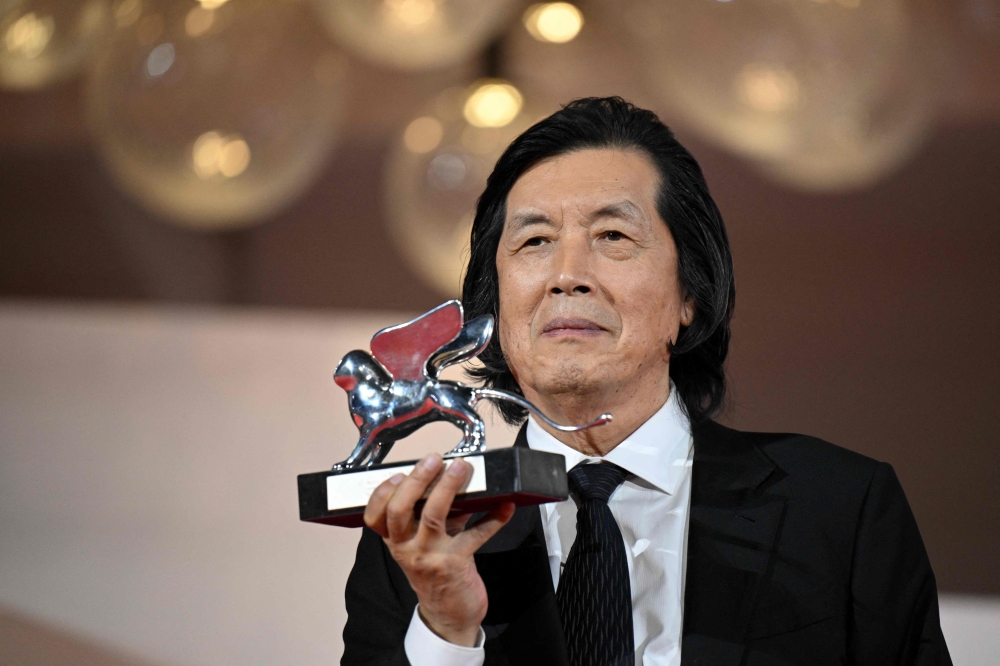
South Korean director Lee Chang-dong receives the Silver Lion, the Grand Jury Prize for ‘Possible Love’ (‘Ga-neung-han sa-rang’ ) at the closing ceremony of the 63rd Venice Film Festival at Venice Lido on September 12, 2026. — AFP pic
The film continues Lee’s long-standing preoccupation with people caught in the pressures of their time.
Lee, who began his career as a novelist, has made only seven features since his 1997 directorial debut Green Fish, yet has become one of South Korean cinema’s most acclaimed auteurs.
His films have repeatedly earned recognition abroad, including the Silver Lion for best director at Venice in 2002 for Oasis and the Fipresci Prize and Vulcan Award at Cannes for Burning in 2018.
According to Korea JoongAng Daily, Lee developed the film after encountering laid-off workers, only to shelve it at one point because he feared it would offer little more than a documentary.
After the Covid-19 pandemic halted cinemas, he returned to the project with the aim of making a film about moving towards “healing” together rather than “consuming” suffering.
“In an age when love seems impossible, I wanted the film to ask what kind of love is still possible, and what we need to do to make love possible,” Lee was quoted by the South Korean newspaper in summing up the question at the heart of the film at a press conference before the Venice film fest.
Possible Love has been selected as South Korea’s entry for the Best International Feature Film category at the 2027 Oscars.
KioskNews shows a cleaned-up reading view extracted from the publisher’s page — the original always lives on their site, not ours.