COP31: Iran wants compensation for environmental damage from US-Israeli strikes
Already have Rappler+?
to listen to groundbreaking journalism.
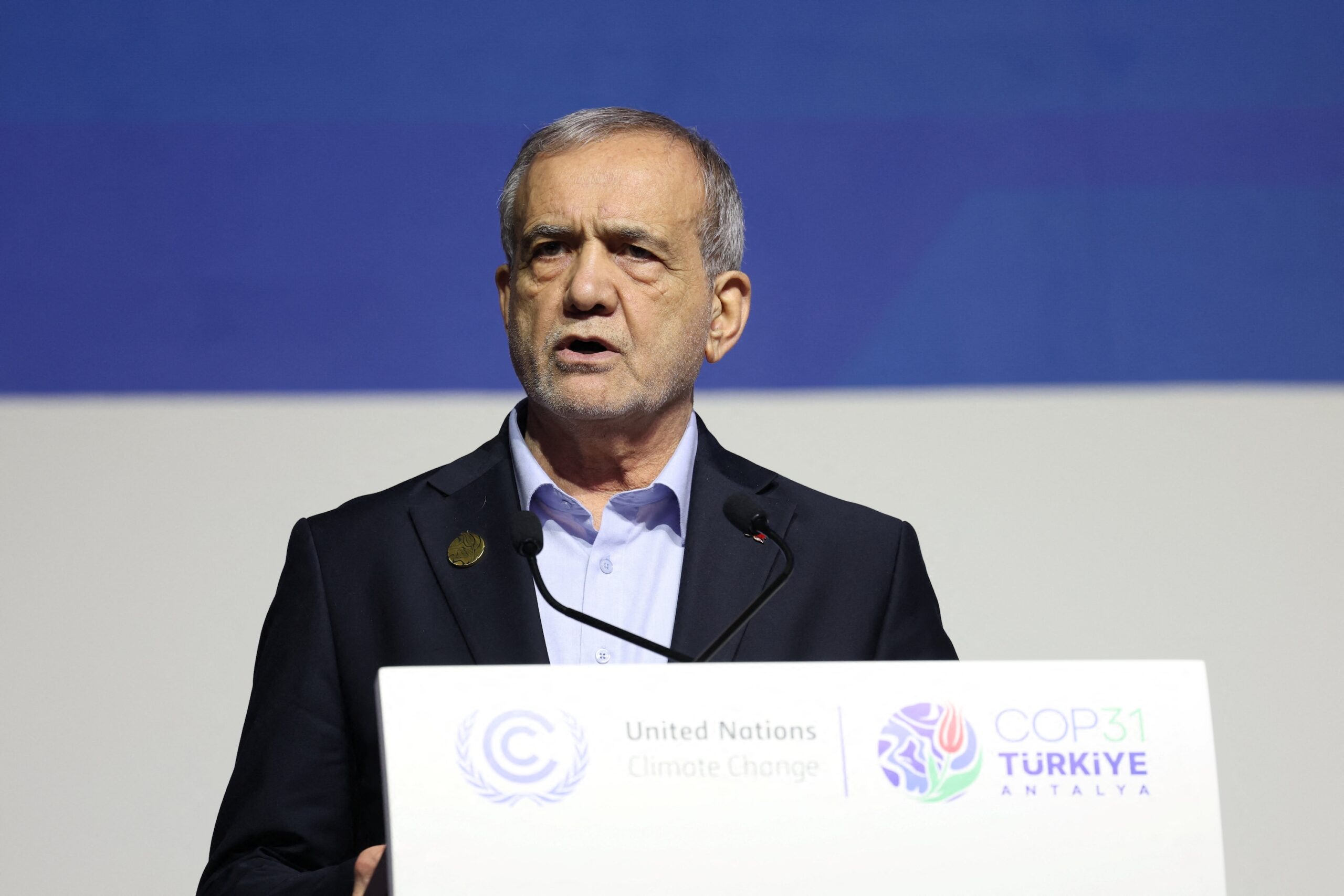
ENVIRONMENTAL IMPACT OF WAR. Iranian President Masoud Pezeshkian speaks during the UN Climate Change Conference (COP31) in Antalya, Turkey, on November 11, 2026.
Murad Sezer/Reuters
'We expect the global community to establish a genuine and meaningful link between climate commitments in times of peace and responsibility in times of war,' says Iran's President Masoud Pezeshkian
ANTALYA, Turkey – Iran’s President Masoud Pezeshkian told the COP31 climate conference on Wednesday, November 11, his country wanted compensation for environmental damage caused by US and Israeli strikes, saying the issue related to global efforts to fight climate change.
“We expect the global community to establish a genuine and meaningful link between climate commitments in times of peace and responsibility in times of war, to document and assess the environmental damages caused by military aggressions and to develop compensation mechanisms,” he said.
His comments were part of back-to-back speeches by heads of state on the third day of the two-week conference in Turkey.
International climate agreements currently include billions of dollars in wealthy-country finance to help developing countries adapt to climate change and pay for its impacts, but there is no provision covering environmental impacts of military strikes.
The US and Israel launched a military campaign against Iran in late February. The conflict, which spread to Lebanon and the Gulf, has involved repeated strikes on energy infrastructure in Iran and across the wider region, as well as strikes on shipping. Iran has repeatedly attacked oil tankers navigating the Strait of Hormuz.
Those attacks have caused environmental damage, including substantial oil leaks.
The Iran war may also have led to a reduction in overall global emissions. A report from a consortium of international scientists on Tuesday, November 10, said global fossil fuel emissions are on track to fall slightly this year, in part due to high prices for fuel and expanded use of renewable energy in the wake of the conflict. – Rappler.com
KioskNews shows a cleaned-up reading view extracted from the publisher’s page — the original always lives on their site, not ours.