Memoir of a troubled Jew: the ghosts of the Holocaust and the Nakba haunt David Leser’s book
I begin this review with the International Court’s recent ruling that the military junta of Myanmar is guilty of genocide in its persecution of the Rohingya people: the first time the court has found a state guilty of genocide.
This is a country far closer to us than Israel, with many of its refugees living among us. Yet it receives, at best, only a small fraction of the attention Australians have paid to Israel/Palestine over the past three years.
There are several reasons. The most significant, I suspect, is the longstanding Australian support for Israel, which the current government has cautiously begun to reverse. The Burmese diaspora do not support the Myanmar generals, whereas our peak Jewish organisations are ferocious in their support of Israel.
Review: Light Sleeper: Memoir of a Troubled Jew by David Leser (Penguin Random House)
Australian journalist David Leser’s Light Sleeper: Memoir of a Troubled Jew is the testimony of a Jewish man struggling to come to terms with what he sees as the inhumane practices of the country he had been taught was also his. Like many Jews today, he struggles with the limits to tribal loyalty, and the extraordinary pressure to support Israel from the established Jewish organisations.
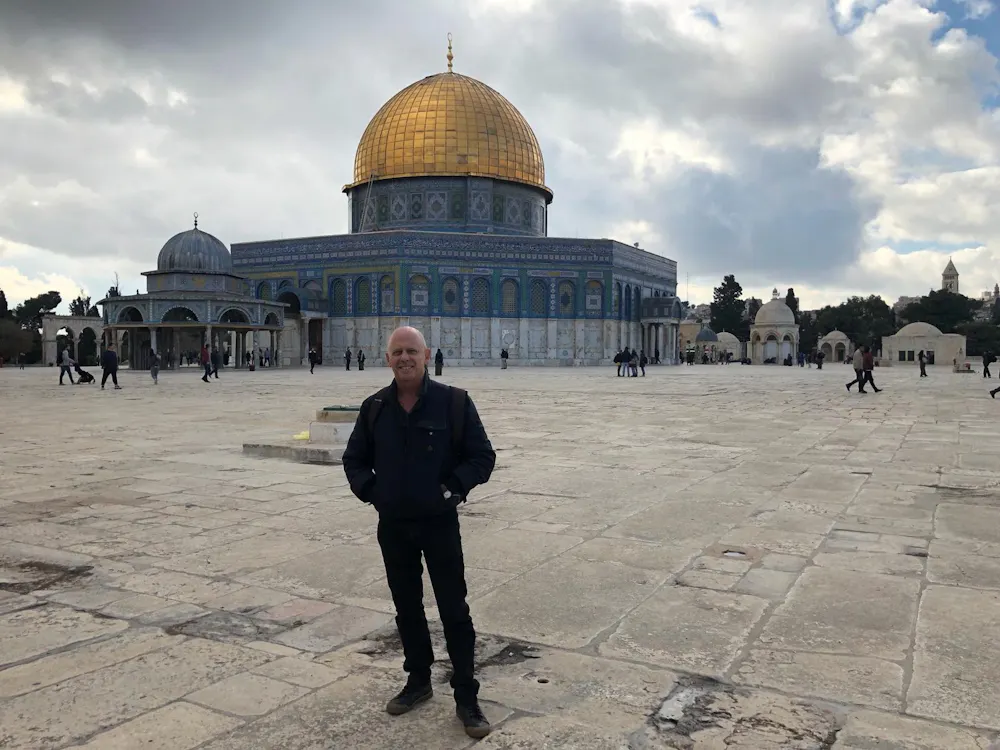
In the interests of objectivity: I am a supporter of the Jewish Council, a group established to counter the pro-Israeli position of legacy Jewish organisations and the stances of both the Liberal Party and the Murdoch press. Like increasing numbers of Australians, I am alarmed by the recommendations from the government’s Special Envoy to Combat Antisemitism, which too often conflate antisemitism with hatred for Israel.
Leser, a former Middle East and Washington D.C. correspondent for national newspapers, has won three Walkley Awards. The third, awarded just last week, was for his work on the Bondi attack (he was out to dinner in south Bondi, that first night of Hanukkah last December, when gunshots rang out nearby) and related pieces. The second was for his writing on the Israel Gaza war. He also has a United Nations human rights commendation.
I came to this book having read some of his newspaper columns in the Sydney Morning Herald, and sharing most of his views.
Reconciling his Jewishness with Israel
Since 1986, when he became a freelance correspondent in Jerusalem, Leser has been seeking to reconcile his Jewishness with the realities of the Palestinian situation:
How could we as a people inflict such indignities on another people after everything we’d endured? How did the Jewish world reconcile itself to this? How did I?
This has meant confronting very different views about Israel within his own family.
Like so many Jewish families, his has been divided over competing claims for loyalty in the ongoing debates over Israel/Palestine. In 1993, while he was travelling to interview Hanan Ashrawi, the first woman to sit on the executive of the Palestinian Liberation Organisation, his father was being honoured in New York for his lifelong commitment to Israel.
His father is now dead, but Leser acknowledges his debt to his family, even while recognising the deep differences of opinion about Israel among them.
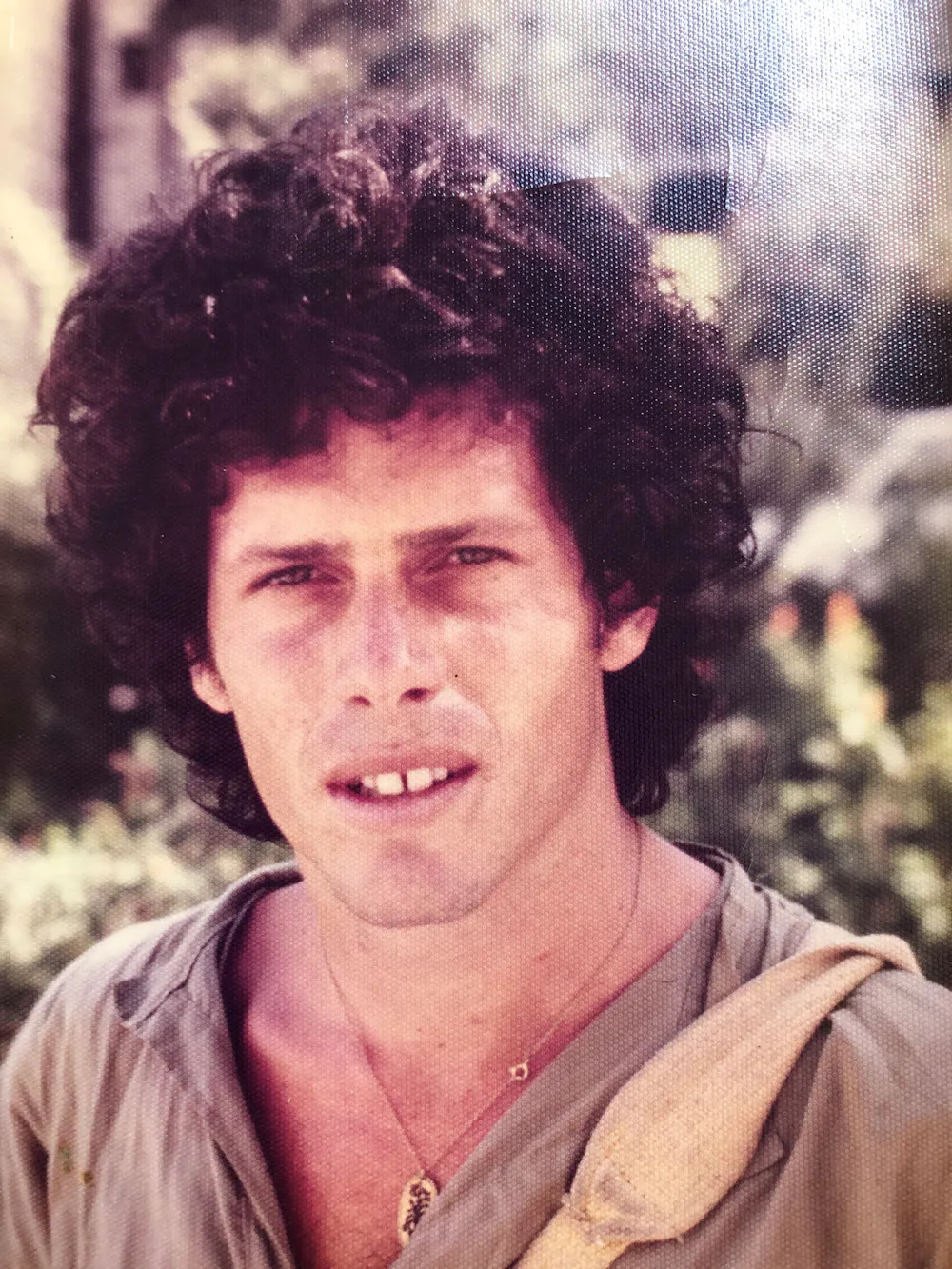
Light Sleeper begins with an account of his first and only visit to Gaza, in 1987. He writes that he has been visiting Israel and the occupied West Bank for “nearly half a century”, has lived in Jerusalem, and has “spent more time thinking about this fratricidal struggle than any other subject in the world”.
This establishes Leser as more qualified to write about the tragedy than most of our local pundits. His first encounters with Israel came almost 50 years ago, when he worked on a kibbutz, aged 21. It epitomised the romantic vision of Israel as a socialist pioneering home for Jews.
Gradually, this vision changed, as he became increasingly aware this land was also the home of displaced Palestinians. Light Sleeper is essentially his anguished journey to make sense of what Israel has become, and how that cannot be reconciled with his belief in a humanity that is not restricted to one people.
Fittingly, he ends the book by invoking the phrase Tikkun olam: repairing the world. And throughout the book, one senses the constant pain of needing to reconcile his early belief in Israel to the harsh realities of what is now happening in Gaza and the West Bank.
When Leser writes about his frequent visits to Israel/Palestine, he is an eloquent and moving voice. The book is strongest when he writes from his own experiences of the conflict, whether it be the mixed emotions he felt when visiting Jerusalem, or his account of the intercontinental trip that led him to meet with Ashrawi.
Flying to meet her, he writes:
So this trip of mine to Jerusalem and the Israel-occupied West Bank felt like no commonplace assignment. Rather, it assumed the weight of a sacred mission.
Reflecting on his meeting with Ashrawi, he recalls the words of every Passover service: Next Year in Jerusalem, and the reality that Palestinians have as much claim to the city as do Israeli Jews. Perhaps, he muses, Jerusalem might really be a City of Peace, “the new Jerusalem of our highest ideals, rather than the Old Jerusalem of treachery, suspicion and holy murder”.
He carries that vision of Jerusalem with him, as after six sleepless nights he flies back to London: ironically, on the same plane as current Israeli prime minister Benjamin Netanyahu.

Punctures the myth of hard-nosed reporter
Light Sleeper takes its title from the many sleepless nights Leser lay awake, trying to come to terms with what he saw being done by Israel in the Occupied Territories. At one point, he describes the erotic images he conjures up to persuade his body to relax into sleep.
Leser punctuates the myth of the hard-nosed reporter, untouched by the horrors he observes. He is haunted by both the ravages of the 2023 Hamas attack and the ensuing devastation of Gaza, but also by his visit to Bali in the aftermath of the 2002 bombings.
He wept for the victims of that bombing, and describes visiting a Hindu priest on the island to search for greater understanding of how “the world might do the work of washing itself clean”.

Reading his book reminds us we are speaking of a tragedy that has now lasted many generations and has its roots in deep ancestral claims to territory shared by both Palestinians and Israeli Jews.
The barbarity of the Hamas attacks in 2023 and the horrors of the ensuing Israeli response can only be understood in the context of a much larger story. A story where a shared allegiance to the land has been increasingly denied by an Israel determined to govern the entire territories that lie “between the river and the sea”.
As Leser notes, using that phrase in pro-Palestinian demonstrations is now forbidden in at least one Australian state, even though successive Israeli governments have consistently ruled out recognising any place for a Palestinian state between the Jordan River and the Mediterranean.
Leser, who was present at Bondi on the day of the massacre, is appalled at the immediate politicisation of the tragedy, and the attempts to use it to rally support for Israel.
Netanyahu sought to blame the attack on Australia’s recognition of Palestine, though it was clear the two gunmen had been radicalised over several years, and were supporters of ISIS rather than Hamas.
An important message
Light Sleeper stems from a number of columns Leser has written over the past few years, many of which he reproduced verbatim. While there is value in revisiting his immediate responses, they tend to slow the narrative and can lose sight of his principal concerns.

Most irritating is the 11 pages devoted to his exchanges about Zionism, Gaza and accusations of genocide with Michael Gawenda, the former Age editor who has become one of Australia’s most strident defenders of Israel. A lengthy exchange between two Australian Jews seems rather indulgent, given the tragic realities Leser describes.
Despite places where I wished his editor had wielded a blue pencil, Light Sleeper is an important addition to the mushrooming literature of the Palestinian conflict. Its strength lies in the combination of personal testimony and a deep understanding of the region, and the apparently intractable refusal of Israel to accept the equal claim to the land of the Palestinians.
Leser, like me, mourns the lack of empathy between the defenders of Israel and the pro-Palestinian movement, and the failure to acknowledge the inherited traumas that lead to absolutism and a denial of shared humanity.
The ghosts of both the Holocaust and the Nakba lie behind his writings. This book’s most important message is the need for us to understand both – and to recognise a shared humanity, greater than any appeal to tribal loyalties.
KioskNews shows a cleaned-up reading view extracted from the publisher’s page — the original always lives on their site, not ours.