What to look for if you’re buying a smart lock in the UK
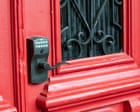
As the nights draw in, thoughts turn to home security. A growing number of British homeowners are choosing to upgrade their front doors with tech-enabled “keyless” smart locks, which allow them to be opened by phone, fob, fingerprint or a number pad.
But you need to make sure you have the right lock for the door – and that your insurance isn’t invalidated by installing it.
What are they?
They allow you to get into your home without a key, instead using a code, a phone, a fingerprint, a voice assistant such as Siri or facial recognition to give you entry.
Some can be operated remotely via wifi so that if a tradesman calls to do work, you can let them in wherever you are. Many offer a combination of several options.
In South Korea, and some Scandinavian countries, they are becoming the norm, says Steffan George of the Master Locksmiths Association (MLA), a UK trade body. In the UK they are more common on offices, but interest is increasing.
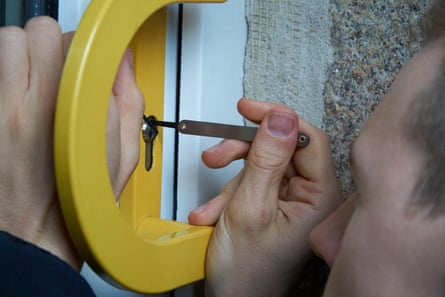
The types vary in complexity. Some have the smart feature and a handle in one unit that fully replaces an existing door handle. Others are made up of a small unit which can be fitted on an existing lock, sitting on top of it, opening the door when activated. This type essentially turns a traditional lock into a smart one.
And there is a third type where the existing mechanical lock cylinder is swapped for an electronic one, which opens the lock once activated. Some allow for a physical key to be used in an emergency.
How much do they cost?
They range from less than £100 to well over £1,000. Shane Hales, of HalesLocks in Sidcup, Kent, puts the starting price for a good quality version at between £200 and £250 for the unit. Getting a professional to fit them will add to the cost.
Look out for the Kitemark on the faceplate to ensure that it meets security requirements set by theBritish Standards Institution.
Sold Secure, an agency which judges the performance of locks, has a certification called SS504. To qualify, locks are tested for physical security, technical performance and cybersecurity.
Hales highlights the Black X (about £200) and the Ultion Nuki (£339) as two well-regarded units.
George says that a smart lock is unlikely to last as long as a traditional one, which “will last 20 years easily with just a little bit of lubrication”. Hales adds that, in his experience, smart locks will last for five to six years before they need to be replaced.
Will it work on my front door?
In the UK front doors are made from a variety of materials, including UPVC, timber, and a composite of different types. Checking the lock works with whatever type of door you have is vital. Many US imports will be unsuitable for British doors because of differences in the locking cylinders.
Lots of lockmakers have guides on their websites so you can check whether their product would work for your home. For example, Yale has a “smart lock compatibility checker” which uses a visual guide on what your lock looks like to recommend options.
You can email in pictures of your existing fitting and door to some installers and manufacturers, and they will advise what is suitable.
How are they installed?
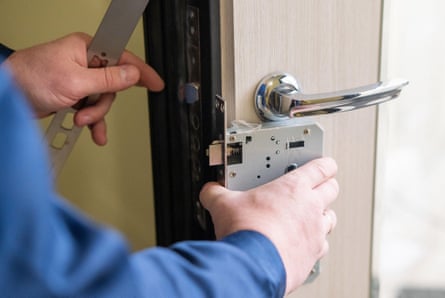
Retrofit smart locks are usually installed on the inside of the door and work with the existing cylinder – the barrel in which you insert the key. They have a motorised unit inside which connects to the lock and turns it open.
To install one yourself, you will need basic tools. Most people will also want to choose a lock that has been designed to be easy to install, with no modifications needed to the door itself.
Things get more complicated when wiring, drilling or carpentry is needed to get the lock to fit properly, or if the door you have is UPVC, composite or non-standard.
Checkatrade, the tradespeople’s recommendation site, says installation costs vary; it puts the labour at between £63 for a basic keypad lock and £210 for a Z-wave-enabled lock, a communication system similar to Bluetooth and wifi.
Will this affect insurance?
If you are considering getting a smart lock, it is important to run it by your home insurer to be sure that what you buy adheres to its standards.
The Association of British Insurers (ABI) says you should check the terms of your policy before making any changes. “Some home insurers have specific requirements for the type of lock you use to protect your home, and your provider will be able to advise you,” says its general insurance policy adviser, Charlie Inwood.
Your insurer may also require that the lock is put in by a professional.
Hales says people should always get professional advice. “There is no one size that fits all doors. For that lock to be compliant, it needs to fit properly, and if it’s not fitted properly, then you know you could leave yourself open to problems.”
KioskNews shows a cleaned-up reading view extracted from the publisher’s page — the original always lives on their site, not ours.