Chhattisgarh seeks expert help for ‘surgery’ to save over 500 damaged trees
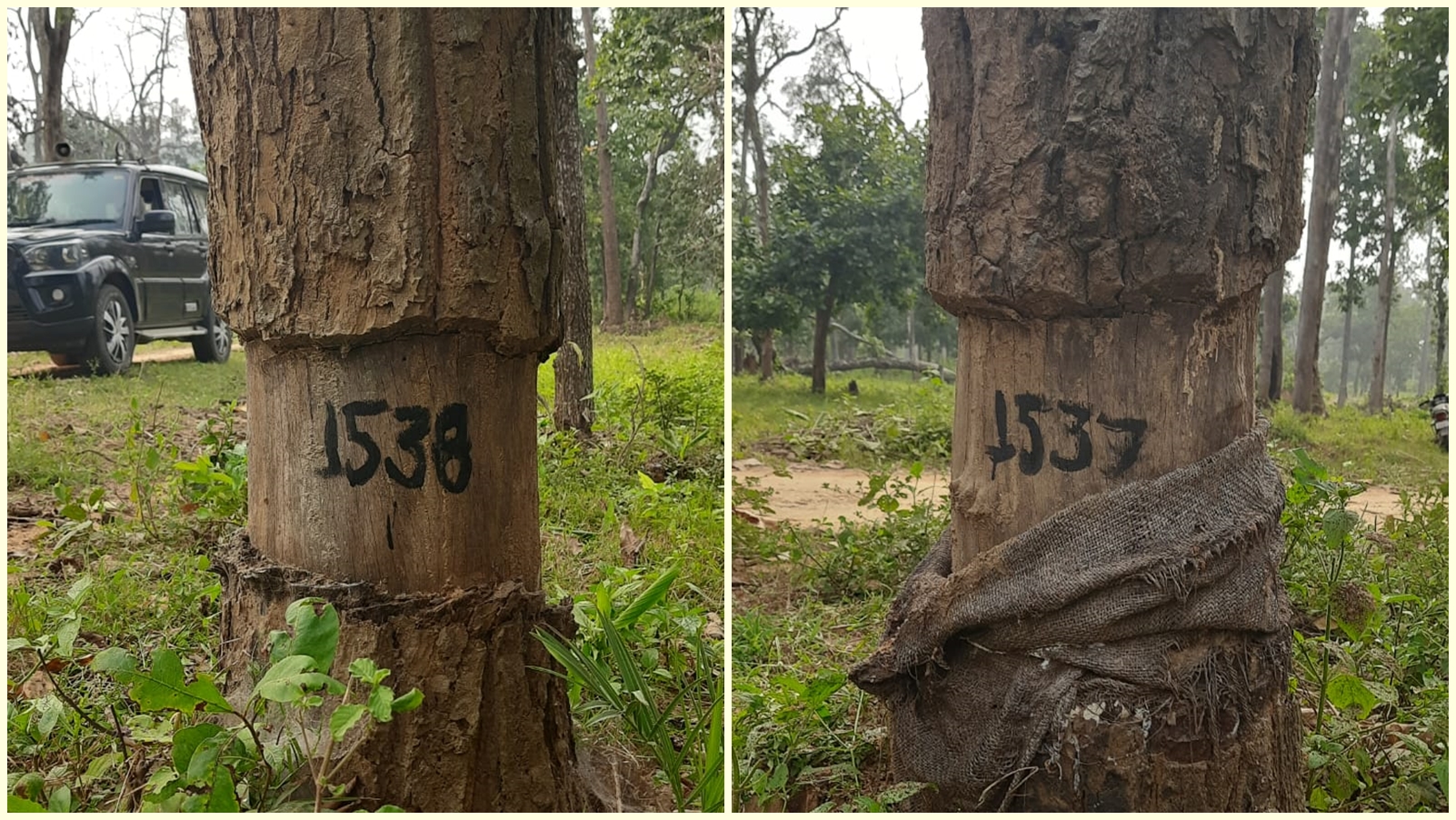
In an attempt to save over 500 trees, which were girdled allegedly by encroachers in Karka village deep inside the Udanti Sitanadi Tiger Reserve (USTR), the Chhattisgarh forest department is seeking expert help – in the form of a “surgery” or bridge-grafting technique.
Girdling is a process in which portions of the bark are removed to cut off nutrient supply, eventually resulting in the death of the tree.
Earlier this month, The Indian Express had reported that around 2,500 trees, predominantly Sal, Bija and Tendu, were found girdled in the reserve, which spans Chhattisgarh’s Dhamtari and Gariaband districts, during an inspection.
At least over 500 of them are freshly girdled and thus, chances of saving them are higher, a forest official said.
The state of the trees was discovered during an inspection carried out by the forest department between September 22 and October 10. This inspection included a DGPS-enabled drone survey read alongside ISRO satellite imagery from 2010 and 2016, when dense forests were seen, which made the department reach the conclusion that thousands of trees may have been cleared in the last one decade.
“These findings underscore the magnitude of forest loss and the urgent need for restoration and stronger protection measures besides prosecution of the accused persons from Karka. While several trees have suffered damage over the years, some (over 500) have been freshly girdled, raising concerns that deliberate damage is being done to facilitate further expansion of encroachment. Protecting the forests of USTR is particularly important given their significance for biodiversity and the Mahanadi River’s origin landscape,” said Deputy Director of USTR, Varun Jain.
Waiting for ‘tree doctor’
In order to save the damaged trees, especially the newly girdled ones, a specialised conservation initiative is being undertaken as part of which Vijay Nishanth, known as Tree Doctor for his work in conservation through Project Vruksha Foundation, will visit the Tiger Reserve soon to provide technical assistance in the “surgical” treatment and restoration of affected trees.
Story continues below this ad
“Bridge grafting involves grafting a healthy branch across the girdled portion of a tree to reconnect the damaged tissues. We currently apply a mixture of cow dung and soil over the wound and wrap it with gunny bags. The procedure is more effective pre-monsoon when tissue growth is higher. However, our success rate was less as we have not had enough time to research the technique. Hence, to try and save more trees, we are taking expert help,” Jain added.
USTR had previously undertaken bridge grafting of girdled trees in Tourenga Range in 2022. However, the intervention recorded a success rate of approximately 10%, highlighting the need for specialised expertise and improved treatment techniques.
Nishanth’s proposed visit will focus on assessing affected trees, identifying those that can potentially be saved, and recommending appropriate surgical interventions, including bridge-grafting and other suitable tree-restoration techniques.
The initiative will also provide an opportunity for USTR personnel to learn specialised treatment procedures and develop protocols for subsequent care and monitoring.
Story continues below this ad
USTR is also consulting tribal communities and forest dwellers residing in and around the reserve to draw upon their traditional ecological knowledge and indigenous practices relating to tree care and healing.
KioskNews shows a cleaned-up reading view extracted from the publisher’s page — the original always lives on their site, not ours.