Youth run through Airport Residential Area to map Accra’s polluted air
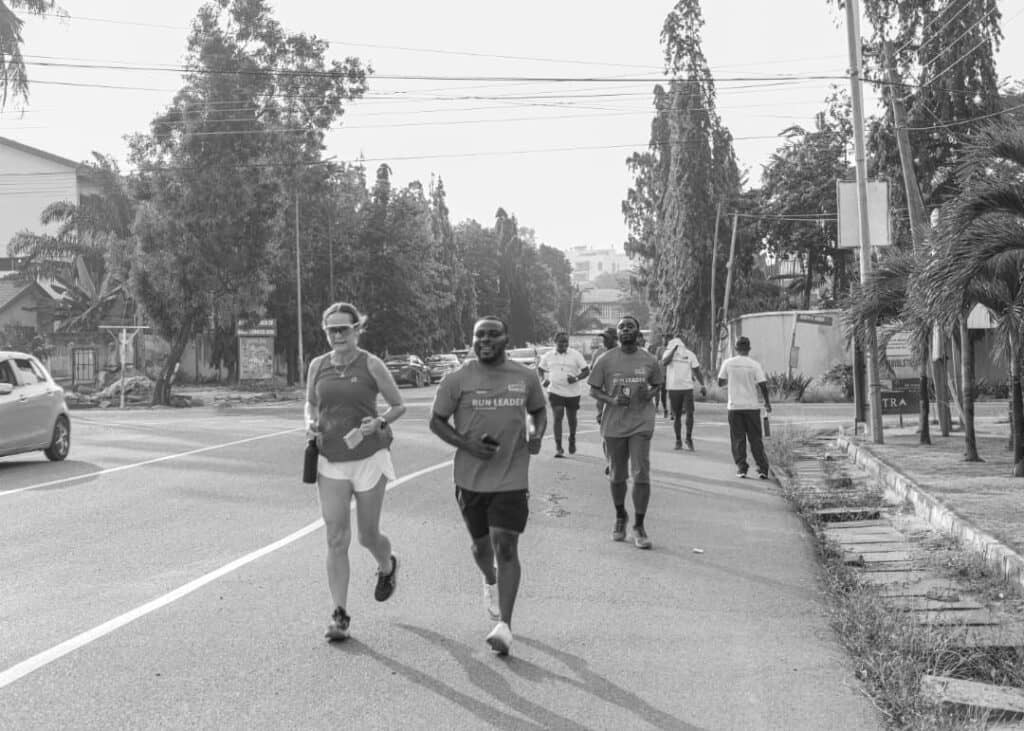
A youth-led run through Accra’s Airport Residential Area has recorded elevated levels of fine particulate matter, with average PM2.5 concentrations more than three times the World Health Organization’s recommended daily guideline.
The 5.3-kilometre exercise, organised by Breathe Cities Accra and youth and transport advocacy groups, used portable air quality sensors to measure pollution along streets in the neighbourhood.
The run began at 6:30am on Wednesday, November 25, from the African Regent Hotel under the theme, “Breathe Accra: Reclaiming our streets for cleaner air, one run at a time.”

It brought together Breathe Cities Accra, UrbanBetter Accra Cityzens, Global Shapers Accra, Transform Transport Accra and the Green Africa Youth Organisation.
The Executive Director of Breathe Cities, Ceci Vaca Jones, who was in Ghana on a working visit to review the initiative’s projects, joined the participants on the route.
The runners carried air quality sensors calibrated at AfriSET, the air quality sensor evaluation centre at the University of Ghana, to collect pollution data.
They also used the UrbanBetter App to document features of the built environment that affect walking and running, including vehicle emissions, open burning and obstructions on walkways.
The route covered North Airport Road, Osu Badu Street, Noi Fetreke Street, Volta Street and Kofi Annan Street.
Data collected during the exercise showed an average PM2.5 concentration of 53 micrograms per cubic metre, compared with the WHO’s recommended 24-hour guideline of 15 micrograms per cubic metre.

The average PM1 concentration, involving even finer particles that can penetrate deeper into the respiratory system, was 44 micrograms per cubic metre.
The highest readings were recorded along North Airport Road, around the junction of Volta Street and Kofi Annan Street, and on Noi Fetreke and Nortei Ababio Streets.

At several points, PM2.5 concentrations rose above 150 micrograms per cubic metre, while readings declined towards the end of the route.
The exercise also identified environmental conditions that could expose residents to pollution and make walking or running difficult.
In one instance, participants encountered waste being burnt within a residential compound, with smoke spreading across part of the neighbourhood. Parked vehicles, damaged pavements and other obstructions also forced some runners onto the road.
Ms Vaca Jones said citizen-led data collection could provide cities with evidence to guide action against air pollution.
“Clean air should not depend on where you live. When young people lace up their running shoes and carry sensors through their own streets, they turn everyday experience into evidence that leaders cannot ignore. Accra is showing the world that the fight for clean air begins with citizens who refuse to accept polluted air as normal,” she said.
Under the Breathe Cities initiative, Accra has committed to reducing air pollution and carbon emissions by 30 per cent by 2030.
Breathe Cities Accra Portfolio Manager, Dr Elvis Gyeabuor, said community-level data would help identify pollution sources and areas requiring urgent intervention.
“The data these young people collected this morning will help us understand where pollution is coming from, from exhaust fumes to the burning of waste, and where action is most urgent. We cannot fix what we do not measure. Clean air in Accra will take government, communities and every household playing their part,” he said.
Hub Coordinator of the Accra Cityzens hub, Lord Offei-Darko, said the exercise combined physical activity with advocacy for cleaner air and safer streets.
“We are young people keeping active, but we are also collecting the evidence to push for cleaner air and safer streets. Every run is a statement. We want our leaders, and our neighbours, to know that what is burnt in one compound ends up in everyone's lungs,” he said.
Air pollution remains a major public health concern in Ghana. Estimates cited by the organisers suggest it causes between 28,000 and 32,000 deaths annually across the country.
In the Greater Accra Region, the Environmental Protection Agency estimated that air pollution caused about 2,800 deaths in 2015, a figure projected to rise to approximately 4,600 by 2030 if no action is taken.
KioskNews shows a cleaned-up reading view extracted from the publisher’s page — the original always lives on their site, not ours.