Caution needed on linking Helen Haines attack to PM’s grievances
Journalist Laurie Oakes famously said of John Howard that he had made many mistakes but only made them once.
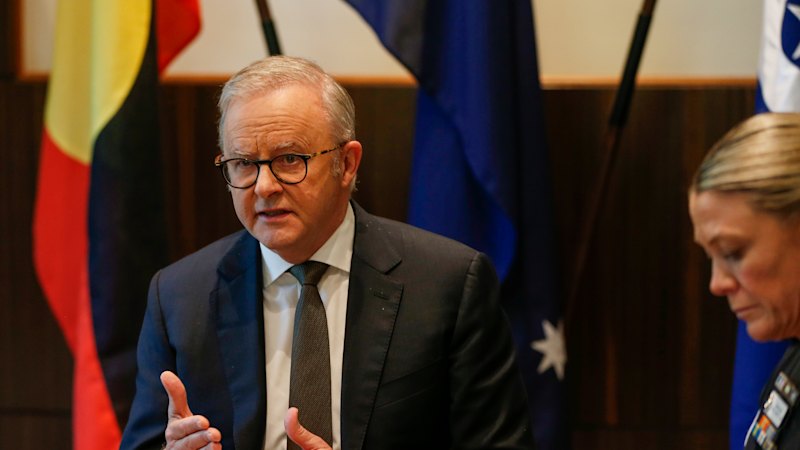
Prime Minister Anthony Albanese would be wise to recall that lesson as he navigates the fallout from the attack on Helen Haines.
After the December 2025 Bondi Beach shootings, conservative critics argued Labor pivoted too quickly to gun control while downplaying the attackers’ fundamentalist ideology. The gun buyback, supported by no state outside of NSW, has faltered.
Wading through the confusing set of factors that may have led to the Haines incident, Albanese has put the spotlight on the modern media.
“The headlines that are generated are aimed at getting clicks and therefore more dramatic than is necessary,” Albanese said on Melbourne radio.
The prime minister isn’t wrong here. The press sometimes goes too far. The digital era has upended journalism and a 24-hour media cycle has made governing and informed citizenry more difficult. Labor’s more fervent critics sometimes go too far and fuel rage.
The problem with his message is that Brendan Nugent, the man accused of running Haines down, has shown no evidence of engagement with mainstream media. He was engaging with conspiracy theorists such as Candace Owens and the zaniest operators in Australia’s alternative media.
Albanese will never convince the most partisan commentators that he is acting in the national interest following the Haines attack. Yet bipartisanship is more fragile than ever and any sense that Albanese is acting opportunistically or making spurious links won’t help.
The prime minister was very quick to remind people of his stance on civility and extremism in the hours after Monday’s incident.
“Go look up the interviews in which I’ve … called for the temperature to be turned down when it comes to political discourse,” he told reporters in one of his first answers at a sombre press conference alongside an ashen-faced Tony Burke.
A well-placed source in the security establishment, who requested anonymity, told this masthead that discourse among politicians had not significantly worsened over time.
The pivotal difference, they said, was the rise of social media: “It magnifies grievance and anger.
“People have always had extreme and conspiratorial views. In earlier times, you would express them to a few mates at the pub and you would just be dismissed. Now crazed people find a like-minded community and gain a platform.”
The source added that the prime minister was on strong ground in pressuring parties such as One Nation and the Greens to take accountability for hardliners in their base. Nugent drifted to far-left conspiratorial territory but it may well be that he was fuelled by an unsound mind.
The car-ramming in Wangaratta is not the first attack on a political figure in Australia. Liberal candidate Donald Mackay was murdered in the NSW town of Griffith in the 1970s. Labor leader Arthur Calwell survived a shooting. Even Sweden saw its leader assassinated in 1986, proving even the most functional liberal democracies can experience tremors.
Albanese’s moral authority has waned since Bondi. As he seeks to guide the nation through this latest crisis, allies and opponents alike will watch closely for any evidence of selective standards on civility or efforts to exploit the moment to pursue long-standing grievances.
KioskNews shows a cleaned-up reading view extracted from the publisher’s page — the original always lives on their site, not ours.