Noor’s journey: Exploring faith, memory, and selfhood
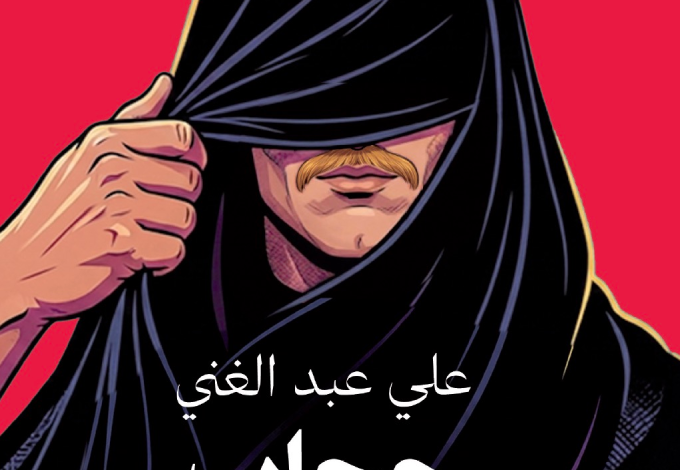
A few days ago, Kuwait kicked off its premier cultural celebration. On the morning of Wednesday, November 18, 2026, the Kuwait International Book Fair opened its 49th edition, setting the stage for a ten-day literary showcase running through November 28.
Over this period, visitors can navigate hundreds of Arab and international publishing houses, browsing and acquiring works whose pages have traveled across borders to find a temporary home in the “Bride of the Gulf,” offering avid readers a rare window into diverse worlds of thought.
During my first visit to the fair, my attention was immediately captured by a novel titled
A few days ago, Kuwait kicked off its premier cultural celebration. On the morning of Wednesday, November 18, 2026, the Kuwait International Book Fair opened its 49th edition, setting the stage for a ten-day literary showcase running through November 28. Over this period, visitors can navigate hundreds of Arab and international publishing houses, browsing and acquiring works whose pages have traveled across borders to find a temporary home in the “Bride of the Gulf,” offering avid readers a rare window into diverse worlds of thought.
During my first visit to the fair, my attention was immediately captured by a novel titled Hijab Mumazzaq (A Torn Veil), written by Ali Abdelghani. Initially, it was the cover art that drew me in, even before I registered the title. Once I picked it up and read the name on the jacket, I knew I had to buy it—compelled to immerse myself in its prose, uncover the meaning behind A Torn Veil, and follow “Noor’s Journey” to its conclusion.
The novel traces the trajectory of Noor, a young man raised in a strict religious environment whose worldview was shaped early on within the halls of an Al-Azhar institute. In his consciousness, the image of women became deeply entangled with inherited teachings on faith, society, and the human body. While he initially appears preoccupied with discovering the world and the people around him, it soon becomes clear that his true quest is directed inward—even if he remains blind to that reality.
His crisis begins when he crosses paths with Rasha, a childhood acquaintance whom he had long idealized through the lens of his own imagination. The moment of their reunion exposes the vast chasm between a real human being and the construct fabricated by the mind, triggering the first fractures in his internal belief system.
From there, the central conflict unfolds as Noor embarks on a turbulent psychological odyssey. Along the way, desire collides with fear, memory clashes with reality, and personal identity wrestles with social authority. As he attempts to reshape the world around him to match the vision he seeks, he finds himself drifting further away from his original self and the devout upbringing that defined him. Each time he believes he is closer to understanding others, he uncovers deeper, more enigmatic layers within his own psyche.
Hijab Mumazzaq is a novel about identity, perception, and the urge to transcend society’s rigid boundaries. At its core, however, it is an introspective journey of a man searching for his authentic face behind the masks he has worn for so long—leading inevitably to the hardest question of all: Was he searching for the truth, or merely for an illusion he invented for himself?
To be, or not to be: that is the question.
Author’s biography
Nermin al-Houti is an associate professor of the Department of Criticism at the Higher Institute of Dramatic Arts in Kuwait.
She holds a PhD in Philosophy of Literary Criticism and is a graduate of the Higher Institute of Dramatic Arts.
Houti is a member of the Association of Writers and the Journalists Association, and is also part of the literary arbitration committees on theater or poetry in Kuwait and other Arab countries.
She has authored numerous newspapers and magazines articles and several books on significant theatrical works examining women’s issues, the latest of which is “The Women in Ismail Abdullah’s Theater”.
She has been chosen as a panelist in various significant cultural events and has participated in multiple seminars across the Arab region.
KioskNews shows a cleaned-up reading view extracted from the publisher’s page — the original always lives on their site, not ours.