Colorado wildlife overpass cut vehicle-animal collisions by 91%, report finds
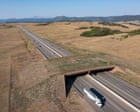
Colorado officials have tracked herds of elk, bears, pronghorn and even northern leopard frogs ambling across its new wildlife overpass. According to a newly released report, the overpass, which acts as a bridge over a busy stretch of interstate, has helped cut wildlife-vehicle collisions by 91% since its completion 10 months ago.
The overpass is the centerpiece of a larger system built by the state to assist wildlife crossing the highway, which also includes miles of 8-ft tall fencing and five large wildlife underpasses.
“One of the most heartwarming moments for me was when [Colorado department of transportation] sent me a picture of an elk mama taking her calf under [Interstate-25],” Brandon Marette, a wildlife biologist for Colorado parks and wildlife, told CBS News. “All came to fruition in that one moment. That elk with her calf was just standing there in safety.”
The Colorado department of transportation said before the overpass system was built, there was an average of one wildlife-vehicle crash a day in this corridor.
Such wildlife crossings are popping up across the country as a way to protect wildlife habitat and reduce collisions, which can result in injuries and deaths in humans and animals. Research has shown that overpass systems are successful in “nearly eliminating” these accidents and that such infrastructure buildouts often “pay for themselves” by preventing costly crashes.
Nearly 20 wildlife crossings are under way in the US, with the structure in Colorado currently the biggest. The overpass, which sits between the state’s two biggest cities, Denver and Colorado Springs, spans six lanes of traffic and connects 39,000 acres of habitat on both sides of the interstate. The bridge is covered in grass and measures 200ft wide and 209ft long with gradually sloped entrances to ease crossings for animals.
This region of Colorado is known for high movement of large game. State officials say that wildlife underpasses and tunnels often don’t work for big animals, such as bull elk, because they restrict mobility and don’t accommodate their antlers.
“Elk and pronghorn like these big open structures where they can see for miles in each direction,” Chuck Attardo, the environmental manager for Colorado department of transportation, told CBS News. “For decades, pronghorn going from Trinidad to Greenland were looking for a place to cross on I-25. And when we open this up, we have pronghorn on video using the overpass, and for the first time in decades they’re coming over here to the west side.”
While large game animals have been taking advantage of the crossing, officials have also tracked smaller wildlife using the corridor, including mule deer, coyotes, rabbits, frogs and the threatened Preble’s meadow jumping mouse.
The project received $22m in federal funding and $8m from the state, but officials say they were able to complete it for just $15m. Now, the Colorado department of transportation says it is hoping to build other wildlife crossings across the state.
KioskNews shows a cleaned-up reading view extracted from the publisher’s page — the original always lives on their site, not ours.