Shah calls for regional approach to tackle drug smuggling, seeks BIMSTEC cooperation
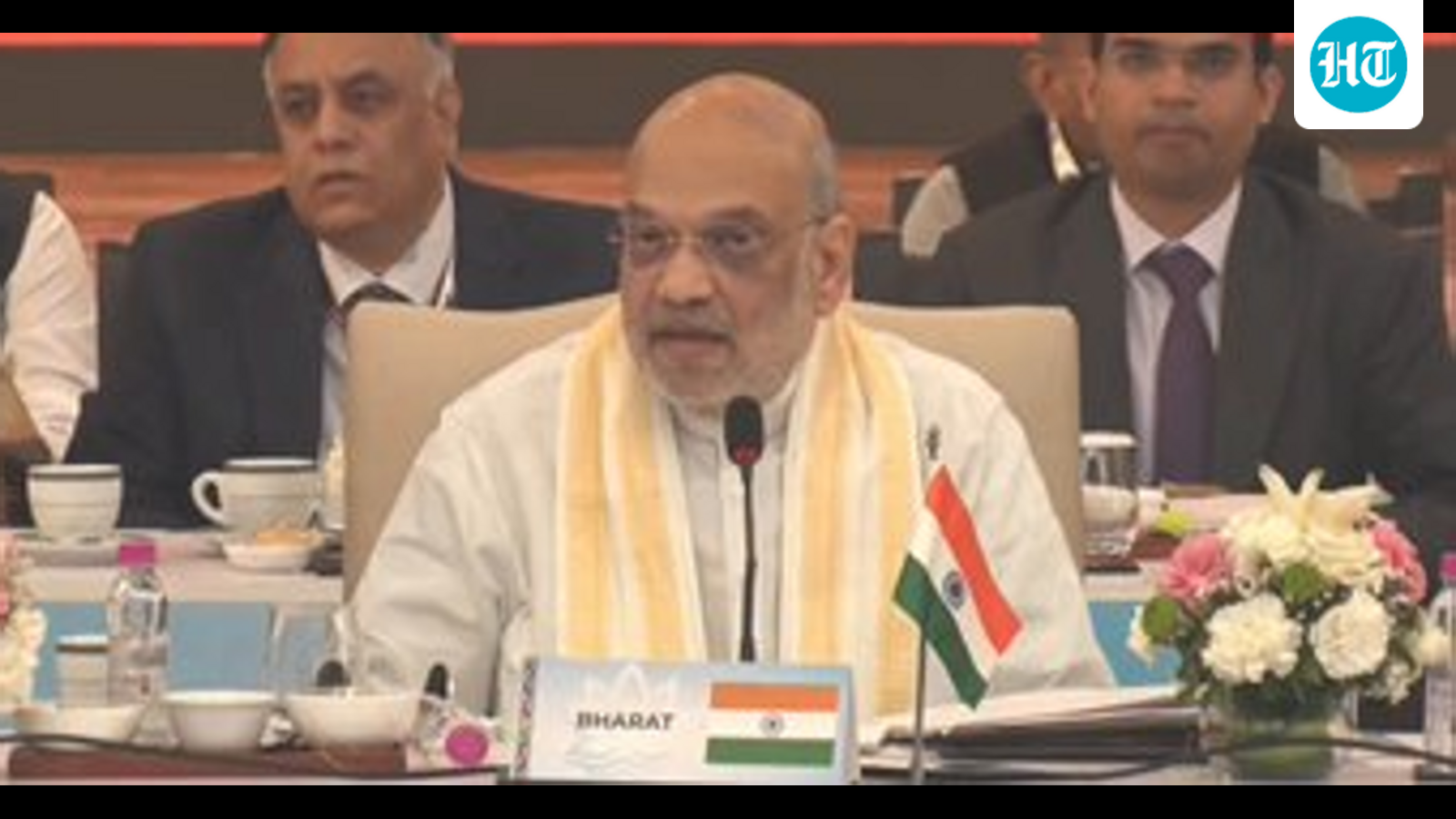
Union home minister Amit Shah on Tuesday called for a whole-of-region approach to tackle drug smuggling and sought cooperation from Bay of Bengal Initiative for Multi-Sectoral Technical and Economic Cooperation (BIMSTEC) member countries. He underlined that the illicit funds generated from drugs are used in financing organised crimes and terrorism.
“India has always adopted a zero tolerance policy against terrorism. The trust in our cooperation is strengthened by the sense that the security mechanism of every member country becomes helpful in the security of other member countries. Our mutual resolution should be to ensure that there is no scope or space for harbouring, recruiting, training, procuring resources, or carrying out activities against neighbouring nations in any part of the region...” he said at the first meeting of BIMSTEC home ministers in New Delhi.
BIMSTEC, a regional grouping, aims to promote economic and technical cooperation among Bangladesh, Bhutan, India, Myanmar, Nepal, Sri Lanka and Thailand.
Shah, who last month announced the goal of dismantling drug networks to make India drug- free, reiterated that smugglers have changed their strategy and are using encrypted communication, social media, drones, cryptocurrency and the dark web.
Shah said India does not believe in supremacy over any country. “India has always believed in sovereignty and peaceful resolutions to any dispute. We are committed to cooperate and face challenges emanating from global terrorism, organised crime and narco-trade,” he said.
Shah referred to the so-called Golden Triangle, the smuggling route encompassing Myanmar, Laos and Thailand, and said there is nothing golden about it. ...we prefer to call it the death triangle. This is not just drug smuggling but is something that is affecting the lives of our youths, our culture, and our future...”
In its annual report released in June, India’s Narcotics Control Bureau said Myanmar overtook Afghanistan as the world’s largest illicit opium producer after the Taliban’s 2022 poppy ban, due to a decade-high production amid economic collapse, civil war and the 2021 military takeover. India has begun fencing the India-Myanmar border.
Shah said the proceeds from drug trafficking provide financial strength to organised crime and are also used to finance terrorism. “The diversion of precursor chemicals and transactions through the dark web make this challenge even more complex.”
He called human trafficking another serious challenge to shared security and human rights. “Cooperation in identifying, rescuing, assisting, rehabilitating and safely repatriating victims must remain an important part of our collective efforts,” he said.
Shah called the BIMSTEC Plan of Action on Drug Control finalised in Colombo in October 2025 an important step in this direction. “Real-time information sharing, establishing joint task forces, preventing the illegal diversion of precursor chemicals, cooperation in financial investigations and the seizure of assets can make our efforts to tackle the entire drug supply chain more efficient.”
On Monday, the government said the meeting of the home ministers and top officers of BIMSTEC countries underscores shared resolve to combat terrorism, transnational organised crime, narcotics radicalisation, trafficking, illicit financial flows, and cyber threats.
BIMSTEC has expanded cooperation across sectors such as regional security, disaster management, transport and trade connectivity, technology and people-to-people exchanges.
KioskNews shows a cleaned-up reading view extracted from the publisher’s page — the original always lives on their site, not ours.