China busts cross-border blood smuggling ring over biosecurity fears
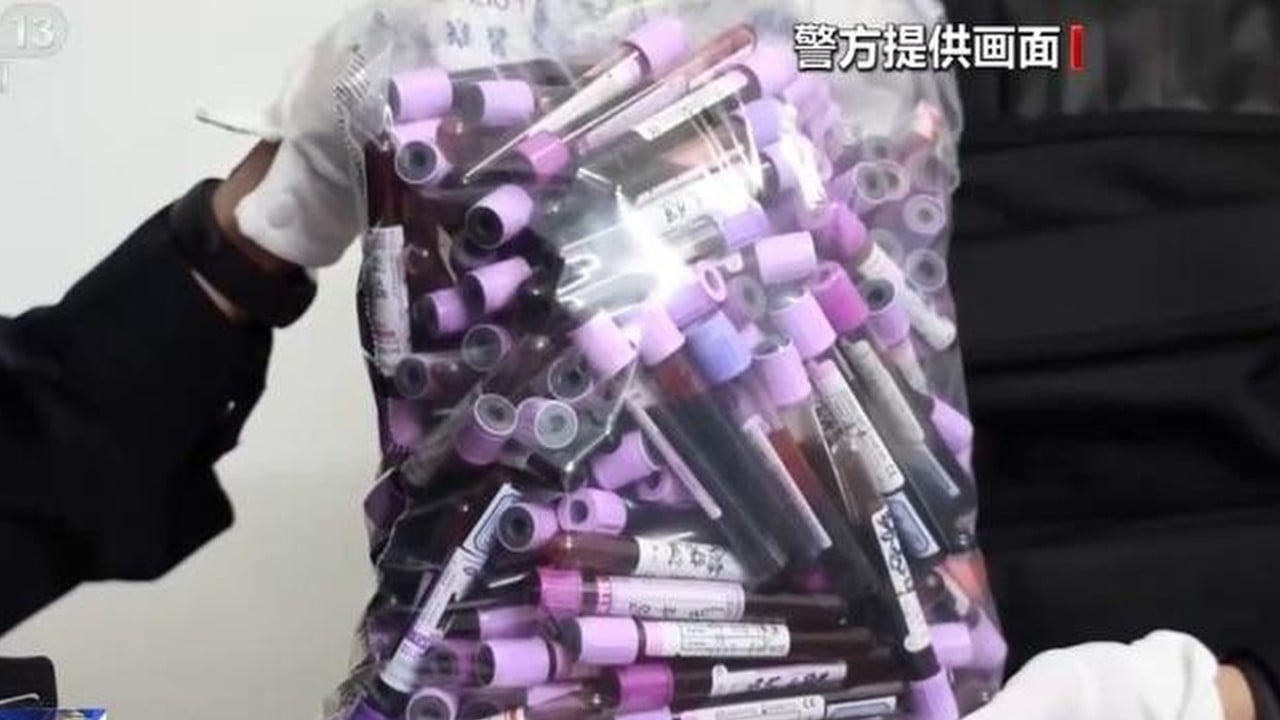
China has cracked down on the smuggling of blood samples from pregnant women, highlighting what authorities describe as a threat to national biosecurity.
State broadcaster CCTV reported on Wednesday that Shenzhen Customs anti-smuggling officers had dismantled an underground network that illegally collected and transported the blood out of mainland China.
The samples were used for fetal sex determination, a practice banned on the mainland for non-medical purposes.
Following a nearly year-long investigation, Shenzhen officers teamed up with counterparts in other cities to carry out raids in January across several provinces, including Guangdong, Hainan and Fujian, according to CCTV.
The operation netted 37 suspects, dismantled four criminal rings and intercepted more than 2,000 blood tubes destined for illegal export, with more than 38,000 maternal blood samples confirmed to have been smuggled overseas.
The report said the case had been handed over to prosecutors for indictment.
The illicit trade is driven by persistent demand among some expectant parents to determine the sex of their unborn children. Yet the state broadcaster warned that the practice carried far-reaching consequences, most notably threatening national biosecurity.
The ban on prenatal sex testing dates back to the era of the one-child policy – which ended in 2016 – when a traditional preference for male heirs fuelled sex-selective abortions.
“Severing this cross-border black-market chain not only protects women’s rights and safeguards the gender balance at birth but also defends the security line of the nation’s human genetic resources,” the report said.
Beijing has steadily broadened its definition of national security to counter emerging technological and geopolitical threats.
At the core of this drive is the “holistic approach to national security” introduced by Chinese President Xi Jinping in 2014, which covers politics, the military, technology, cyberspace, outer space, biosecurity and other fields.
“Maternal blood samples carry the genetic information of two generations – both the mother and the fetus – making them part of the nation’s human genetic resources,” Chang Pai, a legal official with Shenzhen Customs’ anti-smuggling department, was quoted as saying.
She warned that pooling large volumes of smuggled genetic samples overseas could allow foreign institutions to analyse the health profiles, genetic vulnerabilities and ethnic make-up of specific populations, posing “incalculable risks” to China.
Genetic technology could become a deadly weapon, the Ministry of State Security said on social media in October 2023.
The ministry said knowledge of the genetic characteristics of ethnic and racial groups could be exploited to develop biological weapons that selectively target those groups.
Compared with conventional biological and chemical weapons, these hypothetical genetic weapons would be harder to detect, more deceptive and pose greater long-term risks, according to the ministry, which added they might also be difficult to contain and inexpensive to produce.
“If used in warfare, the consequences would be devastating,” it said.
However, no such weapons are known to exist, and scientists continue to debate whether their development is feasible.
The loss of biological samples could also put China at a disadvantage in areas including gene patents and drug development, the ministry said earlier this year.
Under China’s Criminal Law, smuggling human genetic materials out of the country in ways that endanger public health or social interests is punishable by up to seven years in prison, along with fines.
The CCTV report highlighted other risks, noting that unregulated blood collection and non-medical abortions could harm pregnant women’s health.
Meanwhile, potential leaks or improper disposal of blood samples during transit could trigger the spread of infectious diseases, it added.
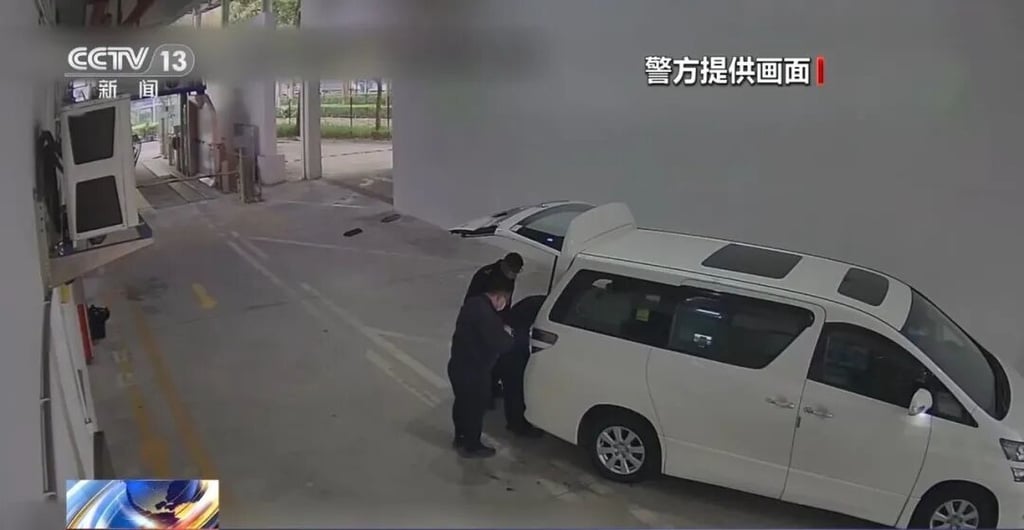
The issue first came to the attention of Chinese authorities in March last year, when Shenzhen Customs received a tip that a white car suspected of carrying blood samples was about to cross into Hong Kong via Shenzhen Bay Port.
After screening white vehicles making frequent border crossings without passengers, officers tracked down the target car and found 527 blood sample tubes concealed inside its retrofitted audio system, according to CCTV.
The report said the driver appeared to be unaware of the details of the blood’s origins or how it was collected.
Suspecting a wider network behind the solo driver, Shenzhen Customs set up a special task force to map out the smuggling chain.
By cross-checking travel routes, investigators linked the seized car to another suspicious vehicle whose driver had repeatedly parked in a secluded lot in Shenzhen’s Luohu district before switching to an electric scooter to drop off and retrieve packages from parcel lockers across residential compounds.
Stake-outs revealed that the suspects were using the lockers to pass samples through multiple hands rather than meeting face to face.
Following the trail, investigators uncovered the wider syndicate: some members managed regional agents and overseas lab connections, while others recruited couriers and cross-border drivers to move the samples out of the mainland.
Officers told CCTV that their investigation found illegal intermediaries reached pregnant women through online platforms and personal referrals, charging between 1,500 and 3,500 yuan (US$225 to US$525) for fetal sex determination tests.
Intermediaries then arranged home blood collections and had the samples smuggled out of mainland China, with test results sent back online. They made a profit of about 1,000 to 3,000 yuan per sample.
The Shenzhen case is the latest in a series of large-scale blood sample smuggling operations uncovered by Chinese authorities.
In December last year, CCTV reported that Guangzhou Customs had uncovered a similar operation involving more than 100,000 blood samples from pregnant women across 23 provinces, generating more than 30 million yuan in illegal profits.
China is not alone in treating the protection of human genetic data as a matter of national security.
In April last year, the United States introduced rules restricting transactions that could give countries including China, Russia and Iran access to Americans’ bulk genomic data and other sensitive personal information, citing national security concerns.
The restrictions also cover biological samples from which such genetic data could be obtained.
KioskNews shows a cleaned-up reading view extracted from the publisher’s page — the original always lives on their site, not ours.