Fire at Hong Kong’s first incinerator prompts calls to rethink waste strategy
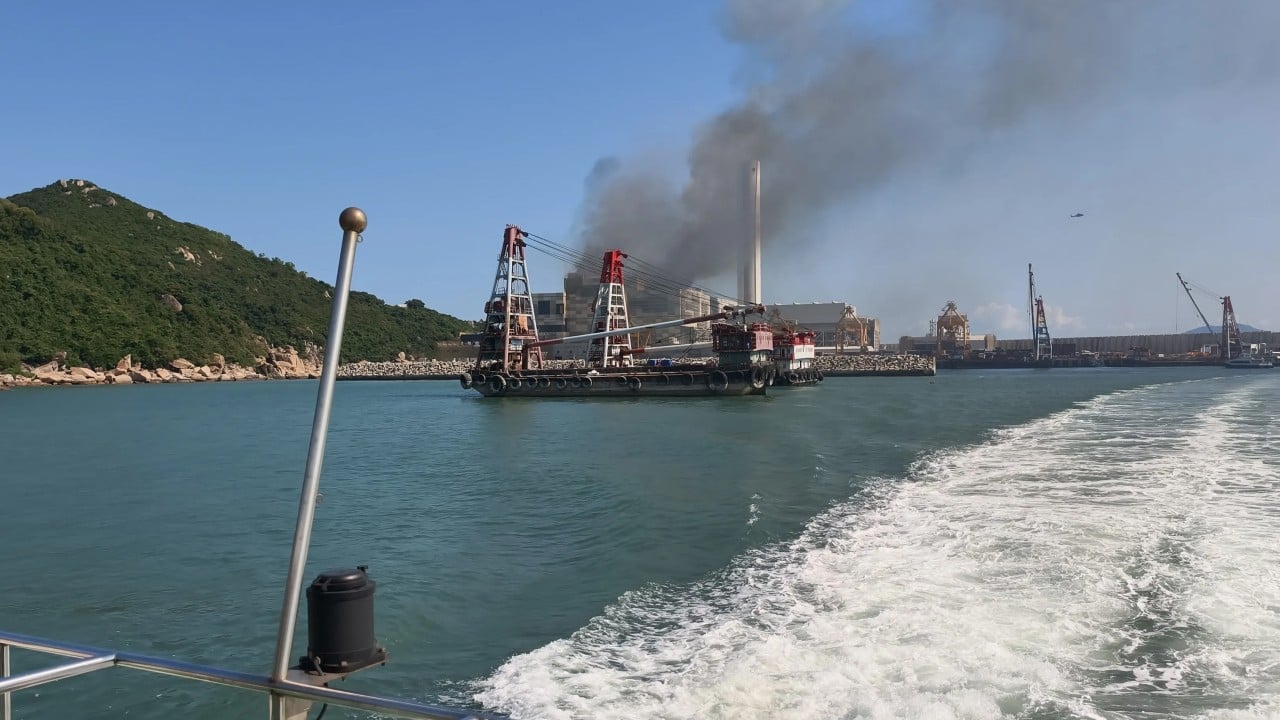
The abrupt suspension of Hong Kong’s first waste incinerator after a fire is a stark warning against relying too heavily on the HK$31.3 billion (US$4 billion) plant, environmentalists have said, as a former lawmaker urges the government to keep its landfill-free timetable on track.
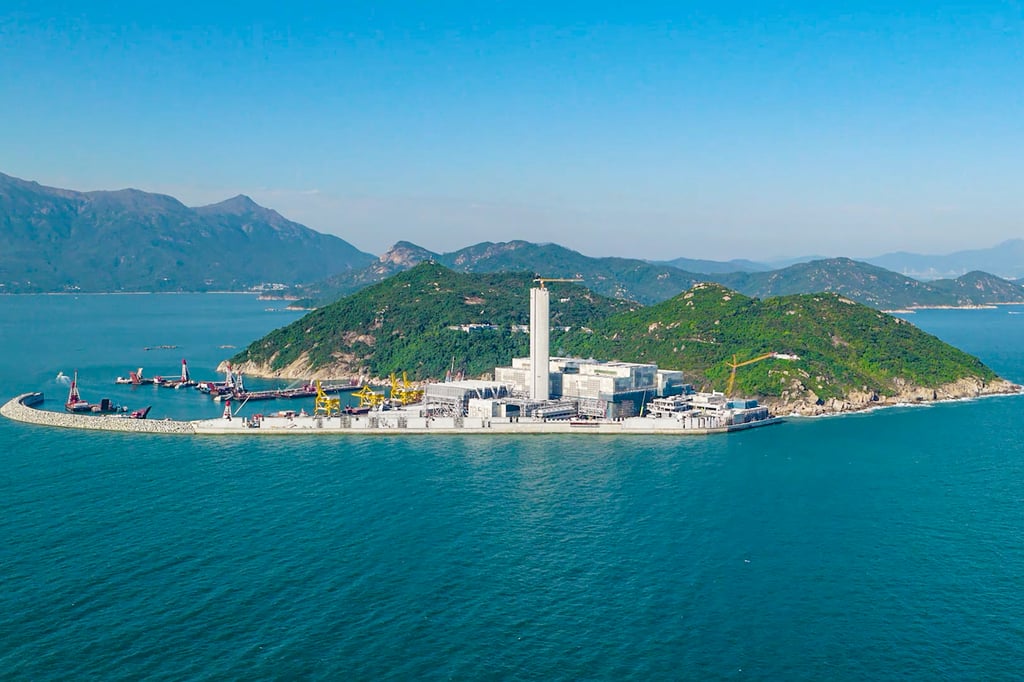
Monday’s blaze broke out on the roof of the third incineration module at the Integrated Waste Management Facilities Phase 1, or I·PARK1, on an artificial island off Shek Kwu Chau. More than 900 people were evacuated and one staff member was taken to hospital after feeling unwell.
The government has instructed the contractor to submit a report within seven days while the investigation continues.
The facility has suspended operations, while authorities have extended operating hours at the West New Territories Landfill extension to maintain the city’s waste-management operations.
Theresa Wu King-yan, assistant director of the Environmental Protection Department, said on Tuesday that the fire was suspected to have been caused by construction materials catching fire, adding that the incinerator had been operating normally at the time.
Edwin Lau Che-feng, founder of environmental group Green Earth, said the government should not rely too heavily on incineration to manage the city’s waste, calling for stronger policies, infrastructure and public education to promote waste avoidance and reduction.
“If one thinks it would be fine to just build more incinerators to solve the problem of urban waste, it would be wrong,” he said.
“Any technical solution could face technical problems … a technical problem or an accident could immediately trigger a crisis in waste management,” he added, noting that waste which would otherwise have been incinerated would now have to be sent to landfill.
Costing HK$31.3 billion and taking more than seven years to build, the facility began trial operations in December 2025 and became fully operational by the end of this year.
Capable of processing up to 3,000 tonnes of municipal solid waste a day, I·PARK1 forms part of the government’s plan to phase out reliance on landfills by 2035.
According to the 2026 budget, the government expected the plant to receive 910,000 tonnes of municipal solid waste this year, averaging about 2,500 tonnes a day – more than 80 per cent of its capacity.
By contrast, Hong Kong disposed of an average of more than 15,600 tonnes of solid waste at landfills each day in 2024, according to the Census and Statistics Department.
Lau said that although incineration reduced the volume of waste sent to landfill, the resulting bottom ash was toxic and required special treatment.
If such toxic elements were released into the air, they could pose health risks to nearby residents, he added.
“We should invest more effort in raising the public’s environmental awareness, habits and everyday behaviour. That is truly how we maximise the benefits of waste reduction at low cost and with low failure risk. Think about it: we do not have to spend a fortune, nor worry about toxins or technical failures.”
Greenpeace Hong Kong shared that concern, dismissing waste-to-energy conversion as a genuinely sustainable approach to waste management.
“The government should spend public funds prudently, making waste reduction and reuse its policy priorities,” it said in a social media post.
While acknowledging the importance of waste reduction, Sai Kishore Ravi, an assistant professor at City University’s School of Energy and Environment, said waste-to-energy technologies remained important for handling waste that could not be recycled.
He said the incident had created a resilience challenge for Hong Kong’s waste-management system, as the waste still had to go somewhere.
“A robust waste-management system therefore needs flexibility and alternative treatment routes. Resilience also benefits from having multiple facilities and treatment technologies contributing to the overall waste-management ecosystem in Hong Kong,” Ravi said.
He urged authorities to diversify the city’s waste-conversion technologies, including biological, thermal and solar-driven methods to turn urban refuse into energy or high-value chemicals.
Ravi also stressed the importance of managing existing facilities well, noting that incineration remained a well-established technology for handling large volumes of refuse.
“From an environmental perspective, monitoring smoke and potential emissions during any fire is important,” he said.
“In general, safe operation of waste-to-energy facilities relies on careful control of the combustion process, continuous monitoring, early detection of abnormal conditions, fire detection and suppression systems, equipment inspection and maintenance, and well-practised emergency procedures.”
Former lawmaker Michael Tien Puk-sun, meanwhile, expressed concern over the long-term impact on Hong Kong’s waste-management strategy.
“Hong Kong definitely needs incinerators – not just I·PARK1 but also I·PARK2. If we cannot get the first one right, we need to forget about I·PARK2. Together, they handle [almost] 10,000 tonnes of municipal solid waste [each day]. Hong Kong will never be able to reduce that much waste, as there are always non-recyclable materials,” he said.
“We must make it work, and they must be operational on time; otherwise, our landfills will face extreme pressure … The government should provide an account of the incident as soon as possible to ease public concerns.”
The South China Morning Post has reached out to the Environmental Protection Department for comment.
KioskNews shows a cleaned-up reading view extracted from the publisher’s page — the original always lives on their site, not ours.