9 Classic Fantasy Books Perfect To Read More Than Once
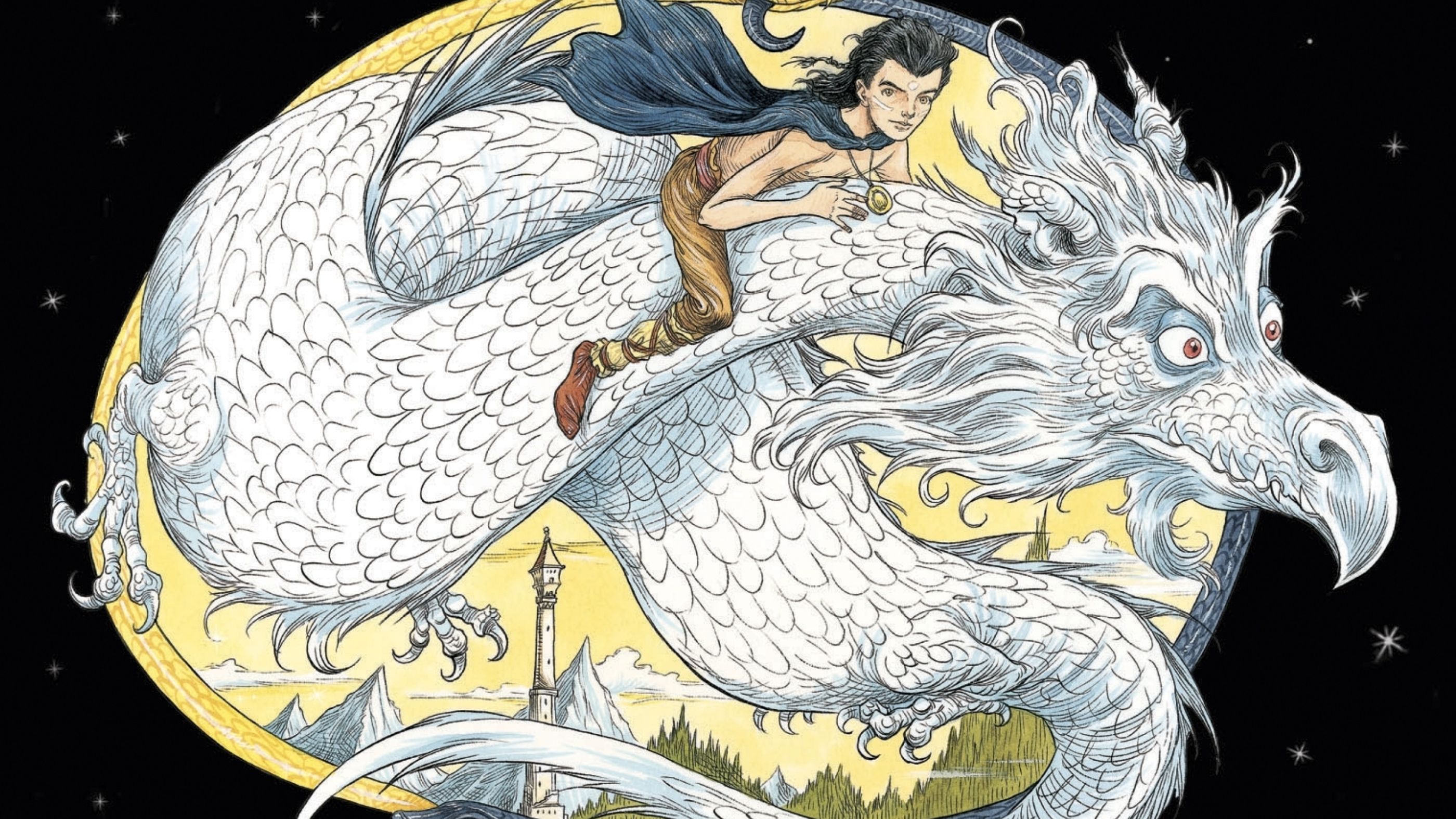

Beatriz (Bea) Valero de Urquia is a Books & Literature author at Collider, where she focuses on Lists surrounding recent bestsellers, classical novels, and everything in between. She is a historian by training and a bilingual reader, moving between English and Spanish literature.
Beatriz began her career as a technology writer at a startup in the UK. Almost a decade later, journalism has taken her to five cities across three continents and into business reporting, cultural criticism, and live TV commentary. She joined Collider in 2026.
Beatriz has a passion for travelling and loves keeping an eye on the books headed to the screen. One of her favorite pastimes is critiquing the historical accuracy of period movies. She also once volunteered for the Charles Dickens Museum. Beatriz also has a core belief that a book is always better than the movie, but she has been happy to have been proven wrong in a couple of occasions.
When she isn’t reading, Beatriz is watching musicals, stage managing Shakespeare plays with a local theater group or doing historical research. She enjoys tracing family trees for her history and genealogy TikTok, creating databases for historical analysis and sifting through 17th-century stories for the novel she is currently in the process of writing.
Sign in to your Collider account
There are certain books that stay with you throughout your life. Others, you come back to, perhaps unexpectedly, and they provide a new meaning. This is especially true of genres like fantasy, which tend to attract readers of all ages, with very different understandings of the world. As a child or teenager, one may be enthralled by a book’s plot, reading as fast as possible. For an older reader, or a person who has read the book before, the story serves another purpose. The act of reading becomes about the joys of the journey: breaking down the worldbuilding, looking for clues for a plot twist, or understanding lessons that went over one’s head the first time around.
There is also nothing like going back to a book you already love. The experience of re-reading can be joyful when returning to a book you know you will like, perhaps after a reading slump. It can also be sad, knowing that a story will inevitably reach its tragic ending. Sometimes, it is eye-opening, and one learns to appreciate a story for the first time, or look at it in a brand-new light. These books do one of these things, or all of them.
'The Princess Bride' (1973)
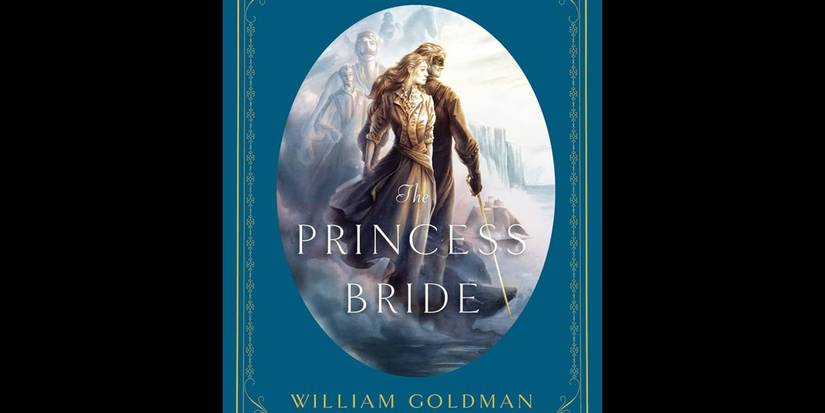
William Goldman’s The Princess Bride is undoubtedly the most fun book to read more than once, out of the ones on this list. Its full official title, The Princess Bride: S. Morgenstern's Classic Tale of True Love and High Adventure, The "Good Parts" Version, already gives a clue as to the tone: it's a love story, a flamboyant adventure, a comedy, and a parody of all three.
In the original book, it is the framing device that makes the magic work. In the story, William Goldman inserts himself as narrator, explaining that he wanted to read a fantasy book to his son, the same one that his father read to him, written by the fictional S. Morgenstern. However, when he supposedly finds said book, it turns out to be incredibly long and boring, so he takes on the task of abridging it. The story then jumps between the adventures and love story of Buttercup and Westley, and Goldman’s own commentary discussing his life and the parts of the novel he skipped.
'The Golden Compass' (1995)
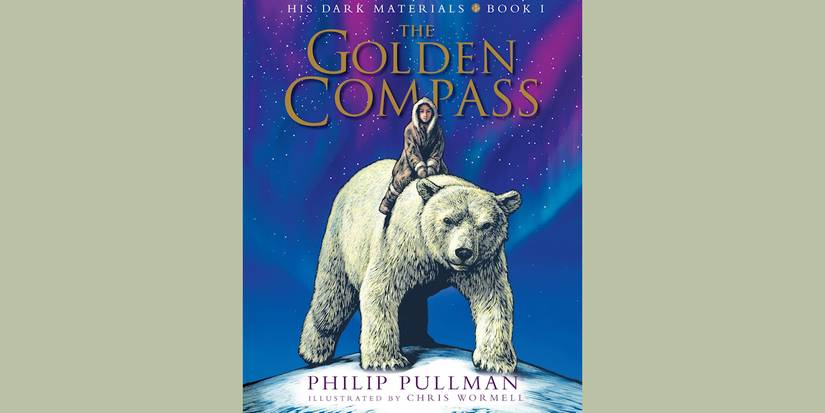
The first time you read Philip Pullman’s The Golden Compass (originally titled Northern Lights), you probably did not think, “Of course, a retelling of John Milton’s Paradise Lost,” but that is exactly what the book series is. On first read, most people would be too focused on the story of Lyra Belacqua and her journey to the Arctic in search of her friend Roger Parslow, where she discovers a series of experiments being done with a mysterious substance known as “Dust”.
His Dark Materials is a perfect series to read again because of its many layers. Alongside fantasy elements like witches and armored polar bears, the book hides deep discussions of physics and philosophy. If Milton’s epic talks about the fall of Adam and Eve, Pullman turns this idea around. In the book, acquiring knowledge is seen as something positive and liberating, and Lyra, a “second Eve,” is the heroine.
'The Last Unicorn' (1968)

Fairy tales often offer valuable lessons. Peter S. Beagle's The Last Unicorn and the animated movie of the same name open with a unicorn alone in a lilac wood who learns that she may be the last of her kind. The Unicorn is joined in her journey by a hopeless magician named Schmendrick and a tough, tired woman called Molly Grue. The trail leads them to the castle of the bitter King Haggard and his monstrous Red Bull.
This is a lyrical, whimsical little story. At the same time, it is one worth going back to just for the writing alone. Beagle’s prose is a true work of craftsmanship. More than that, the story gains from knowing how it will end, and catching on to the wit and melancholy hidden within. On a re-read, knowing how the story ends transforms it into a book about memory, regret, mortality, and the reality of being human.
'Jonathan Strange & Mr Norrell' (2004)
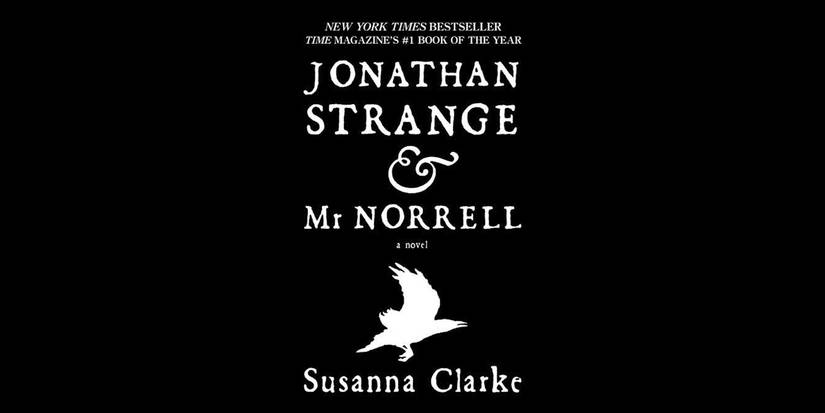
In many ways, Jonathan Strange & Mr Norrell cannot be fully appreciated upon a first read just because of how complex it is. It may have only been published in 2004, but it already reads like a classic. The book provides an alternative history set in 19th-century England. Here, magic once existed under the legendary Raven King, but has long faded into obscurity. Two men are trying to bring it back: the scholarly Gilbert Norrell and his impulsive pupil, Jonathan Strange.
The story then revolves around the two men, discussing topics such as “Englishness” and the meaning of “reason.” The book’s 800 pages are written in the witty style of Jane Austen and Charles Dickens’s novels and are filled with fictional footnotes of magical knowledge. On first read, the amount of information provided can be overwhelming. On a second read, it is a gold mine of entertainment.
'A Wizard of Earthsea' (1968)
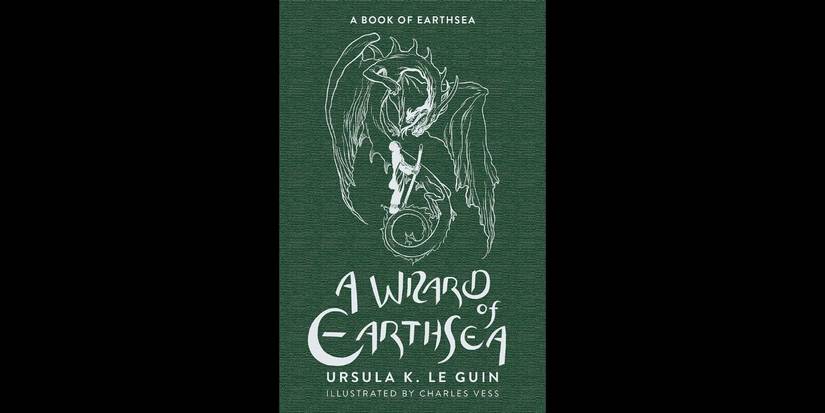
Ursula K. LeGuin’s fantasy novel was first seen as a work of children’s literature. However, the story in A Wizard of Earthsea has a much deeper impact. Rather than having a large battle against an evil force, the story turns inward, and the struggle is one that the main character has with himself. The book is short but deeply thoughtful, and Margaret Atwood herself called it one of the "wellsprings" of fantasy literature.
The book is foundational coming-of-age fantasy. It is set in the archipelago of Earthsea, the home of a young mage named Ged. In this world, magic depends on knowing the names of things, and every spell has a cost. Eventually, Ged goes to a wizarding school, where his pride makes him accidentally unleash a shadow creature into the world. Framed as an adventure story, the book explores deeper themes such as self-acceptance and the danger of having power without knowledge.
Collider Exclusive · 8 Questions · 2 Minutes What Fantasy World Do You Belong To? Middle-earth · Grand Line · The Continent · Camp Half-Blood
Pick your magic, your crew, where you want to wake up and who you would rather be fighting, and we will tell you which world you actually belong in. Four are open to you: an ancient kingdom living through its last good age, an endless sea full of pirates, a continent that pays people to kill monsters, and a summer camp where the Greek gods are extremely real and mostly a nuisance.
💍Middle-earth(Rings of Power)
👒Grand Line(One Piece)
🐺The Continent(The Witcher)
🔱Camp Half-Blood(Percy Jackson)
01
What kind of power do you want? Every one of these worlds runs on a completely different sort of magic.
02
Who is travelling with you? Nobody gets through any of these stories entirely on their own.
03
Where do you want to wake up tomorrow? The best fantasy is usually just somewhere you would genuinely like to live.
04
How are you making a living out there? Even in fantasy somebody has to pay for the horse.
05
There is something in the woods. What do you do about it? All four of these worlds keep something unpleasant out there in the dark.
06
Who is the villain of your story? The enemy tells you far more about a world than the hero ever does.
07
What do you actually believe in out there? Every world hands its heroes one rule and asks them to hold onto it.
08
A thousand years from now, how are you remembered? Eight questions in, this is the one that decides your world.
The Map Is Drawn Your World Is…
Four worlds and four completely different ideas of what a good life looks like. This is where you belong, what it would ask of you, and what you would get back in return.
Middle-earth
You belong somewhere old enough that the mountains have names and somebody can still tell you who gave them. Middle-earth is for people who think the right thing is worth doing even when it will not be finished in their lifetime.
- This is the only world on the list where doing good is understood as a very long defeat, fought anyway, by people who will never see how it ends.
- You are drawn to grandeur, to white cities and deep forges and the sense that almost everything you touch is older than your entire family line.
- The Rings of Power is set in the last good age before it all goes wrong, which gives every quiet scene in it a slightly unbearable weight.
- You would take the hard road, and you would take it on foot.
The Grand Line
You want the sea, a crew, and absolutely nobody telling you where you are allowed to go. The Grand Line is the world for people whose main ambition in life is finding out what is over there.
- One Piece has run for decades on one very simple engine, which is a group of people who each want something impossible and have decided to go and get it together.
- You collect people. Your ideal crew is a set of misfits who were each written off somewhere else before you turned up and offered them a better idea.
- The world is enormous and deliberately ridiculous, and the emotional gut punches land harder because of that rather than in spite of it.
- You would set sail knowing the map runs out, which is more or less the entire point of it.
The Continent
You would rather be feared and useful than liked and useless. The Continent is a world where the monsters are the straightforward part of the job and the people are where it all gets complicated.
- Witchers get paid to do what nobody else will and resented for existing at all, which is a trade most people would refuse and you would probably accept.
- You have no real illusions about which side is the good one, largely because on the Continent that question tends to have a disappointing answer.
- The best of these stories are not about the fighting. They are about somebody with a rigid code being repeatedly cornered into caring about people.
- You would take the coin, finish the job properly, and be out of town before the story got told wrong.
Camp Half-Blood
You want the myths to be real and loose in the actual world, and you want to find out at about thirteen that you were never anywhere near as ordinary as everybody kept telling you.
- Percy Jackson takes the oldest stories we have and drops them into car parks and diners, which makes the gods considerably funnier and a great deal worse.
- You would be the kid every school gave up on, who turns out to have been built for something nobody thought to test for.
- The series is genuinely about friendship rather than destiny, and it says so out loud every time a prophecy tries to get in the way.
- Camp Half-Blood is the real fantasy here: a place where the thing that made you difficult everywhere else is the thing that makes you belong.
'Alice’s Adventures in Wonderland' (1865)

“It’s no use going back to yesterday, because I was a different person then,” Alice famously says in Lewis Carroll’s Alice’s Adventures in Wonderland. Much like Alice can’t go back to her old self, you can never read the same book twice, because your understanding of it will not be the same the second time around. Charles Dodgson, the Oxford mathematician behind the pen name Lewis Carroll, first told the story to Alice Liddell and her sisters on a boat trip in 1862. More than 160 years later, it still feels different from any book out there.
The book is a story about the strangeness of growing up, told from the perspective of young Alice and her trip down the rabbit hole into the fantastical world of Wonderland. There, she meets now-famous characters such as the Cheshire Cat, the Mad Hatter, and the Queen of Hearts. As a child, it all read like nonsense. As an adult, there is method in the madness, and the book becomes full of satirical takes on how society works and insightful thoughts.
'The Neverending Story' (1979)
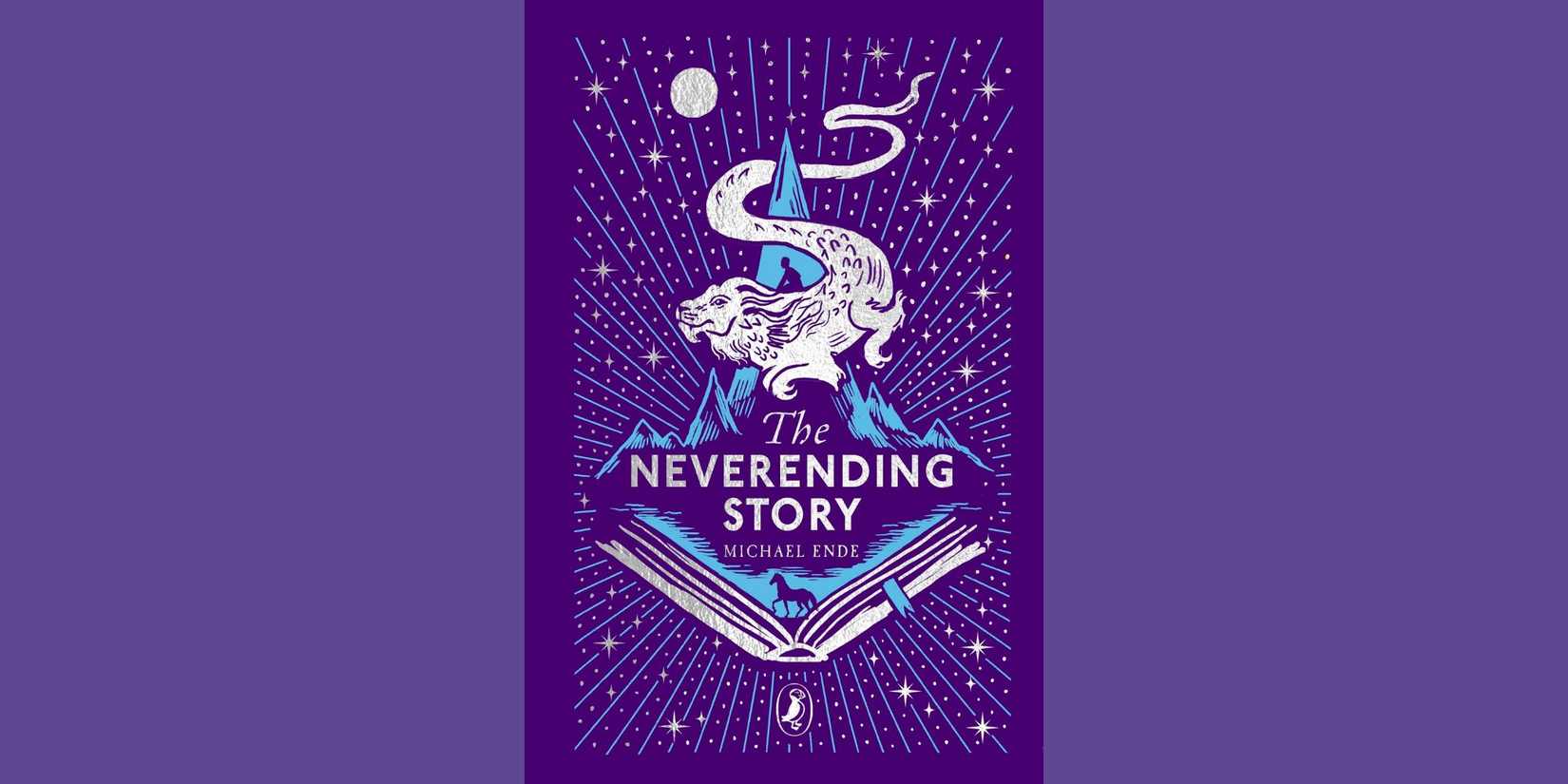
Michael Ende's The Neverending Story is two books in one. It follows Bastian Balthazar Bux, a boy who steals a magical book that tells the adventures of the young warrior Atreyu during his quest to save the Childlike Empress and stop the Nothing from destroying the magical realm of Fantastica. The story continues in this style, similar to that of The Princess Bride, until the end of the first half, where Bastian realizes he himself is the key to saving Fantastica.
The second half of the book is the one that will serve a second reading the most. If the first part is a more traditional adventure, the second one is a much more complex and darker exploration of identity and the dangers of escapism. In this section, Bastian enters Fantastica and is given a medallion that grants him wishes in exchange for memories. The rest of the story narrates his slow decline, as he nearly loses all his humanity before Atreyu helps him find his way back home.
'The Little Prince' (1943)

The Little Prince is a tiny book with gigantic themes. “All grown-ups were once children,” says Antoine de Saint-Exupéry's dedication, “although few of them remember it.” As a child, it is a funny and cute story about a stranded pilot who meets a magical Little Prince. This prince lives on a far-away asteroid called B-612. During his travels through the galaxy, the prince meets a series of single-minded adults, obsessed with power and money, like a king with no subjects and a businessman obsessed with counting stars.
In beautiful images, the Little Prince discusses the meaning of themes like love and grief. At its heart, it is a story about what we lose when we stop paying attention to the people and things we love. The fact that the writer was exiled from occupied France when he wrote it, and would later disappear in a military flight, only underlines the meaning of his story. It's also a book most people only fully understand once they have had a chance to be the adults it makes fun of. It also takes less than an hour to read, so there's no excuse not to go back as many times as needed.
'The Lord of the Rings' (1954–55)

J.R.R. Tolkien's The Lord of the Rings is the foundational modern fantasy epic. Everyone knows the plot, and yet, reading the books is a deeply rewarding experience. The story chronicles the journey of Frodo Baggins to Mordor, where he can destroy the One Ring and defeat the Dark Lord Sauron. Along the way, he joins a community of hobbits, elves, men, dwarves, and a wizard that forms the Fellowship of the Ring, uniting to fight Evil.
The book is considered one of the most influential fantasy stories ever written. Simply put, the fantasy genre today would not be the same without it. Do not read this book just to say you have. Read it. Enjoy it. Then, read it once more and think on it. Behind the quest, The Lord of the Rings is a complex philosophical and theological story. It touches on religion, the Christian faith, and even echoes Tolkien’s own experiences in World War I, exploring themes like survivor’s guilt and post-traumatic stress. On a second and third reading, it almost becomes a book about history rather than fantasy.
KioskNews shows a cleaned-up reading view extracted from the publisher’s page — the original always lives on their site, not ours.