Analysis: Central Agency Raids A Boon Or Curse For Punjab's Ruling AAP
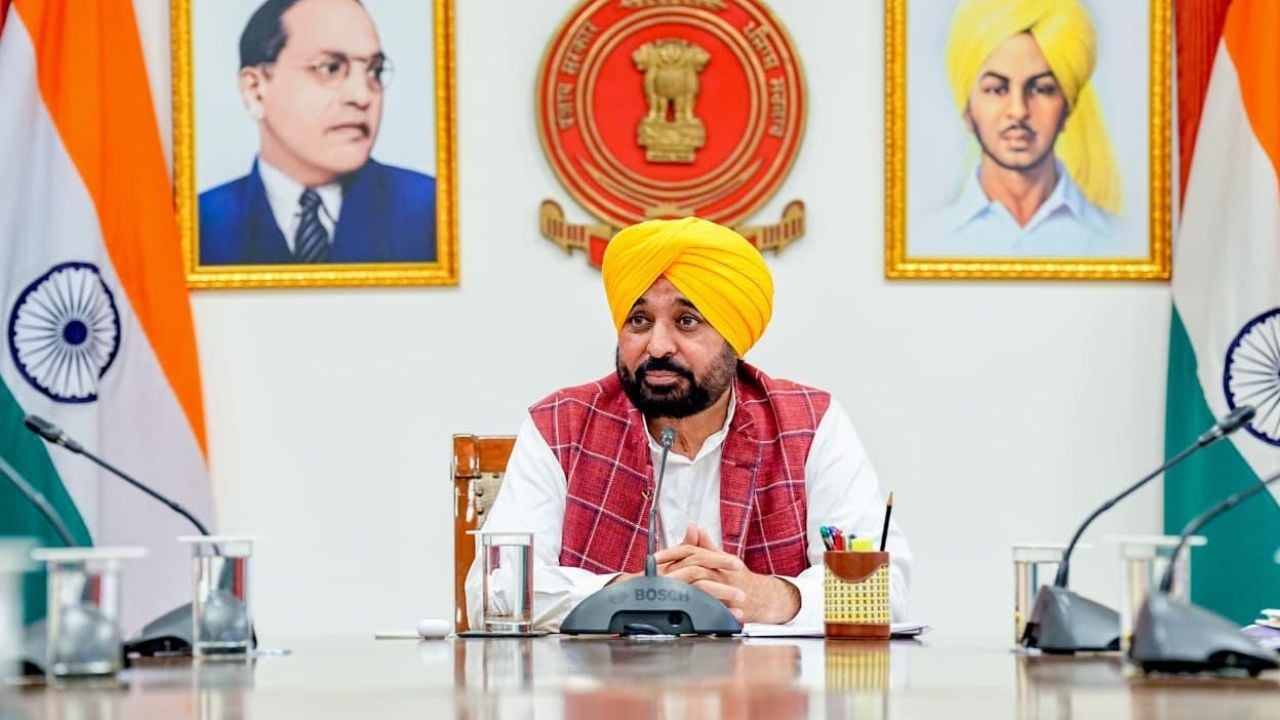
The CBI raids being conducted in the offices of the Punjab government and at the residences of close aides of Chief Minister Bhagwant Mann, while on the one hand seem to have sullied the Kattar Imandar (honest image) of AAP leaders, have raised a question on the other: are the raids a genuine crackdown on graft, or a calculated political strike by the Centre?
From a legal point of view, the fresh raids appear genuine as the CBI probe followed sharp observations from the Punjab and Haryana High Court, which pulled up the state police for sitting on earlier ED inputs about graft in the Chief Minister's Office.
The court did not merely comment; it ordered the probe. That judicial backing blunts the charge of a purely arbitrary executive vendetta. The stakes are legal as well as political, and AAP cannot wave the file away as a random hit from Delhi.
The timing of the raids, other than Bhagwant Mann's camp office and his aides, has given AAP a reason to question the Centre as Punjab heads for the 2027 assembly elections.
The raids landed where AAP least wanted them: inside Bhagwant Mann's own camp office, and on the residences of aides, among them his officer on special duty (OSD), Rajbir Singh Ghuman.
The action rests on Enforcement Directorate inputs about alleged corruption, cash-for-postings, and irregularities in administrative transfers. The allegations, such as leaks of confidential files and providing Arms licences, have left the agencies shocked.
How the raids sullied AAP's honest image
AAP's clean image took a hit after a series of CBI and ED raids. After the legal trouble for the top leadership in the Delhi excise case, the CBI raids and corruption allegations in Punjab have come as a double whammy for the party that is hoping to win a second term in Punjab.
Though neither Chief Minister Bhagwant Mann nor Arvind Kejriwal have been named in the latest CBI First Information Report, there are half dozen accused.
Apart from Rajbir Singh Ghuman, there is Nitin Gohal, described as a middleman and long-time associate of Ghuman, whose Western Towers flat in Kharar was raided in May 2026, when cash bags were thrown; Jitin Gohal alias Raja, Nitin's brother, Romi Raja Mahajan (also referred to as Dr Romi Mahajan), described as an associate who allegedly helped coordinate access; Bir Devinder, described as an AAP youth-wing functionary from Sangrur and RS Nagra - described as a private associate of Ghuman are their close aides.
The FIR was registered after an order from the Punjab and Haryana High Court dated October 5. A group named in the FIR is accused of running a corruption syndicate in Bhagwant Mann's office.
ED investigators claimed they have found that Ghuman and his network ran a cash-for-transfers racket, steering administrative transfers and postings and handing out official favours for illegal kickbacks.
Private individuals allegedly sat in the middle. Nitin Gohal and his brother Jitin Gohal are named as conduits who used their proximity to Ghuman, dealt with people seeking government favours, and handled the illicit money.
The network is also accused of opening a back door. Unauthorised people, the probe says, were given access to the chief minister's camp office and to confidential government documents, and were helped with matters such as arms licences. The FIR does not stop at Ghuman and names close associates and childhood friends, among them Dr Romi Raja Mahajan and R.S. Nagra, who allegedly managed appointments and pushed administrative interventions outside formal channels. The court faulted state authorities for failing to act on the ED's initial disclosures of corruption in the CMO.
AAP did not win power on a long menu of promises. It won on one: that it was the uncorrupted alternative to the old. Once corruption investigations reach the core leadership and the administrative machinery around it, the thing that set the party apart from legacy politicians starts to come apart.
For AAP, the agency action and its timing is seen as an aggressive step up in the Centre's pressure on non-BJP governments.
The raids fit its narrative that the dispensation in Delhi uses the CBI and the ED to harass opposition leaders and unsettle governments in opposition-ruled states.
Mann and Arvind Kejriwal have framed the action as BJP panic, agencies weaponised to defame the government and de
AAP has termed the raids a bid to destabilise a non-BJP state with federal machinery. The party leaders, while criticising the BJP, do not just play the victim card or refer to themselves as AAP leaders or AAP government but 'Punjabis'.
BJP leaders have questioned AAP's Punjabiat by asking: does AAP mean Punjab? What about the outsider non-Punjabis who are ruling the roost, running offices, occupying government houses and pocketing hefty salaries?
The electoral risk cuts the other way. Punjab is heading into assembly elections, and high-profile anti-corruption raids at this point are explosive.
Congress and the BJP get a ready charge of administrative hypocrisy against a government that campaigned on honesty. The argument shifts off governance claims and onto law, order, and transparency. AAP is pushed onto the defensive just when it would rather be talking about what it has delivered.
So the same set of raids does two jobs at once. It gives rivals a court-backed opening against the clean-government brand, and it gives AAP a Centre-versus-state story to take to its voters.
Reactions
Opposition leaders tore into the AAP government after the CBI raids on Punjab Chief Minister Bhagwant Mann's camp office and on his OSD. The target was the party's "Kattar Imandar" line - the claim that it is strictly honest.
Shiromani Akali Dal leader Sukhbir Singh Badal said the raids sent shockwaves through Punjab's power corridors. After years of hollow promises and scams, he said, the walls of power are beginning to crumble.
Congress leader and Leader of Opposition Partap Singh Bajwa went after the government's record. The High Court ordered a CBI probe, he said, because the state sat on the Enforcement Directorate's early inputs on cash-for-transfers.
Punjab BJP leaders, including state chief Kewal Singh Dhillon, and national figures said the ruling dispensation's blatant dishonesty is out in the open. The action came from Punjab and Haryana High Court directions, not political malice, they said.
Bhagwant Mann has rejected the allegations outright. "Their case is political vengeance. As equations in the state shift and the party's footprint grows, they say, the Centre is using the ED and the CBI to divert attention and defame policies that are popular," he said.
KioskNews shows a cleaned-up reading view extracted from the publisher’s page — the original always lives on their site, not ours.