Fitbit Edge vs Fitbit Air: The differences beyond a screen

Google's latest wearable seems like a Fitbit Air with a screen, but the two actually have less in common than you might think.
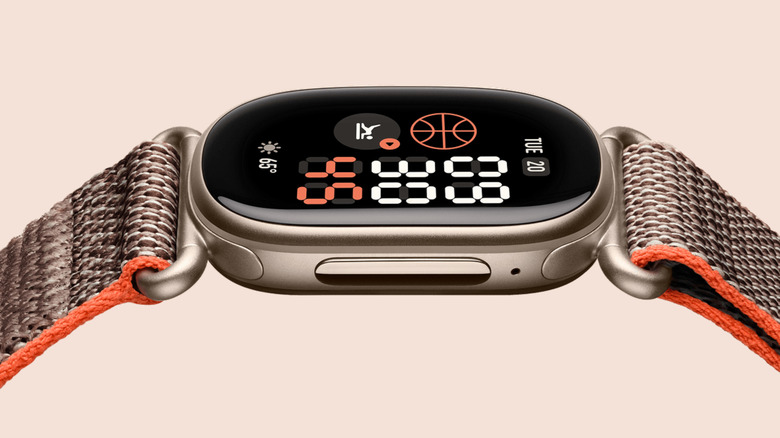
Google cares about fitness trackers again. The company has continually iterated on the Pixel Watch since it launched in 2022 and even released the kid-focused Fitbit Ace LTE in 2024, but you wouldn't be wrong to think the company had all but given up on releasing an affordable wearable under the Fitbit name. That changed in May with the release of the $99 Fitbit Air, an affordable Whoop competitor without a screen. It changed again in October with the introduction of the $179 Fitbit Edge, a new half-step between the company's most affordable tracker and the Pixel Watch 5. Both devices offer AI-powered features not available on Fitbit's older wearables, and more importantly, do so without costing an arm and a leg or locking you into the Android ecosystem.
Now, you do have to pay for Google Health Premium if you want to use them to their fullest, but the Edge and the Air otherwise seem like great options if you're not interested in spending hundreds of dollars on a smartwatch. Just because they support some AI tools doesn't mean they're completely interchangeable, though. The Fitbit Edge features a screen, and some subtler differences that might make it worth picking over the Fitbit Air depending on what you're looking for.
A screen isn't the only thing that differentiates the Fitbit Edge
Cherlynn Low for Engadget
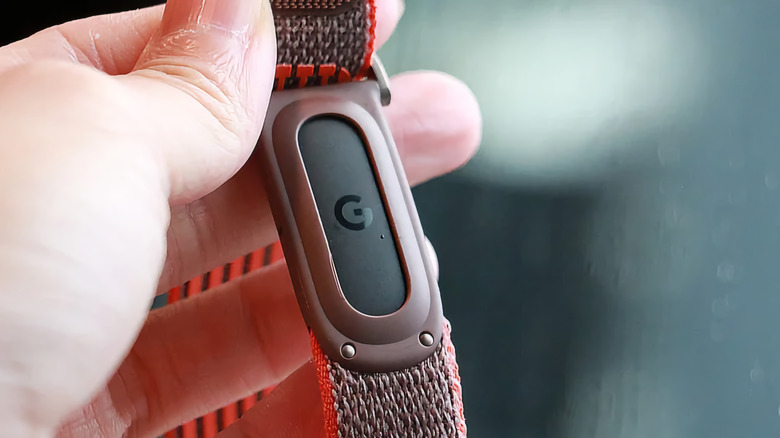
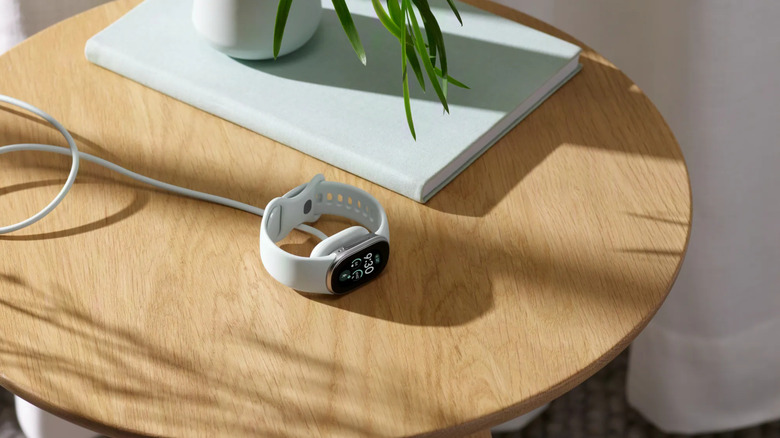
While both are worn on a wrist, the Edge and Air are distinctly different form factors. Nearly all of your interactions with the Air happen through the Google Health app, where you can view your data and adjust its settings. The only time you'll spend touching the Air — a 1.37 x 0.66 x 0.32-inch sensor puck without its band — is to take it on and off to charge or to change its bands. The Edge enables more interaction, mostly thanks to its 1.34-inch oval-shaped AMOLED touchscreen but also a new mechanical side button. At 1.54 x 1.01 x 0.46 inches, the Edge is also larger than the Air, and just more visible, especially if you use the always-on functionality of its screen.
Beyond those surface-level distinctions, the two devices also feature slightly different sensors. They both have optical heart rate sensors, but only the Edge has the electrical sensors necessary to support ECG readings. The Edge also includes an altimeter for calculating elevation and an ambient light sensor, likely to make sure its screen is calibrated to the right brightness.
Google says both the Edge and the Air are supposed to get seven days of battery life, though that math changes slightly thanks to the Edge's display. It can last seven days if its screen isn't in always-on mode. When the always-on feature is enabled (making the Edge more like a modern smartwatch), it's only rated for around two days. To make up for the difference, the company says the Edge can charge to 100 percent in 90 minutes, and when it's on low battery, a 15-minute charge can give it a day of battery life.
Battery life might be an area where the Edge falls short, but both it and the Air are equally water and dust resistant with IP68 ratings and protection up to 5ATM.
The Fitbit Edge can do and track more things than the Fitbit Air
When Google announced the Edge, it shared that the Health Guardian features it introduced on the Pixel Watch 5, covering things like heart health and insulin trends, would also be coming to the Edge and the Air. Because those features largely aren't dependent on specific sensors and instead rely on the corpus of data Google has collected, it seems plausible that additional AI features could follow a similar path.
When it comes to what each individual wearable is capable of, though, things get a bit more complicated. Both the Edge and the Air offer things like activity tracking, a daily readiness score, cardio load insights, step tracking, continuous heart rate monitoring, irregular heart rhythm notifications, sleep tracking and a resilience score that approximates stress. The screen and additional sensors on the Edge enable extras, too, like ECG readings, the ability to track the number of floors you've climbed and live workout metrics on the built-in screen.
Because the Edge, again, has a display and runs Google's lightweight Fitbit OS, it can also show more of your health data on-device, receive notifications from your phone and even run a stripped-down version of Google Maps. The Air can't offer the same without a screen, and depending on your perspective on wearables, you might not want it to.
One of the draws of the Fitbit Air is it's less in your face: just sensors and a companion app when you want to look at the data you collect. By design, the Fitbit Edge is far more obvious. It's not a mini-smartphone in the way a Pixel Watch is, but it could be harder to ignore, if that's something that matters to you.
KioskNews shows a cleaned-up reading view extracted from the publisher’s page — the original always lives on their site, not ours.