The Booker Prize is anyone’s game. Here’s where I’d put my money

Marlon James is the favourite. It’s obvious why. His novel The Disappearers, about eight men who are viciously attacked by gay-bashers in 1988 Jamaica and what happens to the survivors in the years that follow, is big, furious, vastly ambitious, aggressively literate and filthy. It is a cage-fighter of a book that has busted its shackles and come out roaring. And it is roaring poetry.
James has won the Booker before: A Brief History of Seven Killings took the prize in 2015. That book was dazzling; this is better, partly because some of those razzle-dazzle elements – the sprawling cast of characters, the extravagant use of patois, the sweeping timescale – are more controlled here. James clearly still revels in yomping up the byways of Jamaican dialect, but he is more focused on being understood.
What remains undiluted is the violence waiting to erupt around every Kingston corner. These batty-boys live hard lives. Jordan is beaten by his father daily until he leaves home; he finds living in his car, servicing rich older queers with nasty tastes in sex, is easier.
Mat survives the beatings only to invite his fellow oppressed to punish him further in the backroom of a gay club. Total strangers to pity in their own lives, they don’t hold back; we can hear his screams.
This year’s Booker judges are led by Mary Beard: academic, television’s favourite classicist and all-round English eccentric. Also on the panel is another recognised national treasure, Jarvis Cocker.
What those meetings must have been like, with these two duking it out; fellow judge Patricia Lockwood told the BBC that they all “wrestled like pigs in mud” to establish the six finalists. You can feel that pull of extremes in their choices, even if they do end up pulling in a common direction.
That direction points to a world – or six worlds, since they are startlingly distinct – where men are gone mad. In Elizabeth Strout’s relatively genteel The Things We Never Say, the fictional orbit feels familiar enough; we’re in picket-fence Massachusetts, where people sail their boats on weekends and the same couple always hosts the annual Christmas party. What lies beneath, however, is inchoate misery.
Take middle-aged schoolteacher Artie Dam, who wants to kill himself. Why? He is comfortably married; he loves teaching; he has a successful son and a circle of friends sufficiently like him to rub along. And yet that voice nags: my god, how did I get here?
Strout can be a maddeningly folksy and mannered writer, but her voice here is direct and penetrating. Artie may not understand what is happening to him, but he does know that something is very wrong in America.

Reading this is to realise how rarely fiction addresses the pressure of the public sphere on private life; the book also interrogates privacy itself. For Artie, keeping a respectable distance has left him with a terrible sense of isolation; he feels he doesn’t really know anybody. His story is a small one – just one man’s life, engraved on a grain of rice – but it goes to the heart of a generation’s disappointments.
M. John Harrison sets The End of Everything in the coastal towns of Kent, made rather less recognisable than Strout’s New England by a mysterious cataclysm that has left society in tatters and the air swarming with mostly invisible alien beings. Aliens are rare beasts on the Booker list, for sure, but this is sci-fi of a rare order: linguistically acrobatic, expansively imaginative and shiveringly persuasive.
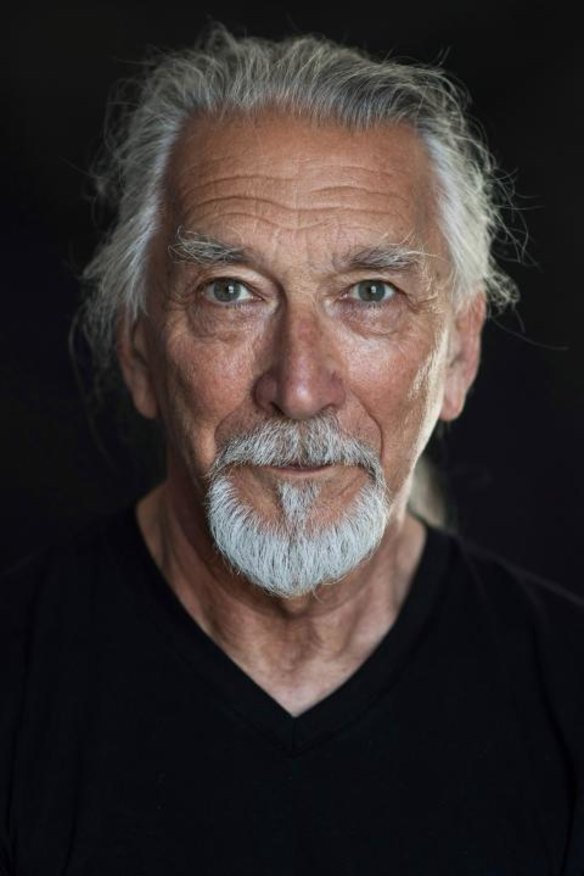
Philip Tennant, like many others, lives by scavenging flotsam on the beach. Harrison relinquishes few details of what has happened, who or what these aliens are or why they are in Kent. He doesn’t even enumerate how everyday life has disintegrated, but it is clear that none of the old rules or moral absolutes mean anything now.
When Philip finds a corporeal, sentient alien on the beach – initially referred to as “the artefact” – his first thought is to sell it. This is a remarkable book, where strangeness is unexplained but simply hangs in the air, conveyed in metaphors couched in plain language but surprising enough to make you gasp.
In May We Feed the King, a first novel by poet Rebecca Perry, the world gone mad is medieval while the man gone mad is the eponymous king, made so miserable by his own authority that he refuses to eat.

Only when his cousin’s wife visits unexpectedly and takes up residence in the palace, where he and the queen live in an amiable mariage blanc, does he begin to recover. Inevitably, the three of them become the targets of spies, gossip and plots, not least because they seem to be hatching a plot of their own.
Perry bookends her record of royal riddles and recipes with the present-day story of a designer commissioned to recreate the rooms where the king once lived. The ancient rooms are dressed with plastic replicas of foods he may have eaten, damask cloths and plumes in inkwells: precious details, described in commensurately exquisite prose. Compelling but elaborately impersonal, it does not so much sympathise with its characters in either era as turn us all into observers, weighing history’s possibilities.
Perhaps the maddest of these novels is Luke Kennard’s sardonic campus spree Black Bag, not least because it is told in a high comic tone coloured with hints of hysteria.
The unnamed hero is a desperately under-employed actor who gets a gig sitting in on a university class while enveloped in a black bag. Ostensibly, this experiment – which was conducted for real at Oregon University in 1967 – is about the students’ reactions to their silent classmate, but Kennard’s focus is on the actor, hiding in his bag from the world and sometimes bonding with people who, for whatever reason, prefer a silent black space to a man.
What does that mean, to be a man? It’s the question he asks himself as he considers his failed career, miserable income and strange affair with a female professor who says she fancies having sex with an absence.

Sometimes he addresses us directly, like a stand-up; sometimes he relates dialogue that reads as banter. When he discovers that there is a bag-wearing masculinist cult out there, this pace steps up to become a tornado, picking up everything in its path.
“I had an epiphany,” his friend Claudio tells him as Kennard slaloms to the finish line. “Men are mostly frightened and crazy and very easily misled. They just want someone to be nice to them, but they don’t know how to ask for that.” A clunkingly obvious conclusion, maybe, but the carnival ride getting there is highly entertaining.
Which brings us to the book considered the only real rival to The Disappearers, Douglas Stuart’s John of John. Like Marlon James, Stuart has won the Booker before; his fictionalised account of a childhood spent with a drunken mother in Glasgow, Shuggie Bain, won in 2020.
John of John is set in a remote community on the isle of Harris, where villagers speak in Gaelic, down tools on the Sabbath and expect to shoulder a hard life without complaint.
Stuart transports the reader into this life with such conviction that we can smell the peat smoke and feel the constant rain on our faces; the island is less a setting than a way of being that claims us, body and soul, as we read.
After several years of study, John-Calum is back home at the croft with his gruff father John and maternal grandmother Ella; his mother moved away with another man. The shame and blame around that rupture remain almost unendurable; the consequences were anyone to know that John-Calum is gay are too hellish to contemplate.
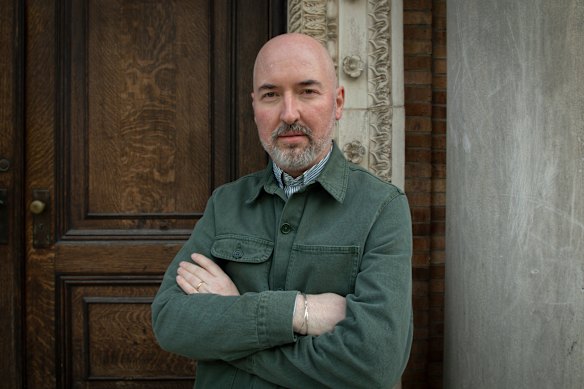
What John-Calum does not know, as he finds himself increasingly drawn to an older neighbour, Doll, is that his father has unspeakable secrets of his own.
It’s a meticulously constructed drama, but its resolution is uncertain; it wasn’t a surprise to learn that Stuart, unhappy with an earlier version, rewrote the second half. It still takes turns that seem very unlikely, undermining the marvellously muddy, salty realism of its beginning. Of course, it is still an absorbing read, but it’s not going to trump The Disappearers.
Neither should any of the other books; good as they all are, nothing has its bravura scope or sheer vitality. Another cigar, please, for Marlon James.
The Booker Prize will be announced at 8.45am on Tuesday, November 10 (AEST).
KioskNews shows a cleaned-up reading view extracted from the publisher’s page — the original always lives on their site, not ours.