Green party drops longstanding opposition to nuclear power
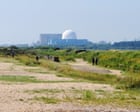
Green party members have voted to end the party’s opposition to nuclear power, dropping a commitment to phase out the technology in a major shift in its energy policy.
The motion, adopted at conference, removes a “blanket opposition to nuclear fission” and instead commits the Green party of England and Wales to assessing nuclear projects alongside other low-carbon technologies.
Its electricity generation policy still prioritises offshore wind, onshore wind and rooftop solar as the primary sources of electricity, but allows elected representatives to support new nuclear reactors on a case-by-case basis.
The Green MP Carla Denyer said the decision recognised there was a role for nuclear while the country moved towards an electricity system based primarily on renewables. “This evolution of our policy does not commit the party to backing new nuclear, but accepts this power source is here to stay for now, while we transition to electricity generation based primarily on renewable sources,” she said.
Denyer said keeping existing nuclear stations running could be a low-carbon option because a significant proportion of their carbon footprint came from construction. “So if I were energy secretary, my evidence-based approach would be to keep existing nuclear plants in operation, but to consider proposals for new nuclear power very carefully, bearing in mind the cost, speed and environmental impacts.”
Her comments strike a different tone from her assessment in 2023, when she described nuclear energy as “incredibly slow and incredibly expensive”. She said at the time: “Renewables is simply the way forward. Nuclear is not going to help us out in this climate emergency.”
Other senior Greens have previously criticised the technology. The party’s leader, Zack Polanski, has described it as outdated and compared investment in new nuclear reactors to “creating a fax machine”.
Last year, Adrian Ramsay, then a Green co-leader, criticised government support for Sizewell C. “The money being spent on this nuclear gamble would be far better spent on insulating and retrofitting millions of homes, bringing down energy bills and keeping people warmer and more comfortable,” he said.
The Green’s previous opposition to nuclear fission was rooted in its staunch opposition of nuclear weapons, one of the party’s founding principles.
Eugene McCarthy, a co-founder of Greens for Nuclear and a supporter of the motion, said the urgency of the climate crisis demanded a willingness to consider all available options. “We are at the throw-the-kitchen-sink-at-it phase of the climate crisis where you cannot be ruling anything out for things like Chernobyl happening in the 1980s,” he said.
The motion allows elected representatives to assess individual proposals on their merits, McCarthy said. “We will not say we support or don’t support any particular technology. This motion basically lets our elected members of parliament take it on a case-by-case basis and go: ‘This makes sense, we will extend the lifetime of Sizewell B,’ and on a different case say: ‘Actually the numbers don’t add up here.’”
after newsletter promotion
Asked about Polanski’s previous criticism of nuclear, McCarthy said the leader remained entitled to his views. “He’s still fully entitled to say that, and a lot of the nuclear technology that we are using is quite outdated, to be frank. What this means is that he can now take a nuanced position.”
Prof Andrew Stirling, who has advised government on nuclear power and energy policy, said the motion was “completely irrational”. “Why would a party that pioneered concerns about nuclear power that have been so broadly vindicated by history, choose now to shift its position?” he said.
“All authoritative sources agree that climate action is much faster, affordable and impactful with combined renewables and storage,” he added. “Why spend scarce resources on less effective actions?”
McCarthy said: “Renewables are cheaper and have much more capacity, and you can roll them out much quicker. [But] there are issues with baseload, which nuclear can help with.”
KioskNews shows a cleaned-up reading view extracted from the publisher’s page — the original always lives on their site, not ours.