Jim Parsons' Young Sheldon Finale Return Lambasted By Prequel Cast Member: "It Was Just Selfishness"


Mads Misasi is a part-time entertainment journalist and full-time marketing content creator. Before joining the ScreenRant team they wrote for TellTaleTV for 9 years working their way up from contributor to Associate Editor. TV has been a passion of theirs since a very young age. Mads typically watches all of the things, especially dramas and sitcoms.
Young Sheldon concluded its seven-season run in May 2024 by bringing Jim Parsons back as the adult Sheldon Cooper, alongside Mayim Bialik as his wife, Amy Farrah Fowler, but not everyone was thrilled about it. Although Parsons had narrated the prequel since its beginning, the finale marked his first on-screen appearance as the character since The Big Bang Theory ended in 2019. What should have been a celebratory reunion instead created an unexpected problem for the show's conclusion.
The two-part finale primarily focused on the Cooper family navigating George Sr.'s death and Sheldon's departure for Caltech. Meanwhile, flash-forwards revealed that the adult Sheldon was writing a memoir about his childhood, providing context for his narration throughout the series. Unfortunately, his interactions with Amy also demonstrated that many of the character's most frustrating qualities remained intact.
While Parsons' return offered an opportunity to connect the two sitcoms, it also highlighted how differently they approached Sheldon as a character. Over seven seasons, Young Sheldon had gradually evolved beyond its original premise, developing the Cooper family into an ensemble whose individual journeys were often more compelling than Sheldon's own.
Now, Annie Potts, who portrayed Sheldon's beloved grandmother Connie "Meemaw" Tucker, has expressed her disappointment with that creative decision. In Jessica Radloff's book, Young Sheldon: The (Juicier-Than-Meemaw's-Brisket) Inside Story of the Hit Comedy, Potts criticizes how the flash-forward undermined the emotional growth that had helped make the prequel so successful. Her frustration is understandable, particularly considering everything the Cooper family had experienced together.
Annie Potts' Understandable Criticism Of Parsons' Sheldon In The Young Sheldon Finale Explained

Potts' criticism centers on the realization that Sheldon, despite everything his family sacrificed for him, seemingly learned very little about putting other people first. By the finale, the adult Sheldon has two children with Amy, yet he remains reluctant to support their son Leonard at a hockey game simply because he has no interest in the sport. Potts reflected on the matter in Jessica Radloff‘s new book, Young Sheldon: The (Juicier-Than-Meemaw’s-Brisket) Inside Story of the Hit Comedy. Read the related excerpt below:
“That broke my heart. It was like, ‘Really? Still no responsibility?’ It was just selfishness,” she recalled. “It’s just not how I wish to see Sheldon off into the world. … I thought the show could have ended [with young Sheldon] and not to the dreaded scene with Jim and Mayim as Sheldon and Amy revealing he was unchanged and unrepentant. That gave me a stomachache. It was like, ‘Who crashed our party?! Who invited you?'”
Potts went further, explaining that she would have preferred the series to conclude with Iain Armitage's Sheldon rather than introduce a future version she considered essentially unchanged. She even compared the appearance of Parsons and Bialik to unwanted guests interrupting a celebration.
Her reaction is especially understandable considering Meemaw's relationship with Sheldon. Throughout Young Sheldon, Connie was one of his fiercest defenders, frequently celebrating his intelligence while recognizing that he needed guidance in other areas. Their relationship provided some of the prequel's most touching moments, even as Meemaw developed into a compelling character independently of her grandson.
More importantly, Armitage's Sheldon was arguably a better-developed character than Parsons' original version. His intelligence and social difficulties remained central to his personality, but his experiences also allowed him moments of genuine vulnerability. The prequel explored how his behavior affected those around him instead of consistently treating his selfishness as the punchline.
By the final seasons, Georgie, Mandy, Missy, Mary, George Sr., and Meemaw were all carrying increasingly important storylines. Sheldon was no longer necessarily the show's strongest character, and that was part of what made the series work. Returning to the adult version's familiar selfishness risked diminishing the emotional development that had made the entire Cooper family worth watching.
Why Young Sheldon's Flash-Forward Couldn't Fully Redeem Jim Parsons' Sheldon

For what it's worth, Potts' frustrations weren't geared towards Parsons personally. Instead, it was the way the older version of the character was portrayed in the Young Sheldon finale. Unfortunately, the prequel faced a difficult problem when attempting to reconcile its more emotionally mature storytelling with the established characterization of Sheldon in The Big Bang Theory. Although the prequel could explore moments of personal growth, it couldn't fundamentally change the man viewers already knew he would become.
The original sitcom spent 12 seasons establishing Sheldon as someone who frequently prioritized his own comfort and interests over the needs of others. Even his marriage to Amy and eventual Nobel Prize victory didn't eliminate those tendencies. Had Young Sheldon suggested that he had completely overcome his selfishness during childhood, it would have created significant inconsistencies with his behavior throughout The Big Bang Theory.
However, this doesn't mean the finale needed to emphasize those qualities quite so heavily. By showing Sheldon initially refusing to attend Leonard's hockey game, the flash-forward reinforced the frustrating reality that he was still struggling with the same lessons his family had tried to teach him decades earlier.
Admittedly, the episode does offer some redemption when Sheldon recognizes how consistently his parents supported him, even when they didn't understand his interests. This realization ultimately convinces him to attend Leonard's game, providing a small indication that he remains capable of learning from his childhood.
Still, Sheldon shouldn't have needed another reminder to extend his own children the same unconditional support that he received growing up. That disconnect is precisely why Potts' criticism carries so much weight. The finale could have allowed Armitage's Sheldon to leave Texas with the knowledge that his family had prepared him for the world, without reminding audiences how little of that preparation seemingly stuck.
Ultimately, Young Sheldon couldn't rewrite its predecessor, but it succeeded in giving Sheldon a richer history and surrounding him with characters who frequently surpassed him in emotional depth. Potts' disappointment speaks to how much that accomplishment mattered, and why the prequel deserved an ending that kept its own characters at the center.
- Release Date
- 2017 - 2024-00-00
- Network
- CBS
- Directors
- Jon Favreau
- Writers
- Chuck Lorre
-

Iain Armitage
Sheldon Cooper
-

Zoe Perry
Mary Cooper
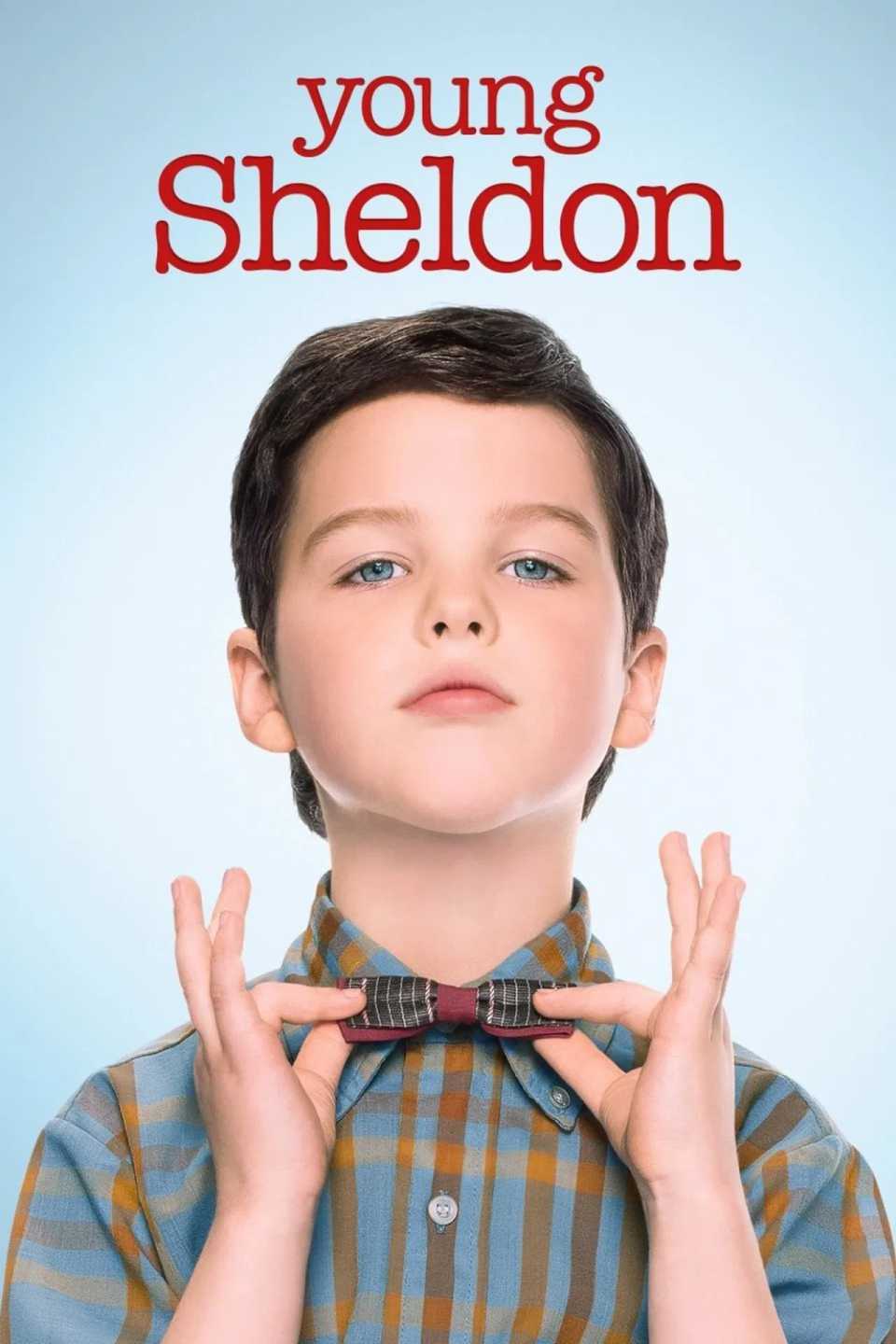
A spinoff of the sitcom The Big Bang Theory, Young Sheldon follows the youth and coming-of-age of Sheldon Cooper during his childhood in Texas as he pursues science and academia. The show also follows his parents, siblings, and Mee-Maw, painting a picture of the world where Sheldon grew up.
KioskNews shows a cleaned-up reading view extracted from the publisher’s page — the original always lives on their site, not ours.