Bukidnon Airport project displaces Lumad families, raises concerns over relocation site
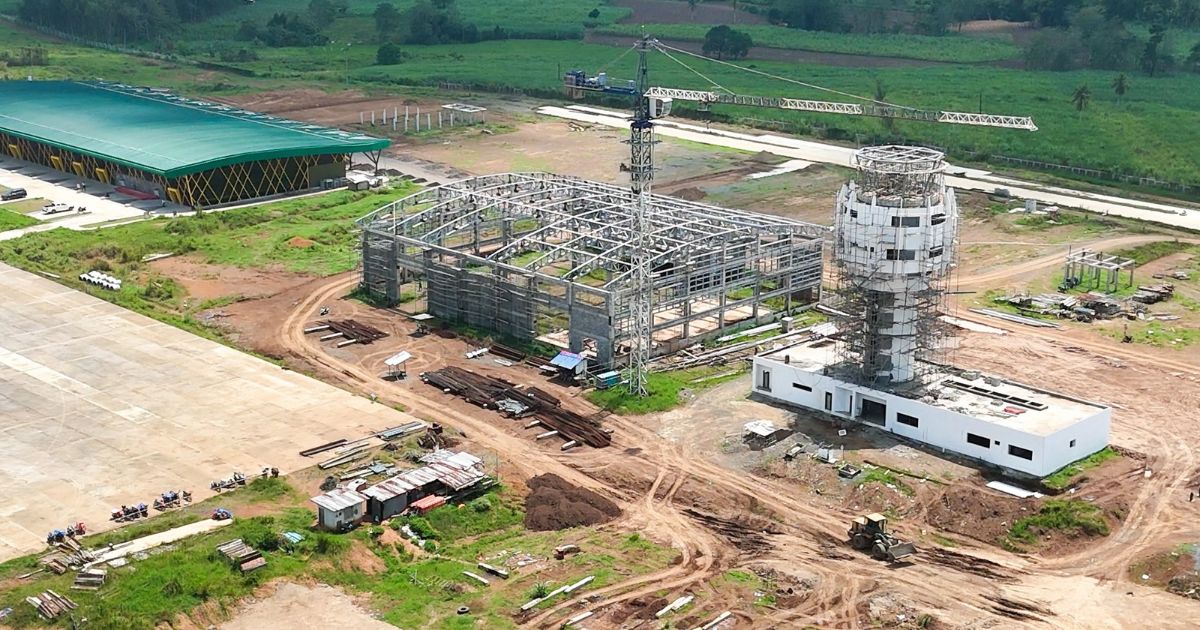
The construction of Bukidnon's first airport is expected to improve transportation, tourism, and business in the province, but some in Indigenous families displaced by the project say they are still waiting for promised services and livelihood support at their relocation site.
According to "Kapuso Mo, Jessica Soho," the Bukidnon Airport is being built in Don Carlos town on nearly 150 hectares of land, and the government has allocated more than P3 billion for the project, which includes a 3,600-square-meter passenger terminal, a 2,500-meter runway, and an apron that can accommodate up to six aircraft.
The airport is targeted to open to the public in 2027.
Indigenous families relocated
Part of the airport site was formerly home to members of the Kirintëkën-Ilantungën Mënuvu and other residents.
Jessica Soho personally went to the area to talk to the residents.
Around 113 families are now living at a relocation site in Barangay Maray-Maray. Some families were relocated beginning in 2022, while others, including the family of purok leader George, were moved more recently.
George said his family had lived in Barangay Maraymaray, where they farmed corn, cassava, sweet potatoes, and fruit trees.
"Communal namin 'yang tinaniman ng mais, kamoteng-kahoy, tapos kamote," he said. "Blessing sa amin 'yon. Mga prutas, mangga, lanzones, rambutan. Ang dami naming tinanim."
["We planted corn, cassava, and sweet potatoes together in that communal area," he said. "It was a blessing to us. Fruits like mangoes, lanzones, and rambutans—we planted so much."]
According to George, residents had previously been displaced from the area in the 1990s and later returned. He said they eventually learned that an airport was being planned in the area.
"2016 narinig ko noon na parang sabi-sabi lang na tatayuan kami ng airport kaya 'di ako naniwala. Nag-away pa kami ng asawa ko. Sabi ko, 'Huwag kayo maniwala diyan kasi kuro-kuro lang ma-displace tayo.'"
["Back in 2016, I heard what seemed like just rumors that an airport would be built here, so I didn't believe it. My wife and I even argued about it. I told her, 'Don't believe that—it's just speculation that we'll be displaced.']
He said the situation became clear when construction equipment arrived.
The affected residents said they were paid for the lots acquired for the project. The government offered P320,000 per hectare, as well as housing, electricity, water, and a one-time cash subsidy of P25,000 per affected family.
Residents raise concerns over water, electricity
Some relocated families said their new homes did not initially have water and electricity.
Mila, a 71-year-old resident, said she received P320,000 for one hectare of land, although she said taxes and other expenses reduced the amount she actually received. She also received the P25,000 cash subsidy.
"Yung 25k, ginastos ko para malipat ang aming bahay doon sa ibang area. Pero, 'yun lang, maliit pa rin talaga 'yang 25k, Ma'am."
["I spent the 25k to move our house to another area. But still, that 25k really is just too small, Ma'am."]
She said the money was already spent on moving their house and that the promised utilities were not provided as they expected.
"Ang sabi sa airport, ang aming bahay ay package. May tubig, may kuryente. Libre lahat. Hanggang ngayon, wala."
["They said that at the airport relocation site, our house would be part of a package. There would be water and electricity, all for free. Until now, there's nothing."]
She said her family eventually took out a loan and bought a solar power system, while water had to be collected from a distant source. Other residents also said they have had difficulty getting water, particularly during dry periods.
The local government, however, said electricity had already been provided to the houses, with residents needing to complete the individual connections.
Engr. Eduardo Corotan Jr., acting municipal planning and development coordinator, said the government had also provided cash assistance.
"Regarding po sa kuryente, nakabigay naman po 'yung government sa kanila. In fact, lahat ng mga bahay do'n, meron kuryente 'yun. Ang kulang lang is yung iko-connect 'yung linya from the house to the line sa electric natin. Binigyan po sila ng cash assistance," he said.
["Regarding the electricity, the government was able to give it to them. In fact, all the houses there have electricity. What's missing is just connecting the wire from the house to our electric line. They were given cash assistance."]
On the water concern, Corotan said a reservoir was already available and that a program was being prepared.
The National Housing Authority (NHA) Region 10 also visited the relocation site after the residents' concerns were raised.
Engr. Clemente Dayot of NHA Region 10 said the agency's role was mainly construction and production.
Dayot said the facilities had already been turned over to the local government for maintenance and operation.
Residents lose livelihood
Aside from housing concerns, residents said their relocation also separated them from their farms and other sources of income.
George, who has been a farmer for most of his life, said he and other residents now have fewer opportunities to grow their own food. He said some residents have had to take construction jobs to earn money.
Another resident, Loloy, said he had not been given a house or the one-time cash subsidy. He is temporarily staying with a fellow tribesperson.
Catherine Cagampan, an administrative officer involved in the project, said the local government handled the purchase of the land and that the P320,000-per-hectare amount was based on the appraisal value at the time.
Cagampan also said some residents had claimed that their properties were part of an ancestral domain, but the LGU had asked for documents supporting the claim.
"Meron nagsasabi, Ma'am, na part sila ng ancestral domain. Pero, humihingi kami ng mga papers na talagang kasali sila. Pero, hindi sila nakapagbigay sa amin."
["Some are saying, Ma'am, that they are part of the ancestral domain. But we asked for documents proving they're actually included, and they weren't able to provide us any."]
The NCIP provincial office, however, said the airport project is within an ancestral domain.
"Ayon sa report ng ating team na pumunta doon, 'yung project ng airport nasa loob ng ancestral domain," Ronnie Bayaon, NCIP provincial officer, said.
["According to the report from our team that went there, the airport project is inside the ancestral domain."]
Questions raised over FPIC
The issue of Free, Prior, and Informed Consent, or FPIC, has also been raised. Benjie said their group had informed government agencies that the area was part of their territory and should undergo the FPIC process.
He also said they had not seen the Certificate of Precondition, or CP, at the time of the interview.
The Department of Transportation (DOTr) acknowledged an issue with the earlier FPIC application.
DoTr Director Eduardo Mangalili said the provincial government initially applied for FPIC in 2015, but the process did not materialize.
Mangalili said DoTr later applied again after learning that the agency itself needed to make the application.
"Yung mga submitted documents is no longer to be found. So nangyari po, nag-apply po kami ng panibago."
["The submitted documents could no longer be found. So what happened was, we had to apply all over again."]
Bayaon said FPIC is required when a project is located within an identified ancestral domain.
"'Pag identified ang ancestral domain, dapat magkakaroon muna tayo ng FPIC process para ang NCIP makapagbigay ng tinatawag nating certification precondition," he said, explaining that Indigenous communities should be informed about the project and its possible effects before deciding whether to give their consent.
["Once the ancestral domain is identified, we must first go through the FPIC process so that the NCIP can issue what we call a certification precondition."
Children face long trips to school
Residents also raised concerns about access to education. Some said children have to walk for up to three hours to reach school. Others said some students have stopped attending because of the distance and transportation costs.
Irene Dumpasan, whose children are among those affected, said the daily journey has become difficult for them. She said her children sometimes attend school only two or three days a week because of transportation and financial problems.
To help address the lack of a nearby daycare facility, daycare teacher Abby turned her mother's relocation house into a temporary classroom.
She said the original daycare center was left behind when residents were relocated.
Abby said she hopes a proper daycare center can eventually be built in the relocation site.
"Ang hinihiling ko lang, sana mapatayuan nila ako ng daycare center. Nag-worry ako kasi, malapit na akong mag-retire. Gusto ko mapatayo na 'yung daycare center, para may sustainable sila, para patuloy ang pagtuturo ko sa mga bata hangga't hindi pa ako nagre-retire."
["My only request is that they build me a daycare center. I'm worried because I'm retiring soon. I want that daycare center built so they have something sustainable, and so I can continue teaching the children for as long as I haven't retired yet."]
Supporters see economic benefits
Despite the concerns raised by some residents, other Bukidnon residents expressed support for the airport project.
They said it could make travel easier, bring in more tourists, and create opportunities for businesses and workers.
Bukidnon resident Elma said traveling outside the province can be difficult and expensive.
"Taga-Bukidnon ako, pabor talaga ako basta may improvement," she said.
["I'm from Bukidnon, and I'm really in favor as long as there is improvement."]
Vendor Von Santillan also said the airport could create opportunities for local businesses.
"Maraming turista na darating proud din kami na may airport kami, tapos marami pa makatrabaho, opportunities na makatrabaho - makapunta sa labas, importante rin sa ating mga negosyo kasi maraming bibili."
["Many tourists will arrive and we'll also be proud to have our own airport. On top of that, there will be plenty of job opportunities—people can go outside the province, and it's also important for our businesses because many people will buy from us."]
The Bukidnon Airport is expected to provide a faster route to and from the province once operational.
For the families relocated because of the project, however, concerns remain over livelihood, utilities, education, housing, and the implementation of commitments made during the relocation process. —JCB, GMA News
KioskNews shows a cleaned-up reading view extracted from the publisher’s page — the original always lives on their site, not ours.