The 10 Best Film Noir Movies in Cinema History, Ranked

Andrea M. Ciriaco is a long-time script reader and former entertainment editor who specializes in classic movies and Hollywood history. She was a student film critic at Kent State University for three years and worked at Warner Bros Studio in Burbank and The Safran Company for several years. Based on her vast taste and range of knowledge, many consider Andrea to be a walking IMDb who knows dozens of underrated movies and is a vital assesst to any trivia night. While movies are her expertise, Andrea is also a diehard fan of iconic shows including The Sopranos, Boardwalk Empire, Rod Serling's The Twilight Zone, Will & Grace and South Park. Some of her favorite filmmakers are Walt Disney,John Huston, Fritz Lang, Alfred Hitchcock, John Ford, Mel Brooks, Quentin Tarantino, Martin Scorsese and Howard Hawks.
Sign in to your Collider account
Few genres announce themselves as instantly as film noir, and fewer still have left such a lasting mark on the way we tell stories. Born in the shadows of the 1940s and fading by the late 1950s, classic film noir emerged from a perfect storm of postwar anxiety, Hollywood’s studio system, and the influence of German Expressionist filmmakers who had fled Europe with their dramatic lighting and off-kilter angles. The result was a style as much as a genre: high-contrast black-and-white photography, labyrinthine plots, morally compromised heroes, and femmes fatales whose charm was matched only by their capacity for betrayal.
But with hundreds of films carrying the label, which ones truly define the form? In this list, I count down the best classic film noir movies ever made: the masterpieces, the game-changers, and the dark gems that prove that sometimes the most unforgettable stories are the ones told in black and white, and in whispers. From the influential detective noir Murder, My Sweet starring Dick Powell to Billy Wilder's Oscar-winning classic Sunset Boulevard, these are the ten best classic film noir movies in film history!
10 'Murder, My Sweet' (1944)
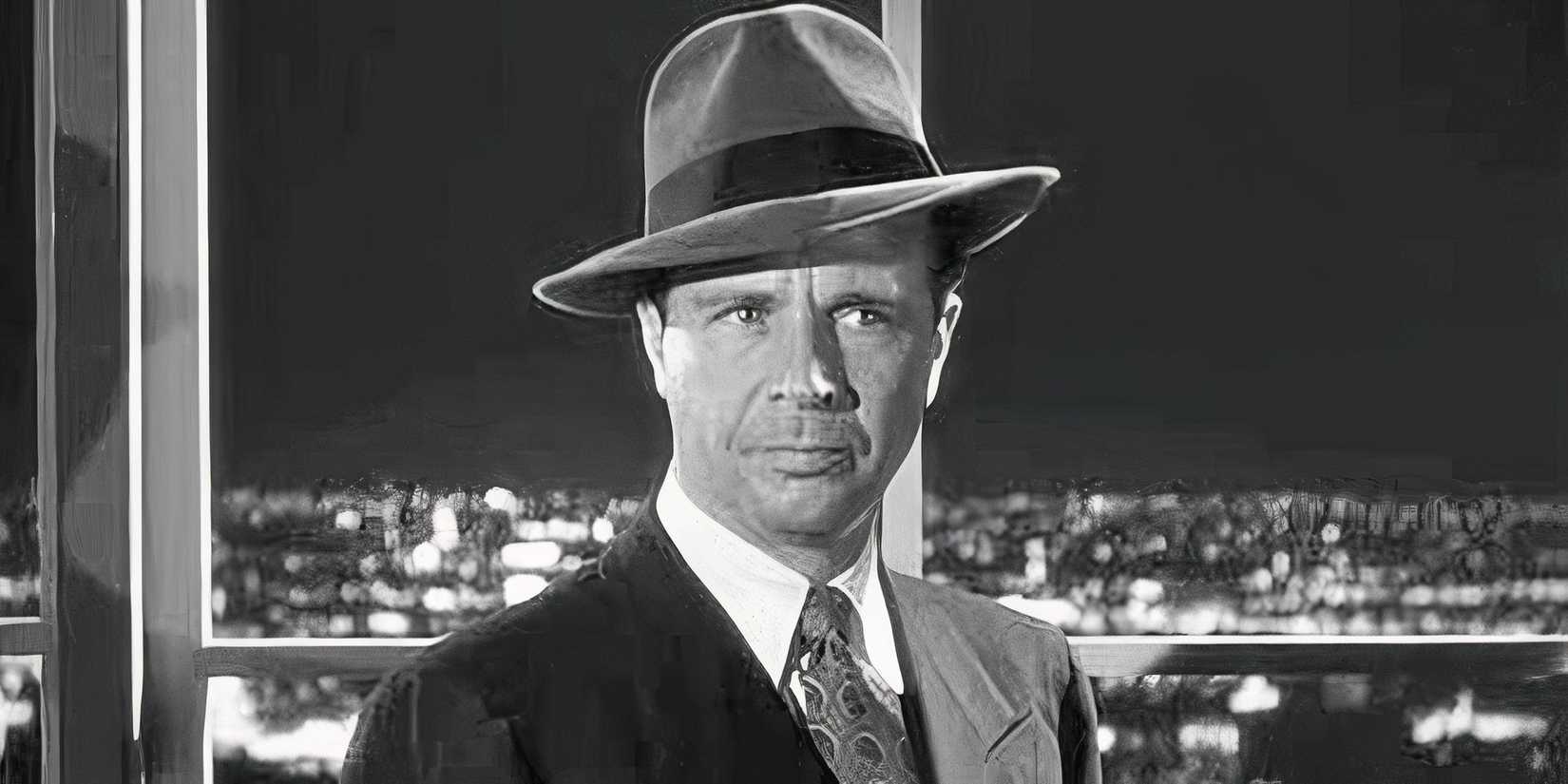
Few films established the noir template as thoroughly as Edward Dmytryk’s Murder, My Sweet, which is an adaptation of Raymond Chandler’s famous novel Farewell, My Lovely. The film packed the genre’s defining ingredients into one tightly wound package: a cynical private eye, a tangled web of lies, and a city where everyone is hiding something. The movie follows Dick Powell as Philip Marlowe, a private investigator who is hired by an ex-con (Mike Mazurki) to find his former girlfriend, but when Marlowe takes on another job while searching for the missing woman, he begins to realize that the two cases might be connected.
Powell, a former song-and-dance star, reinvented himself as Philip Marlowe as his weary, wisecracking performance proved a baby-faced crooner could carry a hard-boiled thriller, and helped set the standard for the tough-talking detectives who followed. Dmytryk and cinematographer Harry Wild use deep shadows, claustrophobic framing, and slanted light to turn Los Angeles into a place of menace, making its style just as influential. Murder, My Sweet ultimately helped launch the era of classic noir, and today, it remains just as sharp, stylish, and is the kind of picture that makes you understand why the genre never really went away.
9 'The Big Heat' (1953)

Fritz Lang’s The Big Heat takes the genre's usual cynicism and sharpens it into something genuinely brutal and volatile that exposes what happens when an honest cop challenges a corrupt system that reaches into his own police department. Glenn Ford stars as Dave Bannion, a homicide detective whose investigation into the apparent suicide of a police officer leads him to an underworld where he uncovers deep-seated corruption between a notorious gangster and men within his own ranks.
Ford delivers a powerhouse performance as a decent family man with a coiled intensity whose pursuit of the truth blurs the line between justice and rage. Gloria Grahame steals the film as Debby Marsh, a gangster’s girlfriend whose arc from glamorous ornament to fearless avenger is one of noir’s great transformations, while Lee Marvin, as a sadistic henchman, Vince Stone, makes for an unforgettable and genuinely frightening villain. Lang, who helped shape the visual language of noir through his German Expressionist roots, directs with economy and cold precision. The violence, then unusually harsh, lands with real force, and the stark compositions keep the tension taut.
8 'White Heat' (1949)
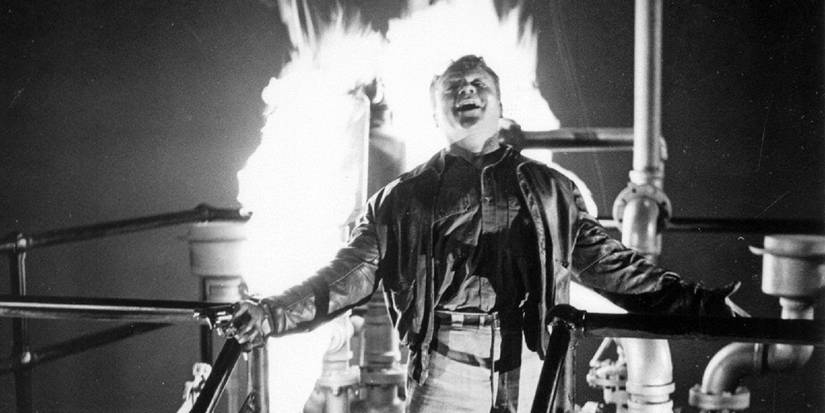
Raoul Walsh’s White Heat blends the gangster picture with film noir and produces one of the most explosive films of the classic era that many consider to be one of the greatest movies ever made. James Cagney stars as a psychotic career criminal, Arthur "Cody" Jarrett, who manages to escape a lengthy prison sentence by pleading guilty to a lesser charge, but while he serves his time, he befriends his cellmate, Vic (Edmond O'Brien), who, unbeknownst to Jarrett, is secretly an undercover agent. There are several contributing factors to the brilliance of White Heat, but Cagney is the sole reason why the film endures.
Returning to the genre that made him a star, Cagney conveys Jarrett as a volatile, psychologically damaged killer, prone to crippling headaches and deeply devoted to his mother. It’s a ferocious, unpredictable performance that gave the gangster archetype a disturbing new depth. Walsh keeps the pace relentless, moving from a daring train robbery to a tense prison sequence to a climactic showdown with little room to breathe. Gritty, psychological, and thrillingly intense, White Heat is a trademark noir that shows how the genre could turn crime into tragedy, and still burn bright, rightfully earning a place on this exclusive list.
7 'The Big Sleep' (1946)

Howard Hawks’ The Big Sleep is a fun noir film where atmosphere and personality matter far more than tidy answers, and ultimately captures the genre at its most intoxicating. Adapted from Raymond Chandler's novel of the same name, Humphrey Bogart stars as Los Angeles private eye Philip Marlowe, who is hired by the wealthy General Sternwood (Charles Waldron) to settle one of his daughter's gambling debts, but as Marlowe begins his investigation, he soon starts to realize that this is more than a case of blackmail and outstanding debts. The plot in The Big Sleep is famously tangled, with blackmail, murder, and missing persons piling up, but strangely, that confusion only adds to the film's timeless charm.
What makes this picture an unforgettable noir classic is the undeniable chemistry between Bogart and Lauren Bacall. Bogart’s Marlowe is world-weary but quick-witted, and Bacall, as the sharp-tongued Vivian Rutledge, matches him line for line every single time. Their verbal sparring is flirtatious, dangerous, and endlessly quotable, and it remains some of the most electric dialogue ever put on screen. Visually, cinematographer Sidney Hickox wraps rain-soaked nights, shadowy mansions, and smoky rooms in classic noir style, while Hawks keeps the tone playful yet tense. The Big Sleep isn’t about solving the mystery, but instead, it's about the mood, the swagger, and the stars, which is exactly why it remains a cornerstone of the genre.
6 'Out of the Past' (1947)


Jacques Tourneur’s Out of the Past is a quintessential noir classic that may be the purest distillation of what the genre is: a story about a man who cannot outrun his own history. Based on Geoffrey Homes' 1946 novel, Build My Gallows High, Robert Mitchum stars as Jeff Bailey, a former private eye turned small-town gas station owner trying to live quietly until a figure from his past arrives and forces him to take care of his unfinished business with a gambler, Whit Sterling (Kirk Douglas), dragging him back into a world of deception, greed, and betrayal. Mitchum lives up to his reputation as the soul of film noir with a magnificent performance that many consider to be one of his finest.
His heavy-lidded, laconic cool makes his character feel both resigned and doomed, a man who knows exactly how this will end and walks into it anyway. Opposite him, Jane Greer delivers one of noir’s definitive femmes fatales as Kathie Moffat, whose beauty and apparent vulnerability mask a ruthless streak, while Douglas brings a smooth, menacing presence in one of his earlier roles. The film’s structure gives it a hypnotic, fatalistic rhythm, while cinematographer Nicholas Musuraca renders shadowy nightclubs, foggy streets, and sunlit Mexican cafés with painterly precision. Rather than offering redemption, Out of the Past insists that the past always collects and that bleak, beautifully crafted inevitability is what makes it one of the greatest noirs ever made.
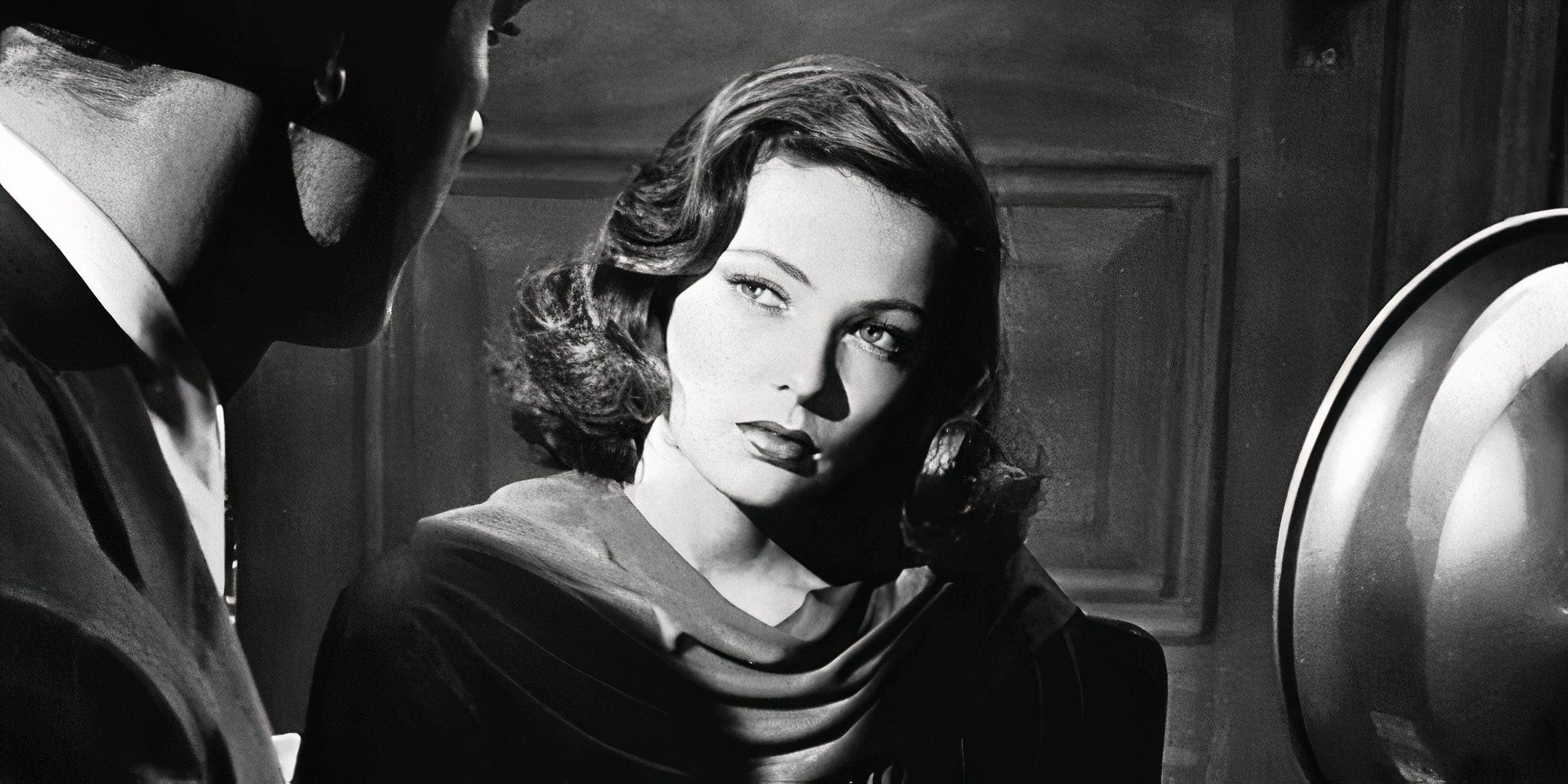
5 'Laura' (1944)
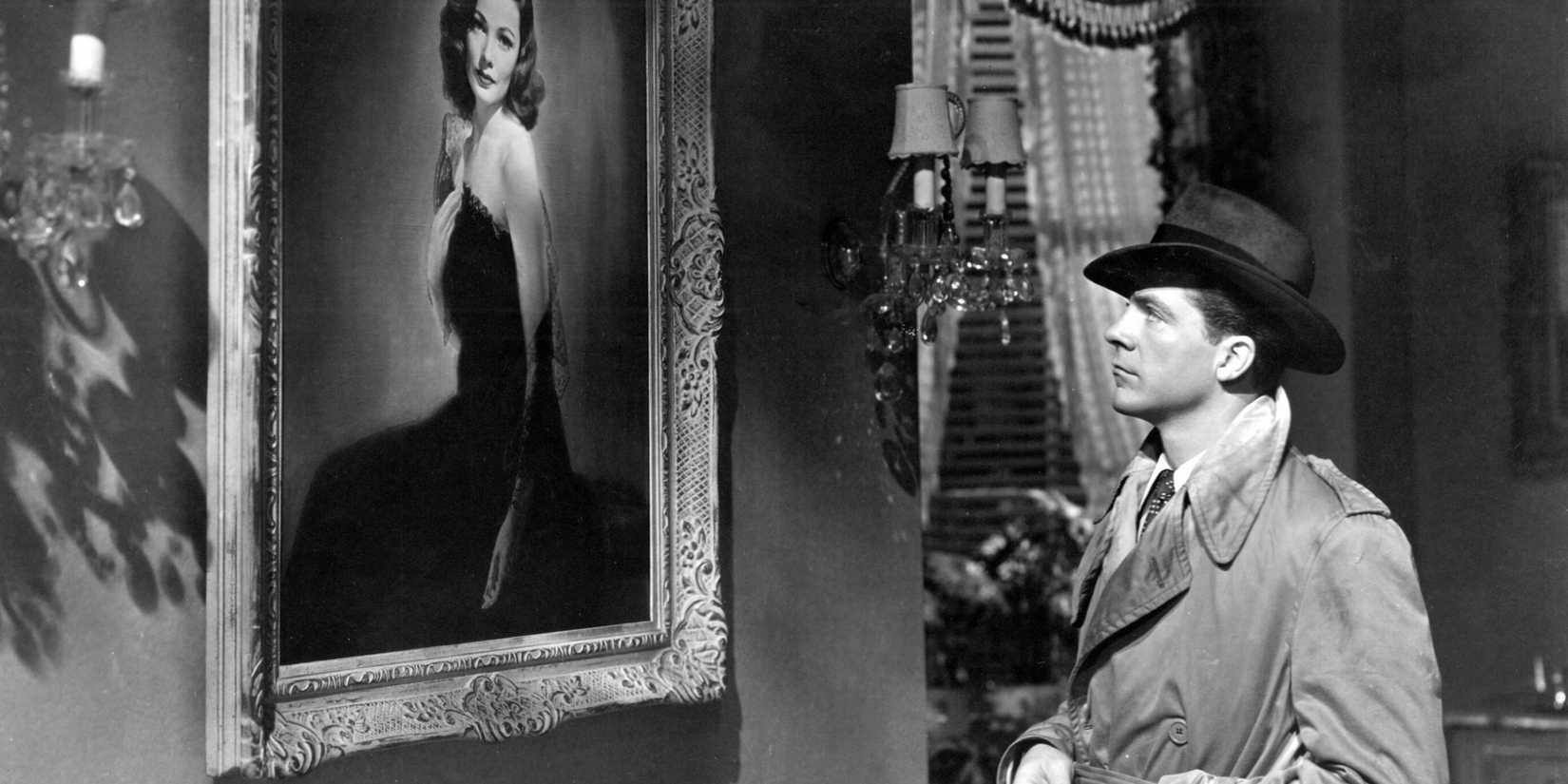
Otto Preminger’s Laura is a signature noir that begins with a murder, then shifts into an obsession, proving that film noir can be as romantic and haunting as it is cynical. Dana Andrews stars as Mark McPherson, a homicide detective who is investigating the murder of an advertising executive, Laura Hunt (Gene Tierney), who was brutally gunned down in her home. As McPherson conducts his investigation, he becomes enthralled by the portrait of the victim, a woman he never met, and his fixation turns the investigation into something stranger and more dreamlike than a typical whodunit.
Tierney has a luminous presence, both on canvas and on screen, giving the film an aching, otherworldly pull while Andrews provides a quiet intensity that keeps audiences guessing his character's motives at every turn. However, Clifton Webb steals the picture as the acid-tongued columnist, Waldo Lydecker, whose elegant cruelty is delivered through some of the sharpest dialogue of the era. Preminger directs with a smooth, elegant restraint, letting suspicion drift from one character to the next while keeping the film’s mood lush and unsettling. Joseph LaShelle’s Oscar-winning cinematography and David Raksin’s unforgettable score, one of the most famous in Hollywood history, give the film a sophisticated, melancholy glow.
4 'The Third Man' (1949)
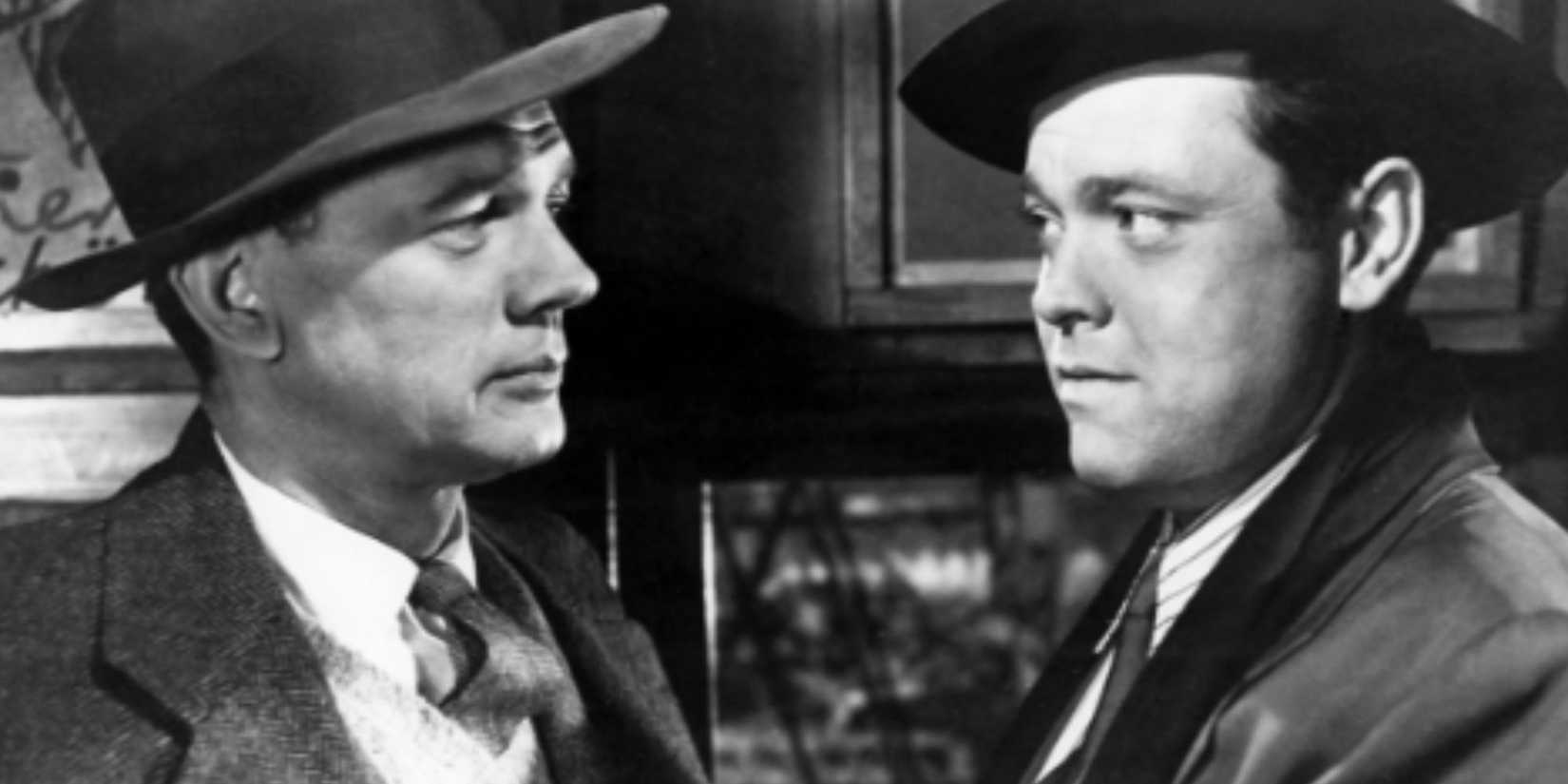
Carol Reed’s The Third Man takes noir across the Atlantic and into the ruins of postwar Vienna, creating one of the most atmospheric films ever made. Joseph Cotten stars as Holly Martins, a down-on-his-luck American writer who arrives to meet his old friend Harry Lime (Orson Welles), only to learn he was recently killed in a car accident. As Martins digs into the circumstances, he finds a city of black-market racketeers, shifting loyalties, and uncomfortable truths that make him wonder if he ever truly knew his friend. There are two notable qualities about The Third Man that make it a masterclass in film noir.
Robert Krasker’s Oscar-winning cinematography uses tilted angles, deep shadows, and rain-slicked cobblestones to turn Vienna into a nightmarish maze while Anton Karas’ jaunty zither score, strangely cheerful against such darkness, gives the film a sound unlike any other. Cotten gives a standout performance as Martins, conveying an unwavering sense of morality that costs him more than a friend. Welles appears relatively late as Lime, but his entrance is among the greatest in cinema, and his famous cuckoo clock speech captures the film’s moral ambiguity in a few chilling lines. Graham Greene’s screenplay explores friendship, loyalty, and the price of cynicism with remarkable subtlety.
3 'The Maltese Falcon' (1941)

Humphrey Bogart stars in John Huston's directorial debut, The Maltese Falcon, as Sam Spade, a San Francisco private detective who is hired by a mysterious woman (Mary Astor) to find her sister, whom she believes has run off. As Spade begins to work on the case, he unexpectedly finds himself entangled with a crew of seedy characters who are all in search of a priceless jewel-encrusted statue known as the Maltese Falcon. Huston's adaptation of Dashiell Hammett's novel is often cited as not only one of the first great American film noir movies, but also as a significant contribution that undeniably shaped the noir genre.
Bogie gives a signature performance as the tough and sardonic Spade, whose impressive style, along with his calm but stern demeanor, set the standard for the genre's hard-boiled detective. Sydney Greenstreet, in his film debut, captivates as the gloriously sinister Kasper Gutman, while Peter Lorre brings nervous, perfumed threat as Joel Cairo. Astor is superb as Brigid O’Shaughnessy, whose shifting stories and false vulnerability make her a model femme fatale. Huston tells the story with remarkable confidence, using tight framing, low-angle shots, and shadowy interiors to create a mood of tension and suspicion. The dialogue is crisp and memorable, and the ending delivers a bitter moral twist that perfectly defines noir’s disillusioned view of the world.
COLLIDER The Mystery Desk
Case File 0481 · Open
Collider/ Movies/ Mystery/ Which Classic Mystery Movie Are You
8 Questions · 2 Minutes Which Classic Mystery Movie Are You? Every answer counts toward the verdict.
Four films that solve a mystery four completely different ways, from a comedy with three separate endings to a thriller told backwards. One of them has been describing you all along.
The Suspects01🕯Clue1985
02🪟Rear Window1954
03📦Se7en1995
04📸Memento2000
Prime suspect
Evidence logged automaticallyExhibit 01 of 08Film Night
What kind of film night are you after? Pick the one that sounds most like you
Press 1 to 4 to log an answer
Prime suspect
Evidence logged automaticallyExhibit 02 of 08Character Witness
How would your friends describe you? Be honest
Press 1 to 4 to log an answer
Prime suspect
Evidence logged automaticallyExhibit 03 of 08Whereabouts
What do you do when you are stuck at home? One answer only
Press 1 to 4 to log an answer
Prime suspect
Evidence logged automaticallyExhibit 04 of 08The Twist
How do you react to a plot twist? Pick the closest answer
Press 1 to 4 to log an answer
Prime suspect
Evidence logged automaticallyExhibit 05 of 08The Scene
Pick a room. No wrong answers here
Press 1 to 4 to log an answer
Prime suspect
Evidence logged automaticallyExhibit 06 of 08Testimony
What is your memory like? Pick the closest answer
Press 1 to 4 to log an answer
Prime suspect
Evidence logged automaticallyExhibit 07 of 08Closing Argument
How do you feel about endings? Think about the last film that got you
Press 1 to 4 to log an answer
Prime suspect
Evidence logged automaticallyExhibit 08 of 08The Verdict
What should a mystery film do to you? Last one
Press 1 to 4 to log an answer
Case Closed Verdict Your Mystery Movie Is
🕯 Clue Jonathan Lynn · 1985 You are the most fun thing in the room, and you are not remotely in control of it.
Clue is a murder mystery built from a board game, played at farce speed by one of the best comic ensembles ever assembled, and it refuses to commit to a single answer. That is you: loud, quick, impossible to plan around, and the reason anybody had a good time. Case Notes
- You keep the energy up and the plan loose, and people have a much better evening because of it.
- Three different endings were sent to different cinemas in 1985, so the answer depended on which screen you walked into.
- It flopped completely, found its audience on video, and went back into cinemas for its fortieth anniversary with the endings randomised again.
- Your flaw is that chaos is excellent company and a terrible plan.
Chaotic Quick Sociable Unserious
🪟 Rear Window Alfred Hitchcock · 1954 You watch, and you notice the thing everybody else walks past.
Hitchcock trapped James Stewart in one room with a broken leg and a view of his neighbours, and built an entire thriller out of a man looking out of a window and being right. You are the one who clocks the detail nobody announced, and you are usually correct before you can prove it. Case Notes
- You are quietly the most observant person in your circle and you notice changes before anybody mentions them.
- The courtyard was one of the largest sets ever built at Paramount, with thirty-one apartments and working plumbing.
- It was nominated for four Academy Awards including Best Director and is still taught as the cleanest thriller ever constructed.
- Your risk is that watching and doing something about it are not the same, and you know it.
Observant Patient Curious Detached
📦 Se7en David Fincher · 1995 You take things on, and you do not put them down.
Fincher made a serial killer film where the detectives are losing the entire time, shot it so dark the studio complained, and refused to change an ending that everybody told him would sink the film. You have that same refusal in you, and it has cost you more than you let on. Case Notes
- You are the one who keeps going after everybody else has accepted it cannot be solved.
- New Line wanted a different ending and Brad Pitt reportedly refused to make the film without the one they shot.
- It turned Fincher from the director who had a bad time on Alien 3 into the defining thriller director of his generation.
- Your weakness is that carrying something this long does real damage, and you are usually the last to notice.
Relentless Serious Principled Haunted
📸 Memento Christopher Nolan · 2000 Nobody can quite follow your thinking, and you get there anyway.
Nolan told the story backwards, so the audience knows as little as the man at the centre of it does, and the whole film becomes an argument about how much of what you believe you simply decided to believe. You arrive at the right answer by a route nobody else would have taken. Case Notes
- You work things out sideways, and explaining the route takes longer than the answer did.
- It was nominated for Best Original Screenplay and Best Film Editing in 2002 and won neither, which still annoys people.
- It cost around nine million dollars, made over five times that, and built the career that led to everything after.
- Your flaw is trusting your own version of events slightly more than the evidence supports.
Lateral Private Analytical Unreadable
Evidence Log
Clue
Rear Window
Se7en
Memento
Copied to clipboard
Case filed by COLLIDER Collider.com · The Mystery Desk
2 'Double Indemnity' (1944)

Billy Wilder’s Double Indemnity provided the blueprint for film noir and is a film so sharply constructed that nearly every crime thriller since owes it something, making it the gold standard of classic noir. Adapted from James M. Cain’s novel with a screenplay by Wilder and Raymond Chandler, Fred MacMurray stars as Walter Neff, an insurance salesman whose affair with a married woman, Phyllis Dietrichson (Barbara Stanwyck), leads the couple to get rid of her wealthy husband, but when they think they've pulled off the perfect crime, Neff's associate and veteran insurance investigator, Barton Keyes (Edward G. Robinson), believes there's more to Mr. Dietrichson's sudden passing than a simple accident.
MacMurray, cast against his genial image, is perfect as Neff, a man who talks himself into disaster while narrating his confession in bitter hindsight. Stanwyck’s Dietrichson is the ultimate femme fatale, cool, calculating, and dangerously seductive, with the blond wig and ankle bracelet becoming instant genre icons. Robinson nearly steals the film as the determined Keyes, whose relentless instincts close the net. John Seitz’s cinematography, with its slatted blinds casting prison-bar shadows across dim interiors, defined noir’s visual language, and the razor-sharp dialogue, loaded with innuendo and snap, and the voiceover and flashback structure became hallmarks of the genre's form.
1 'Sunset Boulevard' (1950)

Billy Wilder's Sunset Boulevard is a timeless noir classic that turns the genre’s fatalism on Hollywood itself, and the result is among the darkest, most darkly funny films ever made. The movie centers on William Holden as Joe Gillis, an aspiring screenwriter who agrees to write a comeback script for a former silent film star, Norma Desmond (Gloria Swanson), but as Desmond's adoration turns into an obsession, Gillis begins to suspect that he's made a deal with the devil and must escape her controlling grip before it's too late. Few films skewer ambition, vanity, and the price of fame so ruthlessly as Sunset Boulevard, which is why many recognize it as a defining noir masterpiece.
Swanson, herself a silent-era legend, gives a fearless, operatic performance as a woman trapped in her own illusions, conveying her character as both monstrous and heartbreaking as her delusion tightens around Gillis like a noose. Holden holds his own against Swanson, delivering a spellbinding performance that elevated his career into more dramatic territory. John F. Seitz’s shadowy cinematography makes Desmond's mansion feel like a tomb, and Franz Waxman’s swelling score amplifies the film’s gothic dread. The script, by Wilder, Charles Brackett, and D.M. Marshman Jr., is brilliantly cynical, filled with lines that have entered the cultural vocabulary.

Sunset Boulevard
- Release Date
- August 10, 1950
- Runtime
- 110 minutes
- Director
- Billy Wilder
- Writers
- Charles Brackett, Billy Wilder, D.M. Marshman Jr.
KioskNews shows a cleaned-up reading view extracted from the publisher’s page — the original always lives on their site, not ours.