Iowa residents mark Thanksgiving with lingering fears after chemical detonation
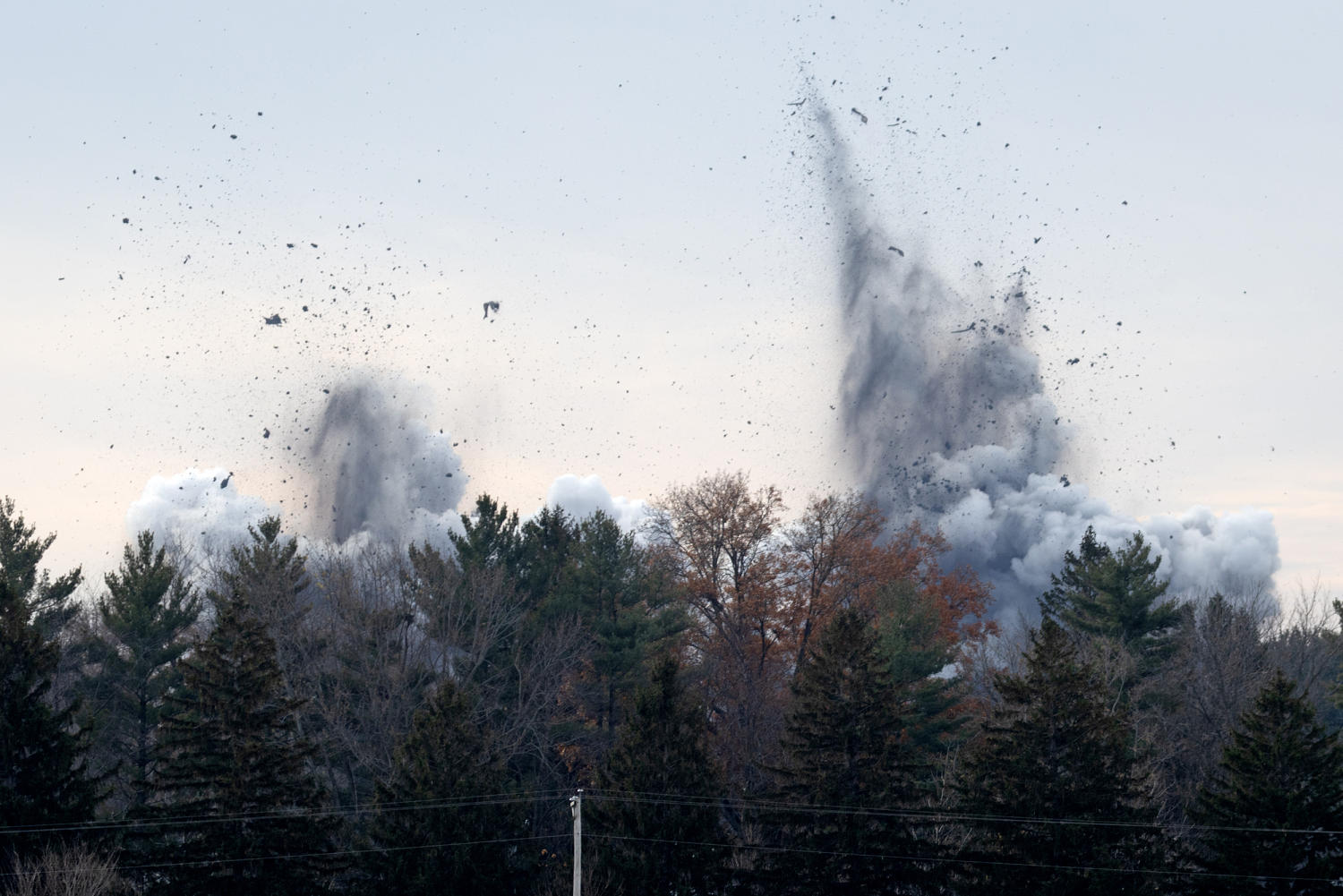
A day after the Army detonated its stockpile of the toxic lead azide, a calculated decision that had triggered environmental concerns and voluntary evacuations around the blast site in southeastern Iowa, hundreds of federal workers returned to the scene Thursday for additional testing as local residents sought to ease any lingering fears with Thanksgiving Day festivities.
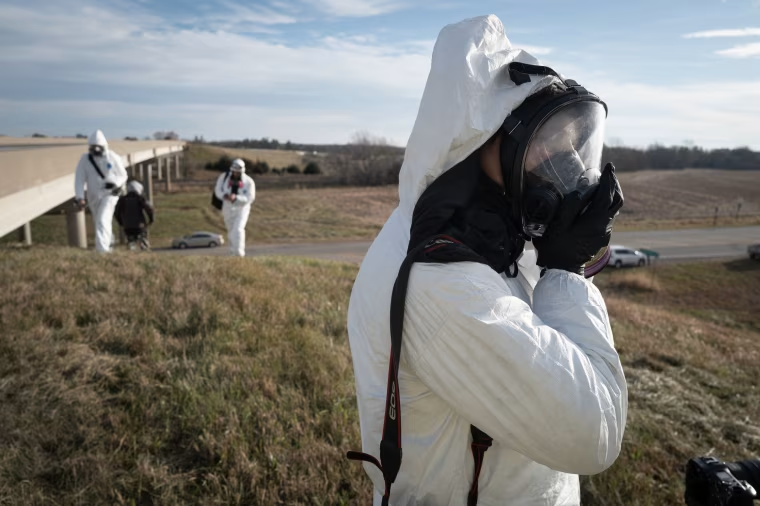
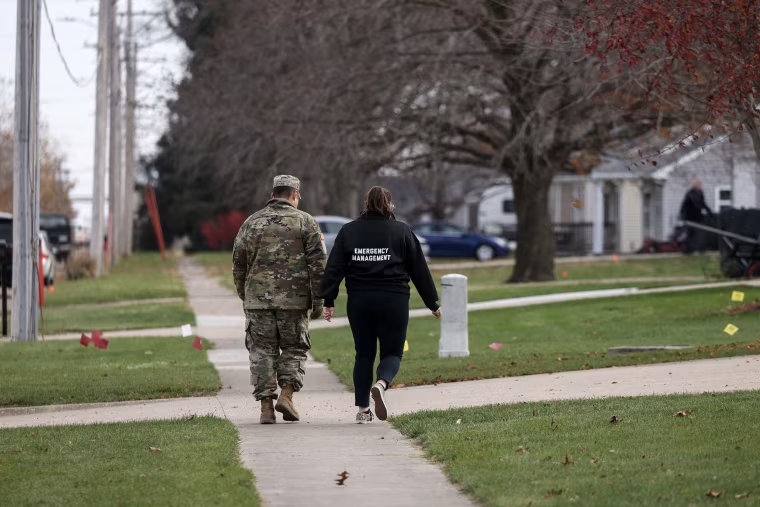
More than 300 employees and contractors with the Environmental Protection Agency began collecting over 1,000 samples from the air, land and water, pulled from homes, schools, farms, drinking water supplies and elsewhere, said agency Administrator Lee Zeldin in a social media post. They intended to finish the job by the end of the day and “transparently provide all results as they come in from our laboratory” within one to two days, he added.
The announcement of ongoing testing was welcomed by residents of the small farming community of Middletown, where the 68 drums of lead azide, once used to make bombs, had been stored at the Iowa Army Ammunition Plant.
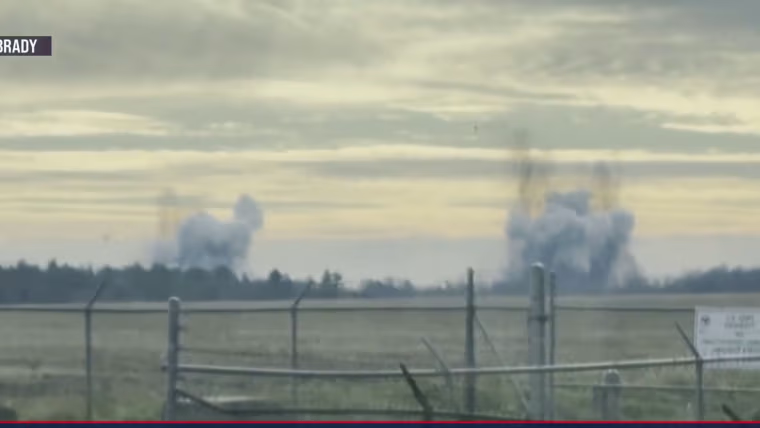
Following Wednesday’s controlled detonation of the material, the Army said the measure appeared a success — its initial findings indicated the plume of dust hadn’t reached nearby farms and residences and EPA monitoring had detected no lead in the air.
Tim Thomann, who was preparing to host 15 relatives at his home in Middletown for Thanksgiving, watched as the nearby command center remained a “beehive of activity,” with workers canvassing the area to take soil samples.
01:34
“The Army said it looks like a success,” said Thomann, as he planned a holiday feast of turkey, ham and homemade ice cream. “I just hope they can continue testing so we have that peace of mind.”
Instead of thinking about Thanksgiving preparations earlier this week, Blaine Dial, another Middletown resident who lives near the munitions plant, was, like many other residents, sealing windows and doors as a precaution from effects of the blast.
Dial said Thursday that environmental monitoring remains “absolutely key” after learning about how lead azide, a heavy metal, can be particularly dangerous to children and pregnant women.
“We never really know with the way the wind was blowing, where anything may have landed,” Dial told NBC News.
Since the military announced, and then delayed, plans for the detonation over the past two weeks, residents and environmental groups have voiced concerns about potential health and environmental impacts and about a lack of information about what to expect.
The Army said the safest option had been detonating the stockpile right away because it was degrading and might explode uncontrollably at any time, as the weather got colder.
Maj. Gen. Eric Shirley, who led the Army operation, said the risk was “reduced as close to zero as it’s absolutely humanly possible.”
“As we saw in the immediate aftermath through overhead coverage, all the lead azide barrels were definitively removed,” Shirley said Wednesday following the detonation. “There was no secondary explosion, there was no kickout, there was no infrastructure damage in or around our installation.”
To prepare for the plan, earthen barriers were put up and foam and water were poured onto a pair of bunkers holding the 5 tons of lead azide. Officials said those measures appear to have absorbed much of the blast.
An alert sent to cellphones late Wednesday afternoon said it was safe to resume normal activities. FEMA also issued an all clear around the plant, the military reported.
President Donald Trump posted on social media that the Army did a “great job,” while Acting Secretary of the Army Adam Telle along with the Republican governors of Iowa and Missouri also said it appeared to be a success and that the explosion was well-contained.
The EPA’s air quality data was promising, said Andrew Whelton, an environmental engineering professor at Purdue University who has helped communities recover from chemical disasters. Yet he stressed that samples need to be tested in a lab to determine if people face health risks.
“This should take days to weeks,” Whelton said. “But what we may see is different guidance issued to different communities based on how far they are from the detonation area and whether or not they were upwind or downwind.”
Colin Wellenkamp, the executive director of the Mississippi River Cities and Towns Initiative, said water treatment facilities along the Mississippi and Missouri rivers will be testing periodically to make sure that there are no detectable spikes.
The stockpile was brought to Iowa from bases around the country in 2009, according to Robert Cekada, director of the Bureau of Alcohol, Tobacco, Firearms and Explosives. The lead azide was stored just in case the military needed to use it again.
Questions remain over why the Army had allowed the lead azide to deteriorate over the years to the degree that it required a controlled detention, which carried a risk to properties and the environment.
The materials “should never have been allowed to degrade to this point,” Josh Turek, Iowa’s Democratic senator-elect, said in a Facebook post.
Kevin and Linda Ross, who own a home and pottery business in Wever, about a mile from the plant, said they were personally testing for lead after worrying their garden and fish pond may get contaminated.
Ten initial tests from around their home came back negative, they said Thursday. They had been too busy safeguarding their home, including wrapping their chicken enclosure in plastic, that they already decided to postpone their family’s Thanksgiving celebration to Friday.
“It was just going to be too crazy, and we’re just going next door to our daughters,” Linda Ross said, “but it worked out for the family, and that’s fine.”
The Army scheduled the detonation for Wednesday because the winds were blowing to the southwest and away from populated areas including Burlington, a city of just under 25,000 people along the Mississippi River.
Government officials had encouraged residents closest to the site and in range of the plume to evacuate, and others to stay indoors.
Schools not already closed around the Thanksgiving holiday canceled classes and many businesses closed.
Matt Mitchell, a truck driver from Middletown, said he witnessed Wednesday’s blast, expecting something noticeably spectacular, but instead of a loud boom or major plume of debris, it was no different than other testing he might hear from the nearby plant, he said.
Still, as he was traveling to the Wisconsin border for Thanksgiving, he said he was grateful for two things: the continued testing and his community’s return to the peace and quiet that was upended after the days of national attention.
“Honestly,” Mitchell said, “I can’t wait for social media to calm down again.”
KioskNews shows a cleaned-up reading view extracted from the publisher’s page — the original always lives on their site, not ours.