Demolishing Trauma in Deconstructeam's Upcoming Experimental Narrative: Virtue and a Sledgehammer
Your hometown is scheduled for demo, no paperwork required. Published by Devolver Digital, Deconstructeam and Selkie Harbour’s Virtue and a Sledgehammer finds protagonist Pratelle deconstructing her past and future in the most literal sense, leaving only wreckage behind. Intimate and explosively emotional, this walking/whacking sim examines family trauma, codependency, the lie of AI, and more, filtered through violent catharsis.
I predict that this newest release by the incomparable Spanish trio will prove their most divisive. In most basic terms, Virtue and a Sledgehammer is a walking sim tethered to a single hypnotic gameplay verb: smashing stuff. Akin to their landmark Behind Every Great One (repackaged in the luminous 2021 retrospective Essays on Empathy), the game's sparse script and concept offers ample room for players to introduce their own baggage and context, though its fractured narrative approach may not be everyone’s cup of tea.
I’m told my preview copy of Virtue and a Sledgehammer contains about 75% of the full experience, with the story interrupted at a pivotal crossroads. By then, I had decimated a small rural Spanish town and its countless robot denizens, fleshing out Pratelle’s memories and stirring up more than a few of my own. To help that process, Jordi de Paco, Marina González, and Paula Ruiz (a/k/a fingerspit) spent some time with Screen Rant to discuss the storytelling studio's first crack at developing a video game “with gameplay.”
When All You Have Is A Hammer...
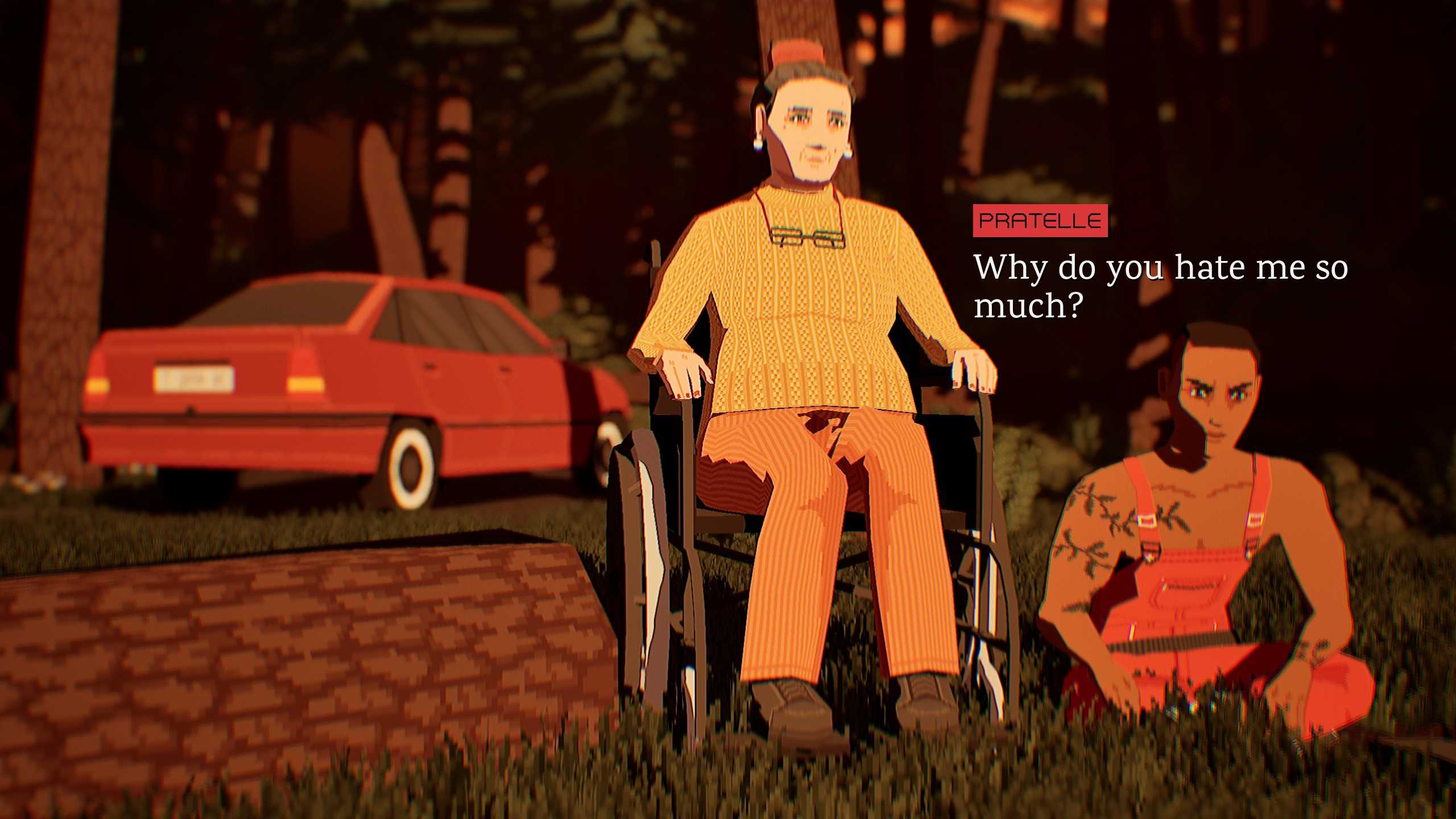

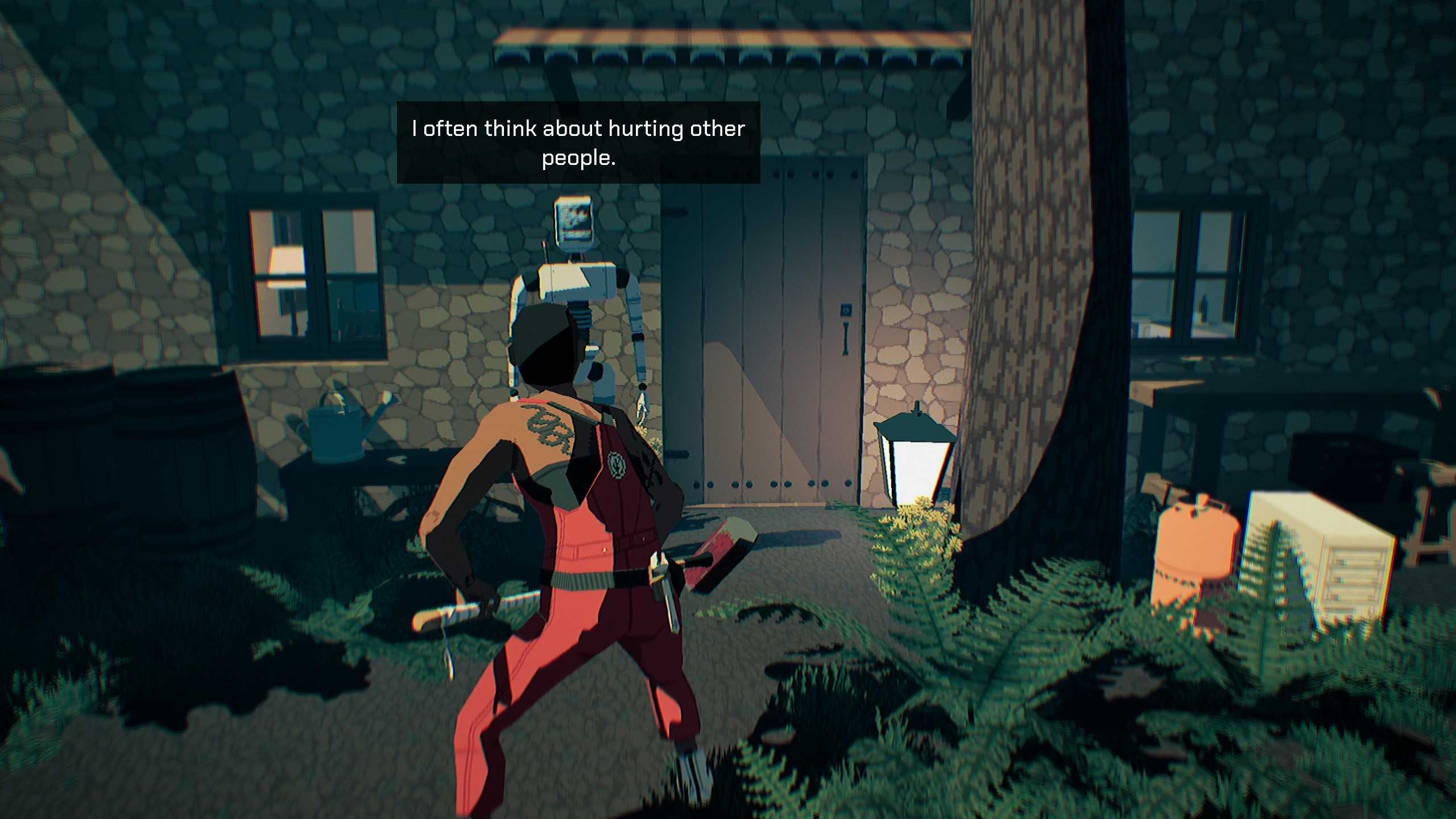
You are Pratelle, steadfast sister to Nina and daughter to Merche. The girls grew up with their mom in a tiny community, with Nina the first to fly the nest for college. That leaves the younger Pratelle behind to care for their mother, although their collective destinies are eventually bound by technology.
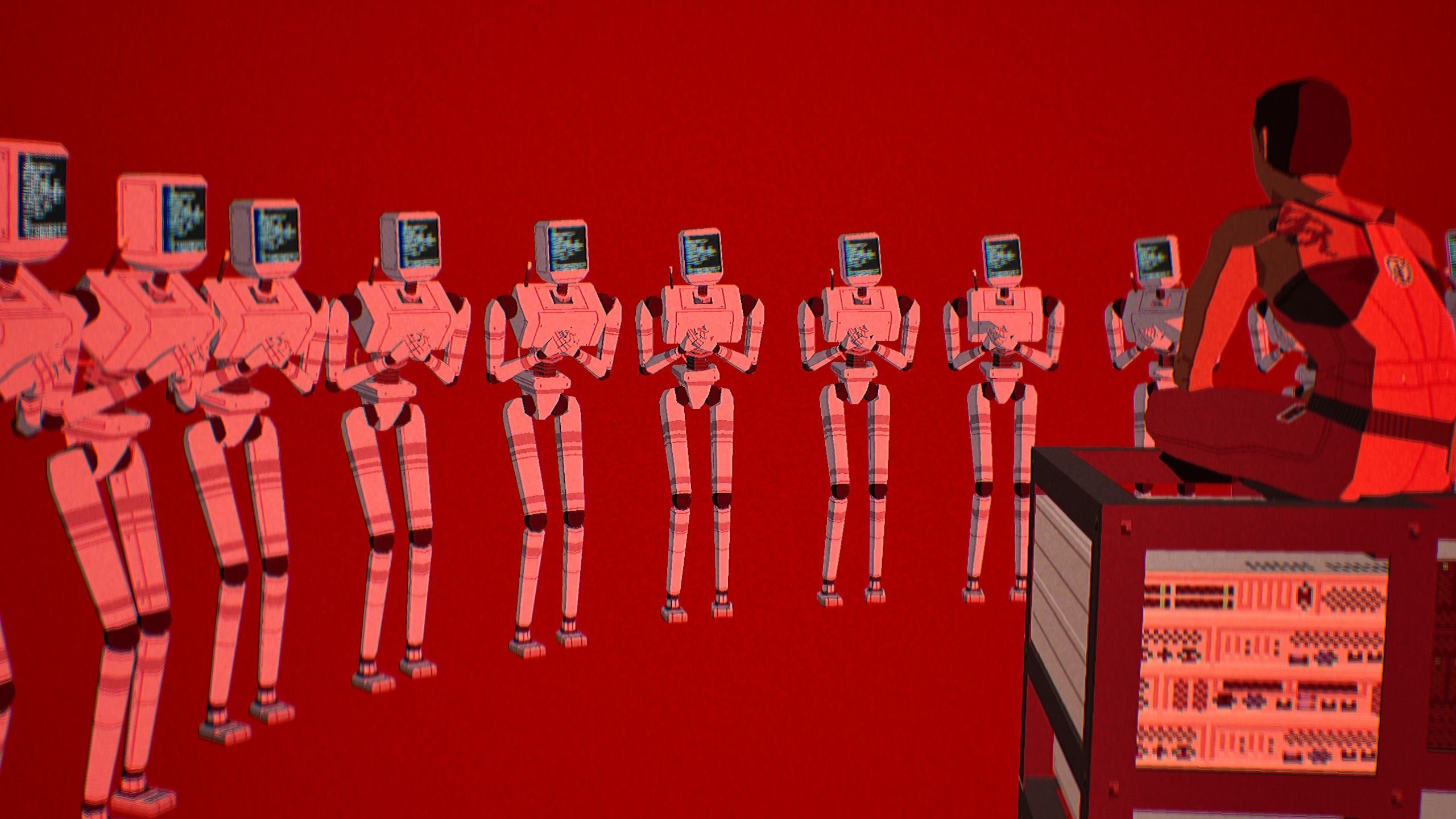
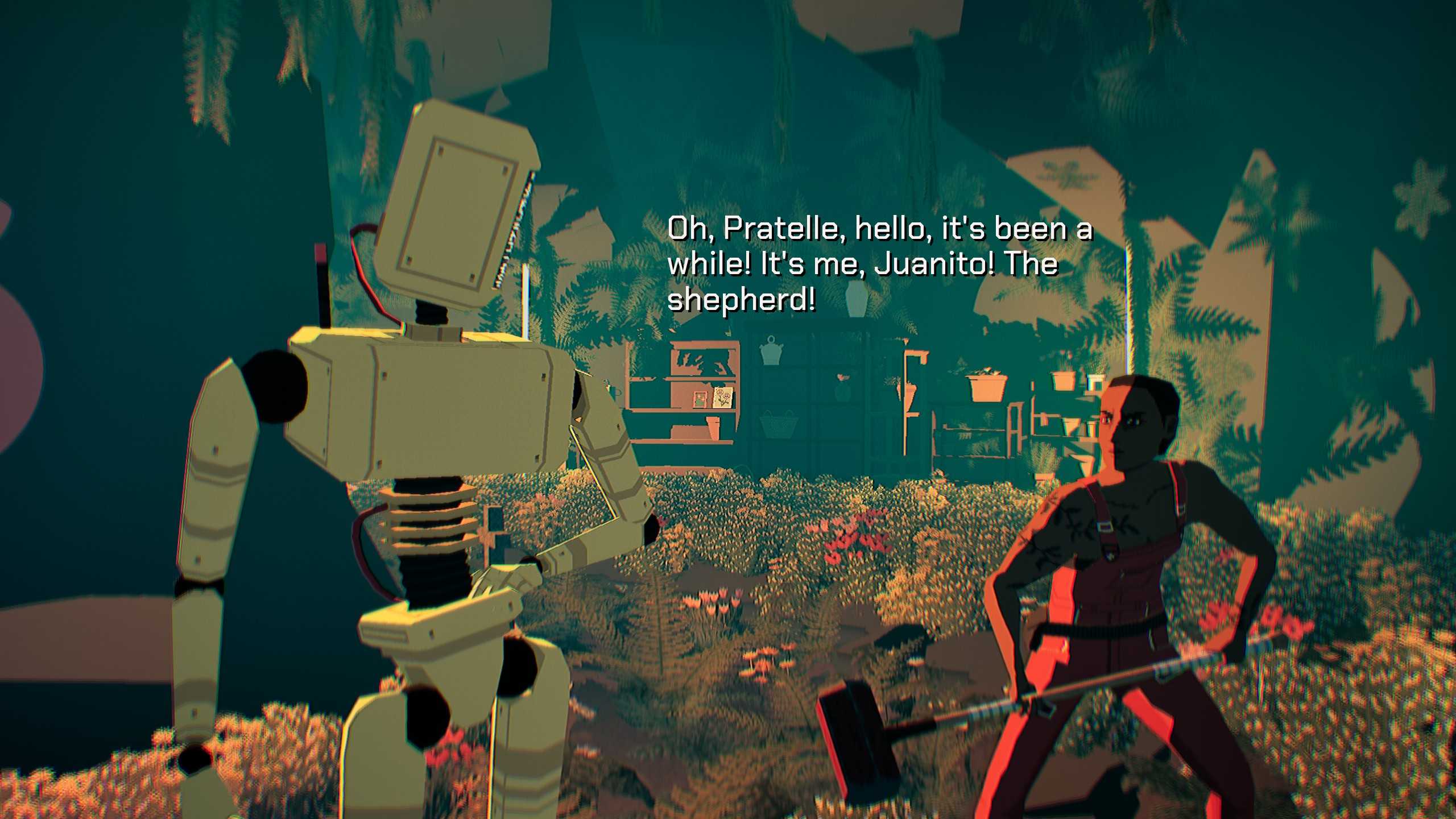
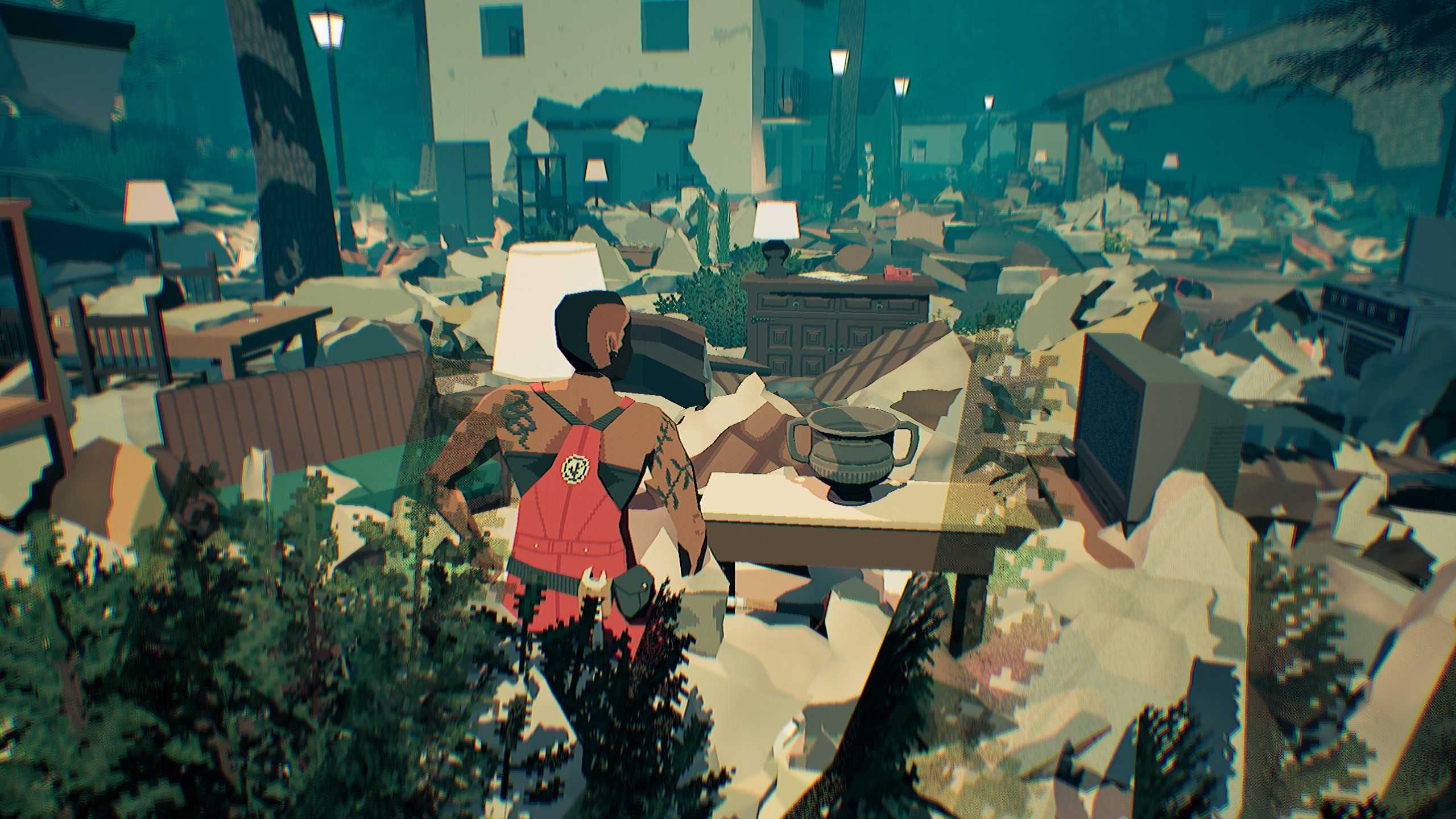
Virtue and a Sledgehammer is largely spent stomping through Pratelle’s hometown, swinging a mighty sledgehammer that renders rubble of buildings and robots alike. The latter are functionally phantoms, dead souls uploaded to the cloud feigning at their lost humanity. They beg for their “lives,” wax philosophical about the world, or even feebly defend themselves against Pratelle’s destructive crusade. Unlucky for them, she never liked this town.
Pratelle’s mighty sledgehammer has a short windup, allowing her to swing it repeatedly or prime a thunderous overhead slam—think of the test-your-strength high striker at a carnival—that pulverizes anything in its impact radius. There’s little genuine challenge to the experience and, if you still somehow manage to get overwhelmed by attackers, a quick continue revives you and scatters any nearby mooks in one stroke.
Pratelle’s hands never leave the handle, with the game’s initial minutes confident proof of what’s to come. Aside from some twisty dialogue options in flashbacks—none of which appear to shift the plot in any way—Virtue and a Sledgehammer is mechanically repetitive, but especially profound in the way it dwells on the most arresting of its signals: the crackling crescendo of broken masonry, fingerspit’s alternately tranquil and gasping-for-air soundtrack, a disquieting insult spat out by a mother in the throes of dementia.
Anthropomorphism And The Hazards of Empathy

How readily family can rhyme trauma with trust; Jordi de Paco articulates, “One of the mantras we had while developing the narrative is: despite everything, I still love you.” The characters are richly multifaceted, though their depth is drip-fed via intimate flashbacks which activate after smashing glitches found in the environment. Story points usually unfurl in disconnected fashion, including childhood memories and past trauma, with the game’s present and future drowning in the promises of AI.
Deconstructeam has leveraged empathy above all throughout their many projects, a distinct contrast with this game's implication that we’ve grown too empathetic. Virtue and a Sledgehammer explicitly insists that our increasingly conversant relationship with AI is a poison promise, reflecting further on entropy, immortality, and identity. And, of course, revenge.
“At this point, AI is a great source of distress for me,” Jordi explains. “I see family and friends fall victim to it—I consider them victims, in how they become dependent, in how they develop feelings and empathy for their AI companions. They talk, they give nicknames to ChatGPT. And I hate it.” Artist Marina González echoes this experience: “I couldn’t process how quickly all of this changed, and sometimes I feel like I’m in this sci-fi dystopic future, what I used to read when I was a teenager… When I talk to regular people who use AI for a lot of things in their life, I feel like I’m the crazy one.”
Pratelle arrives at similar conclusions. Her dead neighbors have been replaced with stand-ins, gibbering tombstones born through a sci-fi promise of eternal life, the ultimate ego trip. Encapsulated in skinny-limbed forms with code-strewn screens for faces, they ramble and ruminate about their former flesh-and-blood lives, haunting their old streets and homes, sensibly disturbed by the approaching hammer-wielder. Our instinct is sympathy. The game near-delights in its insistence that our instincts are wrong.
What Mortal Hand or Eye Could Frame Thy Fearful Symmetry?

I can grok the difference between a video game dog and a real-life dog. Given the opportunity, though, I still wouldn’t giddily smash the former to bits. Many of Virtue and a Sledgehammer’s robots—or “digital beings,” as some self-identify—have a certain miserable dignity and apparent self-awareness, aspects which made it initially difficult to approach them all as equal-opportunity sledge fodder, especially the more tragic or ponderous bots: How strange they looked, the ones I left standing alone in the ruins of their homes.
Jordi anticipated this inherent player conflict in Virtue’s design. “We wanted the violence to feel complicated in this game, and we very deliberately had a sledgehammer be your only way to interact with the world. We were adamant that the main character doesn’t speak in the game at all. Only in the past, only in flashbacks.”
That silence can feel unnervingly confrontational, with Pratelle never responding to even the most talkative digital beings she encounters. Some are aggressively homophobic and hateful, and I found it pitifully easy to smash those to smithereens. Others—like some apparently disabled robots huddled in a church—demanded obvious mercy. A select few may even welcome or stir Pratelle’s deliverance, but the game doesn't track progress based on which ones you choose to sacrifice or ignore.
This proved the greatest obstacle in my reckoning with Virtue and a Sledgehammer as a whole, something I expect will be shared by others. However, one thing is important to keep in mind: anyone who has interacted with generative AI is familiar by now with its uncanny knack for feigning obsequious deference, assuredness, penitence, and other human behaviors, all puppeteered purely via language. It can be an admittedly persuasive shadow play, but there is nothing beyond the screen.
A Memorial of Fragments

Deconstructeam’s projects are typically stacked high with text and dialogue, making Virtue and a Sledgehammer’s script seem sculpted down to the bone. The poignant flashbacks carefully draw out a more coherent picture of the family trinity, but their transient, non-linear nature and abrupt conclusions can be disturbing, especially for the most traumatic episodes. The trio never speaks very much, either, leaving shadowy sentences that sizzle in the air as you return to your violent pursuits.
Jordi remarks that, “[Of the] commercial games we released, this has the least amount of text we ever put out there, the least amount of words.” Composer and level designer fingerspit even grew concerned at the game’s minimalist script: “Sometimes I was like, dude, the game is not enough, you need to write more! Because the scenes are the magic of the game, it’s what keeps people playing. Especially for Deconstructeam fans, the whole Deconstructeam thing is these scenes, right? Where we bring you questions that make you think, that define the characters.”
Ultimately, this decrease in word count proves consistent with the authentic way the game examines the frustrations of memory. Marina interprets how our recollections arrive in fragments: “I think it helps with how the game [functions] in exploring that place, the brevity of the scenes. How you walk along a street in your hometown and suddenly remember a short conversation. When I'm remembering stuff from my childhood, that is only a moment, I don't remember the whole scene that happened around that moment.”
A distinct encounter in the town graveyard accentuates these exact sentiments, as well as the game's tendency of flashing mysterious split-second snapshot images. Virtue and a Sledgehammer seems to always circle back to fragments as an underlying theme; pieces of buildings, pieces of memory, pieces of people. Doubling back onto paths you've already cleared through, the leftover span of debris has a kind of incoherent beauty, abstracted through the game's low-poly 3D visual aesthetic.
Appetite for Deconstruction

The primal urge to smash buildings is a constant in video games, from Rampage to Teardown and beyond. This prompts the unique circumstance of Virtue and a Sledgehammer as Deconstructeam's most accessible game built into one of their least conventional narratives, a combination sure to provoke some thorny reactions on release, as Jordi concludes below:
“We think a lot about what this game will do to people. We talk about it sometimes as a Trojan Horse, because it’s the first game we are making ‘with gameplay.’ And I see it ending up in the space of games like Mouthwashing or Arctic Eggs. People who enjoy gameplay get into it, but suddenly they get something they weren’t expecting which is actively trying to challenge their emotions…
“I think it’s going to be the first time that we encounter that audience. When you make ‘reading games’ like The Red Strings Club and The Cosmic Wheel Sisterhood, people mostly get into them knowing it will have some sort of intellectual [side]. But then, I see people who will get into this because the trailers are cool, and you smash stuff, and you fight robots. And, suddenly, you are asked: what would you do to stop a family member from doing something horrible?
“I’m really looking forward to seeing how that unfolds.” Virtue and a Sledgehammer releases on PC on October 27, 2026.

Virtue and a Sledgehammer
Systems

- Released
- October 27, 2026
- Developer(s)
- Deconstructeam, Selkie Harbour
- Publisher(s)
- Devolver Digital
- Number of Players
- Single-player
- Steam Deck Compatibility
- Unknown
- PC Release Date
- October 27, 2026
Pratelle returns to her hometown to tear it down with a sledgehammer in this new sci-fi narrative by Deconstructeam. Confront family trauma in a devastating story about devastating the past to protect the future.
KioskNews shows a cleaned-up reading view extracted from the publisher’s page — the original always lives on their site, not ours.