One photo, many near misses: The hunt for Ganpati, the last big Maoist fugitive
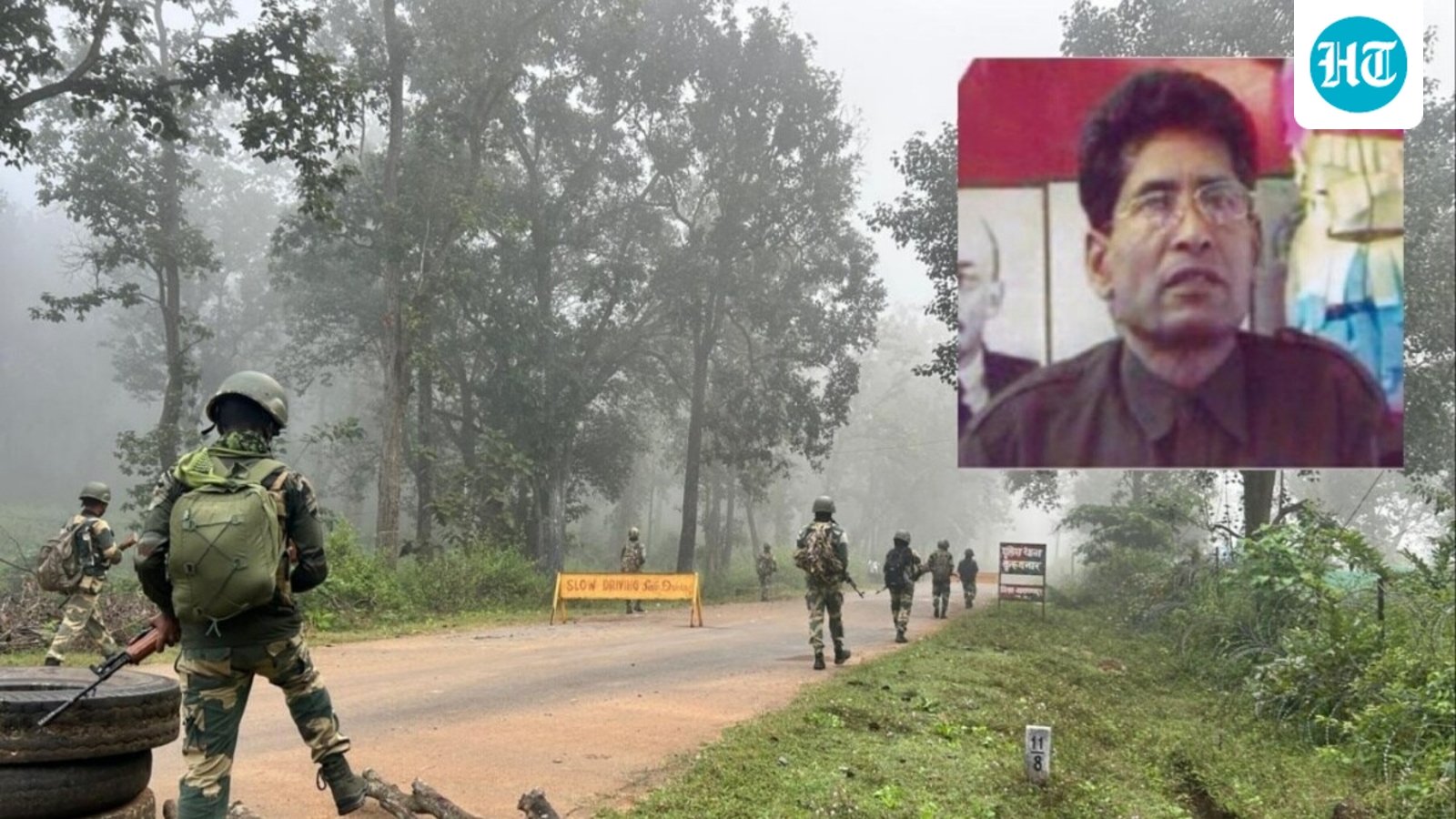
For 47 years, Muppala Laxman Rao, popularly known as Ganpati, has been a fugitive.
The former school teacher (possibly in his late 70s), who built India's deadliest insurgency, spread it across states, trained villagers into guerrilla fighters, and taught generations of Maoist cadres how to disappear without a trace, has himself disappeared, even as the movement lies in ruins.
The men who once fought the war under Ganpati are surrendering, being arrested and facing justice.
On Wednesday, a court in Raipur sentenced 10 Maoists to death for the 2013 Jhiram Valley massacre, in which 27 people—most of them senior Congress functionaries—were killed. Hours later, in West Bengal, Asim Mandal, a former Central Committee member of the CPI (Maoist), surrendered after nearly three decades in hiding. In July, the last active Central Committee leader, Misir Besra, was caught while fleeing his hideout in Jharkhand. Ganpati shaped cadres like Besra and Mandal and ordered ambushes such as the Jhiram Valley massacre.
On March 30, after India declared the end of the Naxal insurgency, what remained of the Maoist leadership was dismantled. No Maoist attack has been reported since; for the first time in six decades, guns have fallen silent in India's Naxal hotbeds. Yet for intelligence agencies and security forces, one hunt remains unfinished: finding Ganpati, one of India's longest-wanted fugitives. Police and intelligence agencies believe surrendered cadres could hold vital clues to Ganpati’s whereabouts.
Senior Maoist commander Rupesh, alias T Vasudeva Rao, a former Central Committee member who surrendered last October, now lives with other senior surrendered cadres at a government-monitored facility in Bastar's Jagdalpur.
He still receives occasional visits from Intelligence Bureau and police officers. During these visits, the questions are often the same: Do you know where Ganpati is? Is he hiding in Nepal or elsewhere? Is he living under an assumed identity somewhere in Telangana or Bastar? Has he contacted anyone about surrendering?
The answer, Rupesh said, is also the same every time: he has no information.
A senior government official, who asked not to be named, said, “There are different inputs. About a year ago, there were inputs that his location was traced to a town in Telangana. Last year, the forces got a tip-off about his presence in Bijapur, but it turned out to be a cold trail or a false tip.”
Ganpati’s only photograph, a grainy old image dating back to the 2000s, is uploaded on the wanted lists of different police forces and central agencies. “Be it the intelligence agencies or the security forces, there is a strong sentiment attached to finding Ganpati. He was responsible for many of the attacks and killings carried out by the Maoists, especially of security forces. He taught cadres how to build bombs and plant IEDs [Improvised Explosive Devices]. Naxalism may be history, but Ganpati remains a prized target,” the official said.
Those who fought alongside him claim they have little clarity about his whereabouts.
Another surrendered Maoist commander, Kandagatla Yadagiri, alias Rajman, who spent nearly three decades fighting from the jungles of Bastar, believes Ganpati is no longer in the forest because the jungle, which was once Ganpati’s core bastion, is no longer his.
“The jungles of Bastar and the other states were literally emptied by the government. Ganpati cannot even live like a hermit inside the jungle because the forces have reached everywhere. I last saw him in the jungle sometime in 2023, when he had come for a meeting. He was not the party’s head then,” Rajman said.
Contrary to media reports about Ganpati's health, Yadagiri said the former Maoist chief was still physically fit. “Maoists are trained to live in the jungle and survive on bare necessities. Their lifestyle is different,” he said.
Even as senior surrendered Maoist cadres say they have not seen Ganpati for a few years, for the security forces the wait has been much longer—since 1979.
Born in Telangana's Karimnagar, he graduated with a BSc degree in 1970 and later worked as a high school teacher. He was arrested twice in the 1970s for his role in violent student protests and the radical student union. After jumping bail in September 1979, he went underground. He has not been arrested since. Police believe he entered the Bastar jungles in the early 1980s, eventually rising through the Maoist ranks to lead what became India's largest and longest insurgency.
At the peak of the Maoist insurgency, more than 120 districts across India were affected by left-wing extremism (LWE), with Maoists establishing parallel systems of governance in thousands of villages. Today, no district or even a village is LWE-affected.
For retired CRPF additional director general (ADG) HR Singh, who served multiple tenures in Maoist-affected areas during his three decades in uniform, Ganpati's name brings back years of near misses.
“In my days of leading a battalion in the jungles as a commandant, there were many times when we narrowly missed catching the man. I remember one time when we had information about him at a railway station. When our teams reached there, the train had just arrived. The Maoists must have sensed something was amiss and got locals to crowd the station and gather around the coach where we believed he had alighted. He had the support of the locals, who helped him escape,” Singh said.
Singh said almost anyone who served in the Maoist-affected areas during the insurgency's peak has a Ganpati story. “People like us tracked him and other top leaders for years. During my time, we did get many senior leaders, including Kishenji [a dreaded Central Committee member killed in 2011], but Ganpati managed to escape multiple times,” he said.
He pointed to some of the deadliest attacks of the insurgency, including the 2010 Dantewada ambush that killed 76 security personnel, and the Malkangiri encounter in which 38 Grey Hound commandos died.
“There is a lot that Ganpati has to answer for,” Singh said, adding that the villagers, who were once the biggest informers and helped Naxals, no longer support them.
“My gut feeling is that we will hear about Ganpati soon,” he said.
From the jungles of central India, Ganpati led the proscribed party from 1992 until 2018, when he handed over the reins to his lieutenant, Nambala Keshava Rao, alias Basavaraju, who was killed in an encounter in Bastar in May 2025. Intelligence and security agencies had then suspected Ganpati could return to take control of his organisation that had suddenly lost its top leader. He did not.
Senior IPS officer P Sundarraj, one of the prominent faces of the government's anti-Naxal campaign who led operations, had told HT earlier: “We suspected Ganpati would return to control the party as it was headless after Basavaraju's death. But he did not come. He has not been seen in the jungle for years. He escaped when the Maoists were still a formidable force in the jungles a few years ago.”
Back in Jagdalpur, Rupesh has watched from the sidelines as the organisation he once belonged to has collapsed—arrest after arrest, surrender after surrender, killing of his former comrades, and now a death sentence.
But the whereabouts of Ganpati remain a mystery even to him. The government records have 10 different aliases for the man and just one photograph.
“Ganpati raised the party and trained everyone how to hide and not get caught. He will be caught only if he is active. Today he is just hiding. It is what he is trained for and is the best at. India is a big country. He could be anywhere, even near you in a city, with a new name," Rupesh said.
KioskNews shows a cleaned-up reading view extracted from the publisher’s page — the original always lives on their site, not ours.