10 Closing Lines In TV Miniseries Better Than Any Movie

Ben Sherlock is a Tomatometer-approved film and TV critic who runs the massively underrated YouTube channel I Got Touched at the Cinema. Before working at Screen Rant, Ben wrote for Game Rant, Taste of Cinema, Comic Book Resources, and BabbleTop. He's also an indie filmmaker, a standup comedian, and an alumnus of the School of Rock.
A memorable final line can make or break a movie. Everyone remembers a really great closing line, like Michael Corleone telling Kay not to ask about his business at the end of The Godfather, or Rick Blaine declaring “the beginning of a beautiful friendship” at the end of Casablanca. There are a ton of classic final lines in the annals of cinema history.
But a limited series has even longer to build up to its ending, so if it sticks the landing, then its final line can be even more cathartic and satisfying. From Adolescence to Band of Brothers to Chernobyl, these classic TV miniseries wrapped up with a greater final line than any movie ever made.
10 Adolescence
"I'm sorry, son. I should've done better."

The final scene of Adolescence might be a little cloying, and it might be a little on-the-nose, and it might spell out the themes that the last four episodes had explored in much subtler ways. But it works, because Stephen Graham commits to the harrowing emotions of the moment.
At the end of Adolescence, just as Eddie begins to heal from the trauma and confusion of finding out his 13-year-old son is a murderer, he goes into Jamie’s room and embraces his teddy bear, a symbol of his lost childhood innocence. Eddie’s final line is what he wishes he could say to his now-incarcerated, disgraced, seemingly irredeemable teenage child.
9 The Penguin
"Gotham's yours, sweetheart. Nothin' is standin' in your way now." "Goddamn right."

The Penguin almost has a happy ending. Almost. Oz and Vic are about to ride off into the sunset and conquer Gotham together. But then, Oz murders Vic in cold blood, just because he saw him open up and be vulnerable. It reinforced exactly what kind of person Oz is: a monster.
In the final scene, we see Oz indulge his delusions and wishful thinking. He imagines his mother coming back to life and fulfilling all his Oedipal desires. It was a suitably disturbing note to end this series on.
8 The Dropout
"Are you Lizzy?" "Hi. Yeah, I'm Lizzy. Hello."

Hulu’s eight-part Elizabeth Holmes biopic The Dropout ends with Elizabeth leaving the empty Theranos office behind, having defrauded and misdiagnosed and even indirectly killed so many people. As her ex-employee tries to nail into her mind that she hurt people, Elizabeth remains in complete denial. She acknowledges that she failed, but not that she caused real harm.
When she gets a second to herself, the mask slips and she breaks down. Then, as soon as her Uber driver arrives, she instantly composes herself. It shows just how deep her delusions go, and how aggressively she lies to herself to maintain those delusions. The driver asks for Lizzy, and Elizabeth says, “Hi. Yeah, I’m Lizzy. Hello.” She puts the mask right back on — it’s sociopathic behavior — and rebrands herself yet again, this time as “Lizzy,” the namesake of the finale.
7 The Queen's Gambit
"Let's play." (in Russian)

The Queen’s Gambit did the impossible: it made chess exciting. The miniseries’ final moments hammered it home that, despite all the messy personal troubles she’s weathered, Beth Harmon remains just as in love with the game of chess as she ever was.
The finale ends with Beth getting out of the car on the drive back to the airport, wandering into a park where some local men are playing chess, and being invited to join. “Let’s play” was the perfect last line for this long and winding chess saga, because that’s what it’s all been about; it was all about playing this game.
6 Watchmen
"Theoretically, yes."

Much like the seminal comic that it dared to follow, HBO’s Watchmen miniseries is a really bleak story. But it ends on a surprisingly nice moment between Angela and Dr. Manhattan. Sister Night asks her superhuman friend if he’s able to pass on his powers, and he floats a hypothetical scenario in which he could transfer his powers into an egg, she could eat the egg, and then she would absorb his abilities.
It’s an interesting thought experiment that ends on some delightfully witty screwball patter to play us out. “So, you could put them in this egg,” Angela asks, “and if I ate it, I could walk on water?” Dr. Manhattan wryly replies, “Theoretically, yes.” It’s like His Girl Friday with superpowers.
5 Unbelievable
"You have a good day, okay?" "You too."
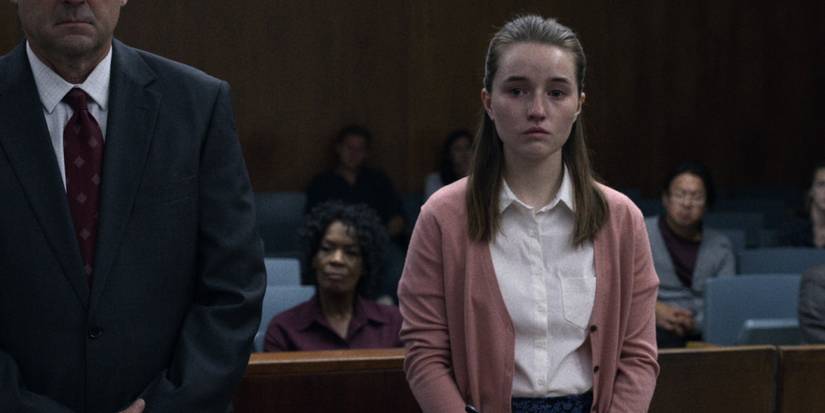
At the end of the trying true-crime ordeal of Unbelievable, our two protagonists finally meet over the phone. Marie sincerely thanks the detective for her efforts, and for believing her when no one else did.
Marie ends the call by wishing Karen a good day, and Karen returns the pleasantry. It’s a little moment, but it says a lot about the healthy place that Marie is in. Karen made sure justice was served. It won’t make the trauma any easier to overcome, but it should give Marie some sense of closure, and the chance to have a nice day.
4 Band Of Brothers
"No... but I served in a company of heroes."

Band of Brothers is one of the biggest, boldest, most visually stunning miniseries ever made. It brought cinematic production values to the small screen, and paved the way for big-budget spectacle to make the move to television.
But the ending of the series is refreshingly intimate and character-focused. Winters narrates the fate of some of the men, we see the end of the war, and the finale concludes with on-camera interviews with surviving Easy Company members, who are finally named on-screen. Above all, Band of Brothers is a love letter to the camaraderie of Easy Company, and this closing “company of heroes” line highlights that.
3 Midnight Mass
"I can't feel my legs."

As Leeza and Warren float away from Crockett Island in a little boat, her paralysis returns. The first of Father Paul’s supposed “miracles” starts to wear off. The horror is over, and the survivors can begin to heal.
Midnight Mass was a deeply personal story for Mike Flanagan. It went to some really dark places — addiction, Catholic guilt, the neverending torture of eternal life — so it was nice to see the series end on a hopeful note, looking toward a brighter, vampire-free future.
2 The Curse
"So, it's for TV?" "I think so." "Oh."

Nathan Fielder and Benny Safdie’s The Curse did an epic rug-pull in its final episode. After nine-and-a-half episodes with an aggressive, uncomfortable sense of realism, The Curse suddenly went full supernatural and had Fielder’s Asher inexplicably float off into space.
In the show’s final moments, some bystanders ask what the HGTV guy is filming, and wonder how they pulled off the flying-into-space stunt. They’ve all shrugged off this horrifying paranormal event as a Hollywood fantasy. It ends the series on an appropriately meta note; The Curse always made us voyeurs, like we were watching something we shouldn’t be seeing, and that final scene calls out the inherent artifice of filmed drama.
1 Chernobyl
"What is the cost of lies?"
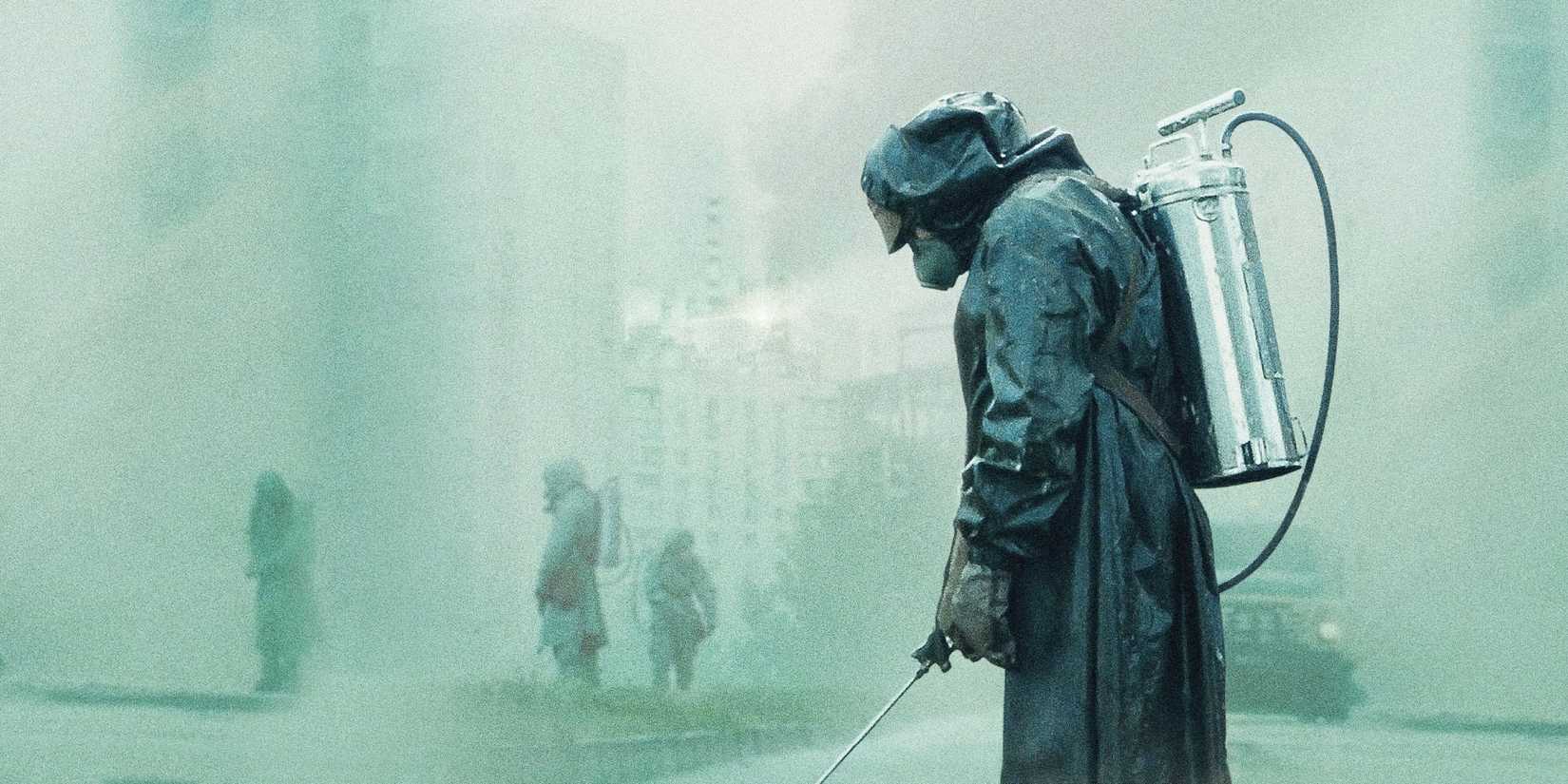
The final monologue of Jared Harris’ Soviet chemist Valery Legasov sums up the thesis of Chernobyl. He explains that scientific pursuit is naive, because scientists are “so focused on [their] search for truth” that they fail to prepare for the dangerous influences who don’t want them to find the truth. He wonders, “What is the cost of lies?”
Obviously, in the show, he’s talking about the Chernobyl disaster, but the same could be said of the politicization of the science behind climate change and COVID vaccines. Chernobyl wasn’t just about the horrors of nuclear fallout; the attempted government cover-up is just as disturbing, and Legasov’s fight to expose the truth is a Paths of Glory-level righteous tale of a noble individual standing up to a corrupt institution.
KioskNews shows a cleaned-up reading view extracted from the publisher’s page — the original always lives on their site, not ours.