Stop holding only one man accountable for Oct. 7 – opinion
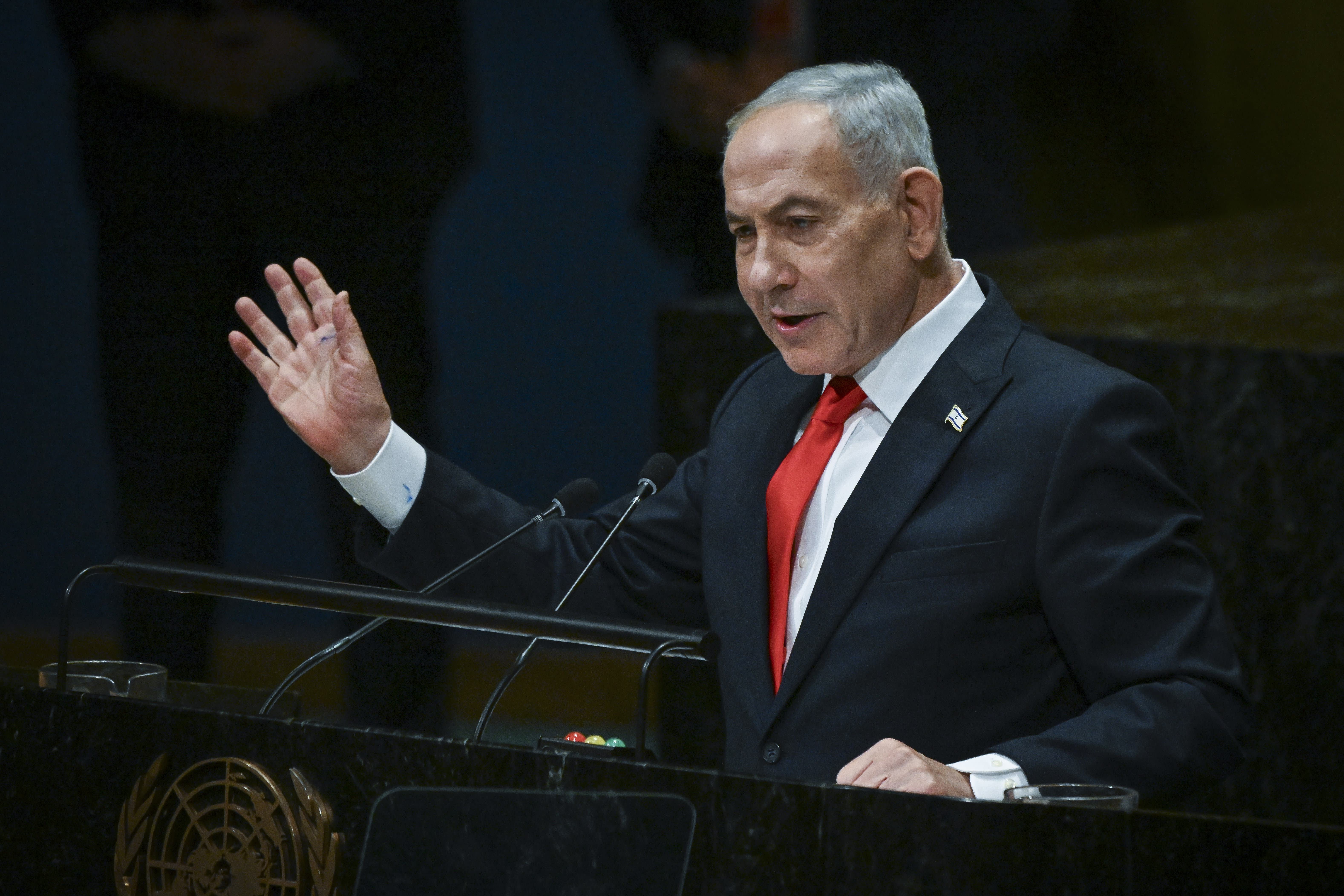
If we presumed this election period for the 26th Knesset would be dominated by the memory of October 7, 2023’s debacle, and that Prime Minister Benjamin Netanyahu would be pilloried by the slogan: “You were in charge, you are responsible,” that’s not quite the current case.
A new spin has emerged seeking to frame Netanyahu’s “responsibility” more narrowly. The new conseptzia (Hebrew for a “fixed notion”) in public discourse is that there definitely were warnings of the Hamas invasion.
However, they weren’t negligently missed and overlooked by the Shin Bet (Israel Security Agency), IDF intelligence units, the Mossad, or any other section and/or officer in charge, as we have read in various reports.
Those warnings, the new motif is, were passed on to Netanyahu and stayed with him. He did not reveal them. He did not pass them on.
The current memes on social media read: “You knew and hid it.” And what did Netanyahu know? The left-wing version of the conspiracy theory framework surrounding the events of October 7 has erupted.

According to an exposé in Haaretz, based on a forthcoming book by Shlomi Eldar and Ruthie Yuval, Emirati President Mohamed bin Zayed called Netanyahu about a week and a half before October 7 to warn that Hamas was planning a major operation against Israel. Netanyahu, however, remained unperturbed.
A purported second warning was then revealed. The Atlantic reported that Egypt’s intelligence chief Abbas Kamel arrived in Israel 11 days before October 7.
He also warned that the armed group in Gaza was preparing a major attack. Kamel, it emerged, sought to pressure Israel to award Hamas further economic concessions.
The revelations are literally flooding the social discourse platforms and the media.
Unfortunately for the anti-Bibists, logic dictates that if Netanyahu was responsible for the October 7 debacle, he also must be responsible for the ultimate results of Israel’s quite successful post-October 7 operations.
Even if this were true, can it be that the heads of the various services bear no responsibility for the lead-up to October 7? The order not to approach the fence? The decision not to wake Netanyahu when there were genuine warnings?
Of course, there were warnings. The female field scouts’ reports were dismissed out of hand, as well as warnings of a different type – one that the anti-Bibists would prefer to be forgotten.
And in 2023, amid the judicial reforms controversy, were central figures opposed to Netanyahu impressing upon Hamas, or warning Hamas leader Yahya Sinwar, that Israel was crumbling from within?
Israel’s security network often clashes with any given governing body
While this is very relevant to Israel’s internal political struggles, the real conseptzia that should be considered is that ever since the Oslo Accords, Israel’s security establishment has been in conflict with the country’s elected political leadership.
That leadership has mainly been critical of, and disbelieving in, the wisdom of those agreements.
The conflict brought them, as Efraim Karsh wrote in an article for the Begin-Sadat Center for Strategic Studies – “How the 30-year peace delusion led to the October 7 Hamas massacres” – to adopt a conception that the century-old Arab conflict with Zionism and Israel paved the way for Hamas’s invasion.
Karash wrote: “The failure to prevent Hamas’s slaughter … is a direct result of [those who] decided to do nothing despite acute warning signals, and failed to alert the Gaza division commander and the political echelon to the imminent attack.”
He asserts that there was an underlying mindset to this blunder that can be traced to what the “Oslo peace delusion” brought upon the thinking of the security establishment. He views Oslo as “a grand strategic deception” that aimed at the “emasculation of the IDF’s military capabilities and combative/offensive ethos.”
Former defense minister Yoav Gallant has now said that Israel was warned ahead of the October 7 massacre. He confirmed that the Shin Bet received a message that Hamas leader Sinwar would “shake the prisons.” Israeli security officials interpreted the threat as Hamas’s intention to take dramatic actions to compel Israel to release thousands of Palestinian prisoners.
But that message was thought not to focus on Gaza. Was that because the thinking was that Hamas was deterred?
A conseptzia overrides normative reason and critical analysis. Only a conseptzia could have thought that the July 6, 2023, warning from a veteran Israeli signals intelligence analyst, that Hamas was holding large-scale training exercises, to be dismissed by her superior as an “imaginary scenario.”
Likewise, only a conseptzia could have convinced those specialists who provided situation analyses to Netanyahu, and to then-head of the National Security Council, Tzachi Hanegbi, that Hamas was in a state of deterrence.
Journalist Amit Segal, criticizing Eldar’s and Yuval’s claims, notes: “Tragically, Netanyahu and [Shin Bet head Ronen] Bar adopted the Yuval-Eldar approach: economic concessions are preferred in the hope that these would appease” Hamas, and that they would choose money over ideology.
More importantly, Segal writes further that “Netanyahu and his subordinates operated in line with the prevailing approach of the media, think tanks, academia, and the High Court of Justice – always offer a carrot, never a stick – or if a stick is unavoidable, make it as small as possible.”
As we approach the October 27 elections, we cannot allow another conseptzia – the “he-was-warned” charge – to take hold.
The writer is a researcher, analyst, and commentator on political, cultural, and media issues.
KioskNews shows a cleaned-up reading view extracted from the publisher’s page — the original always lives on their site, not ours.