8 Most Violent Horror Movies of All Time, Ranked

Remus is a writer, editor, journalist, and author with an eye for detail and an extremely active imagination. He is an enthusiast of everything to do with the graphic medium, whether it's Western comics and their adaptations or manga and anime. Remus is also the author of the sci-fantasy novel Once Upon a Time in Hyperspace and several works of short fiction in the mystery, comedy, and horror genres.
Sign in to your Collider account
Violence is a most unpleasant topic of conversation, but whether you like it or not, it’s also an effective tool to depict the horrific side of the human condition. Extreme horror movies often push boundaries with relentless gore, graphic torture, and severe psychological disturbance. But used in a meaningful context, violence can also serve a deeper artistic purpose rather than just offering shock value to the audience.
Some of the most horrifying films ever made use their extreme violence and gore as an expression of social, political, and cultural allegories. Bloodshed and brutality can only work in a story if they are tied directly to its plot and the character’s purpose. And that is why the films below are outstanding examples of ultimate violence in horror cinema. These films aren’t just visceral; their graphic content is balanced by thematic storytelling, profound social commentary, or exceptional technical craftsmanship. Viewer discretion advised, but here’s our ranked selection of some of the most violent horror movies of all time.
8 ‘The Purge’ (2013)

James DeMonaco’s action-horror thriller that launched the decade-long, titular franchise, The Purge follows the story of a future America where citizens are given free rein for 12 non-stop hours, allowing them to engage in any criminal activity, including murder. The plot focuses on the wealthy Sandin family, who do whatever it takes to save themselves from a group of people out on their rampage during the annual Purge. Ethan Hawke, Lena Headey, Adelaide Kane, and Max Burkholder portray the family.
In its day, The Purge was a massive commercial hit but heavily criticized by reviewers for its clichés and clunky allegories. However, the film found its audience among fans of violent dystopian action horror and thriller cinema. A claustrophobic home invasion horror, The Purge has since become most famous for its strong, disturbing violence, gunfights, and bloody confrontations that make it one of the most shocking horror thrillers of our time.
7 ‘Confessions’ (2010)

Written and directed by Tetsuya Nakashima, Confessions is a Japanese psychological thriller adapted from the 2008 novel by Kanae Minato. The film follows the story of Yuko, a grieving mother and high school teacher, as she sets out to avenge the death of her infant daughter, who was found dead under mysterious circumstances. Takako Matsu stars as Yuko, alongside Masaki Okada, Yukito Nishii, Yoshino Kimura, and Ai Hashimoto.
While it has ample instances of physical violence, Confessions is more psychologically violent than visually gory. Its story of a teacher’s cold, calculated revenge against her students feels more brutal and arguably darker than direct bloodshed. The movie’s most overwhelmingly disturbing element is how the revenge triggers a chain reaction of mental devastation among the students and their families. Despite its gut-wrenching nature, Confessions is widely acclaimed for its faithfulness to the novel, the direction, and the performances of Matsu and the child actors, with the movie ranking among the best revenge horror films of all time.
6 ‘Hostel’ (2005)

Directed and written by Eli Roth in his second feature film project as a director, Hostel marks the first entry in the titular cult horror franchise, following three college friends traveling to Europe who encounter a mysterious Dutch businessman who convinces them to stay at a particular hostel. When the group reaches the said hostel, each of them encounters brutal and terrifying incidents. Jay Hernandez, Derek Richardson, Eyþór Guðjónsson, Barbara Nedeljáková, and Rick Hoffman play the main roles.
An extremely violent and disturbing horror thriller, Hostel is infamous for the severity of its torture methods and has a dedicated fanbase among slasher-lovers. The film earned mixed reviews from critics at the time of its release but was a great success at the box office. The film’s horror iconography has since been compared to Giallo, splatter movies, and Nazi exploitation films, and it’s earned praise for its dark social allegories.
Collider Exclusive · Horror Survival Quiz Which Horror Villain Do You Have the Best Chance of Surviving? Jason Voorhees · Michael Myers · Freddy Krueger · Pennywise · Chucky
Five killers. Five completely different ways to die — if you're not smart enough, fast enough, or self-aware enough to avoid it. Only one of them is the villain your particular set of instincts gives you a fighting chance against. Eight questions will figure out which one.
🏕️Jason
🔪Michael
💤Freddy
🎈Pennywise
🪆Chucky
01
Something feels wrong. You can't explain it — you just know. What do you do? First instincts are the difference between the survivor and the first act casualty.
02
Where are you most likely to find yourself when things go wrong? Setting is everything in horror. Where you are determines which rules apply.
03
What is your most reliable survival asset? Every survivor has a quality the villain didn't account for. What's yours?
04
What kind of fear is hardest for you to fight through? Knowing your weakness is the first step to not dying because of it.
05
You're with a group when things start going wrong. What's your role? Horror movies are brutally clear about who survives group situations and who doesn't.
06
What's the horror movie mistake you're most likely to make? Honest self-assessment is a survival skill. Denial is not.
07
What's your best weapon against something that can't be stopped by conventional means? Every horror villain has a weakness. The survivors are always the ones who find it.
08
It's the final scene. You're the last one standing. How did you make it? The final survivor always has a reason. What's yours?
Your Survival Odds Have Been Calculated Your Best Chance Is Against…
Your instincts, your strengths, and your particular way of thinking under pressure point to one villain you actually have a fighting chance against. Everyone else — good luck.
Jason Voorhees
Jason is relentless, but he is also predictable — and that is the gap you would exploit.
- He moves in straight lines toward his target. He doesn't strategise, doesn't adapt, doesn't outsmart. He simply pursues.
- Your ability to keep moving, use the environment, and resist the panic that freezes most victims gives you a genuine edge.
- The Crystal Lake survivors were always the ones who stopped running in circles and started thinking about terrain, water, and distance.
- You think like that. Which means Jason, for all his indestructibility, would face someone who simply refused to be where he expected.
Michael Myers
Michael watches before he moves. He is patient, methodical, and almost impossible to detect — until it's too late for anyone who isn't paying close enough attention.
- But you are paying attention. You notice the shape in the window, the car parked slightly wrong, the silence where there should be sound.
- Michael's power lies in the invisibility of ordinary suburbia — the fact that nothing ever looks wrong until it already is.
- Your spatial awareness and instinct to map every room, every exit, and every shadow before you need them is precisely the quality Laurie Strode had.
- You are not a victim waiting to happen. You are someone who already suspects something is wrong — and acts on it.
Freddy Krueger
Freddy wins by getting inside your head — using your own fears, your own memories, your own subconscious as weapons against you. That strategy requires a target who can be destabilised.
- You are harder to destabilise than most. You've faced uncomfortable truths about yourself and you haven't looked away.
- The survivors on Elm Street were always the ones who understood what was happening and chose to face it rather than flee from it.
- Freddy's greatest weakness is that his power evaporates in the presence of someone who refuses to give him the fear he feeds on.
- Your psychological resilience — the ability to stay grounded when reality itself becomes unreliable — is exactly the quality that keeps you alive here.
Pennywise
Pennywise is ancient, shapeshifting, and feeds on terror — but it has one critical vulnerability: it cannot function against someone who genuinely stops being afraid of it.
- The Losers Club didn't survive because they were braver than everyone else. They survived because they faced their fears together, and faced them honestly.
- You ask the questions others avoid. You look directly at what frightens you rather than turning away.
- That directness — the refusal to let fear fester in the dark — is Pennywise's worst nightmare.
- It chose the wrong target when it chose you. You are exactly the kind of person whose fear tastes like nothing at all.
Chucky
Chucky's greatest advantage is that nobody takes him seriously until it's already too late. He exploits the gap between how something looks and what it actually is.
- You don't have that gap. You take threats seriously regardless of how they present — and you never make the mistake of underestimating something because of its size or appearance.
- Chucky relies on surprise, on the delay between recognition and response. You close that delay faster than almost anyone.
- Your instinct to treat every unfamiliar thing with appropriate scepticism — rather than dismissing it because it seems absurd — is the exact quality that keeps you breathing.
- Against Chucky, not laughing is already winning. You are very good at not laughing.
5 ‘Saw III’ (2006)

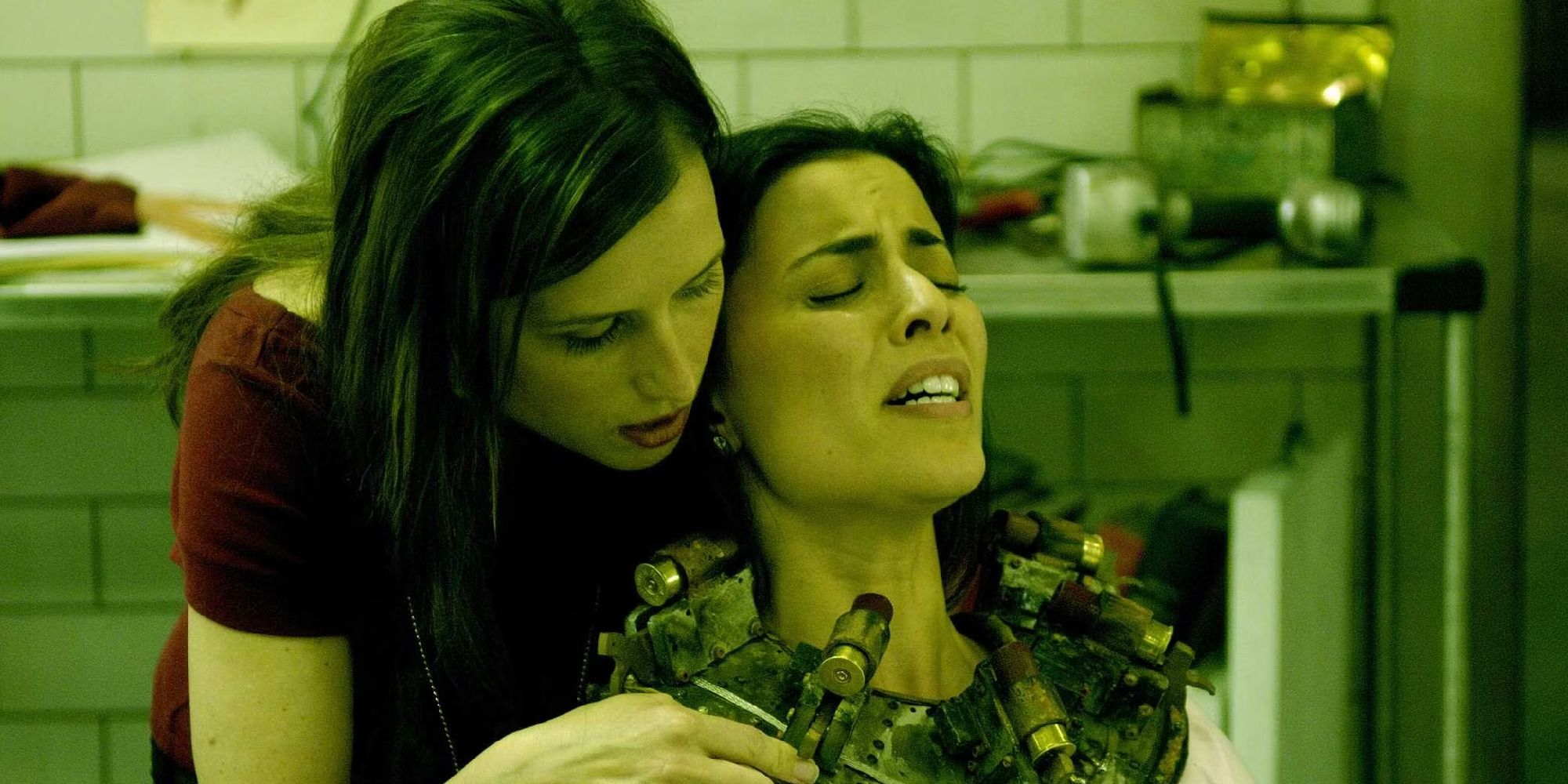
Darren Lynn Bousman’s third installment in the Saw film series and the sequel to 2005’s Saw II, Saw III follows John Kramer, aka the Jigsaw Killer, known for forcing his victims to play deadly survival games, as he puts another test subject named Jeff through extreme torture. Meanwhile, Kramer’s apprentice, Amanda, kidnaps a terminally ill doctor and tries to keep him alive long enough for him to complete the game. Tobin Bell reprises his role as the Jigsaw Killer, with Cary Elwes, Shawnee Smith, Angus Macfadyen, Dina Meyer, and Donnie Wahlberg also reprising their roles.
When it premiered, Saw III was widely panned by critics for reusing tropes from the previous films, only with more gore. But the film was a massive box office success and became the highest-grossing film in the series. Featuring some of the most painful-looking torture devices and methods ever devised, Saw III is aptly considered the most wince-inducing and goriest of all the films in the Saw franchise, arguably topping even the first film.
4 ‘Martyrs’ (2008)

A French psychological thriller written and directed by Pascal Laugier, Martyrs tells the story of Lucie, a young woman who is traumatized by a childhood incident in which she was kidnapped and tortured for a year. Lucie sets out to seek revenge on the people who destroyed her, helped by Anna, her friend who is also a victim of child abuse, with terrifying consequences. The film stars Morjana Alaoui and Mylène Jampanoï as Anna and Lucie, respectively, with Catherine Bégin, Juliette Gosselin, and Xavier Dolan-Tadros.
At the time of its French premiere, Martyrs met with controversy, provoking audiences to walk out of theaters because of its graphic depictions of violence. The film has since remained highly polarizing among fans and critics, with some lambasting it as a repelling splatter flick while others praise the dark themes underneath the gory visuals. Martyrs has since earned a modern cult classic status and is often considered a defining work of the New French Extremity movement.
3 ‘Inside’ (2007)

Directed by Julien Maury and Alexandre Bustillo in their directorial debut, Inside is a French horror film that follows Sarah, a pregnant woman mourning the recent death of her husband. On Christmas Eve, while preparing for the delivery of her baby, a mysterious woman invades Sarah’s home and attacks her. The film stars Béatrice Dalle as the stranger and Alysson Paradis as Sarah, with Nathalie Roussel, Dominique Frot, and Tahar Rahim in notable roles.
When it was released in France in 2007, Inside was positively received by critics as an effective product of the New French Extremity movement, which gave rise to a new genre of extreme and transgressive horror films at the turn of the 21st century. Often considered one of the most violent films in French horror cinema, Inside frequently ranks among the most disturbing movies ever made, alongside similarly extreme contemporaries like Martyrs.
2 ‘The Last House on the Left’ (1972)

Wes Craven’s directorial debut, which launched him as a rising horror filmmaker, The Last House on the Left is a revenge-horror thriller based on Ingmar Bergman’s 1960 film The Virgin Spring. The film follows the story of teenager Mari, who is kidnapped, raped, and killed by a group of violent fugitives, who in turn end up at her parents’ house. When her parents learn the truth, they seek vengeance against the criminals in brutal ways. The film stars Sandra Peabody, Lucy Grantham, David Hess, Fred J. Lincoln, Jeramie Rain, and Marc Sheffler.
Back in 1972, The Last House on the Left received polarizing reviews from critics but was a major commercial success and introduced Craven as a distinctive new voice in horror cinema. While the extreme brutality and gore were heavily criticized and considered repulsive by many, some also praised the relentless dramatic tension, the direction, acting, well-written dialogue, and the overall presentation of the film’s violence. Over the years, The Last House on the Left has been reassessed as a cult hit and a must-watch (if you can) movie for Wes Craven fans.
1 ‘The Hills Have Eyes’ (2006)

Directed by French filmmaker Alexandre Aja and co-written by Aja and Grégory Levasseur in their English-language debut, The Hills Have Eyes is a remake of Wes Craven’s 1977 film. The movie follows the Carter family, who get stranded in an isolated desert after their car breaks down and find themselves targeted by a clan of mutant cannibals. The movie stars Aaron Stanford, Kathleen Quinlan, Vinessa Shaw, Emilie de Ravin, Dan Byrd, and Ted Levine.
The Hills Have Eyes is significantly more violent, graphic, and brutal than the 1977 original, which relies more on the gritty tone of 1970s exploitation cinema, tension, and a raw atmosphere. The 2006 film is also faster-paced and gorier, with lots of special effects, chaotic attack sequences, and explicit gore. While critics have had mixed responses to the film, The Hills Have Eyes is widely considered a masterpiece of extreme horror, joining the ranks of the original among Hollywood’s most violent films.
KioskNews shows a cleaned-up reading view extracted from the publisher’s page — the original always lives on their site, not ours.